

sleepgood.org explains sleep research in plain words. We cover snoring, waking in the night, bedtime habits and the bedroom itself, and we review the products that claim to help, including who should skip them. If you are new here, this page shows you where to start.
In this article
The short answer
- Adults need at least 7 hours of sleep a night, on a regular basis. More than a third of US adults usually get less.
- Most sleep problems get better with a few steady habits: the same wake-up time every day, daylight in the morning, and a cool, dark, quiet bedroom.
- If you snore, the cause decides the fix. Our free snore quiz helps you find yours in about a minute.
- Loud snoring with pauses in breathing or gasping is a reason to see a doctor, not to buy a gadget.
How much sleep you need
The American Academy of Sleep Medicine and the Sleep Research Society reviewed the research in 2015 and agreed that adults need 7 hours of sleep or more on a regular basis. Regularly sleeping less than that is linked with weight gain, diabetes, high blood pressure, heart disease, depression, and a higher risk of accidents and mistakes.
Many people fall short. In a CDC survey of 444,306 US adults, 65.2% said they usually sleep at least 7 hours, which means more than a third do not. If that sounds like you, start with 12 sleep habits that have real evidence, or read whether 5 hours of sleep is enough.
If you snore, or someone snores beside you
Snoring is the sound of soft tissue in the throat shaking as air passes through a narrow airway. Where the narrowing happens is different from person to person: a blocked nose, a mouth that falls open, a tongue that drops back, or simply sleeping on your back. That is why one fix works wonders for one person and does nothing for the next.
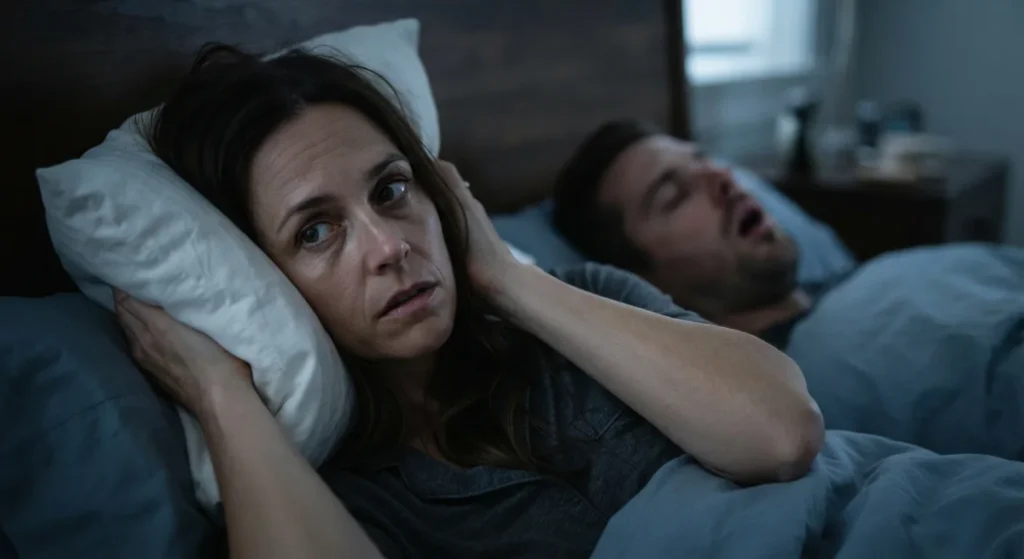
The quickest way to narrow it down is our free snore quiz, which uses four simple checks. Then read the guide that matches your answer:
- The best sleep position for snoring, and when it is not enough
- Snoring with your mouth closed: what it says about the cause
- Do snoring mouthpieces work? Who they help and who they don’t
- Nasal dilators and nasal sprays for a blocked nose
- Tongue exercises for snoring
- Wedge pillows for snoring
- TMJ and snoring: what to try if your jaw hurts
If you are the one lying awake, read how to sleep with someone who snores and which earplugs work for a snoring partner.
Our product reviews, such as the Good Morning Snore Solution, VitalSleep, Somnofit-S and the Posiform pillow, say who each product suits and who should skip it. They are based on published research, the makers’ details and buyer reports, not on hands-on testing.
If your bedroom is working against you
Most people sleep best in a room that is cool, dark and quiet. Heat in particular breaks up deep sleep, and light at night delays the body clock. Small changes to the room often help more than a new routine.
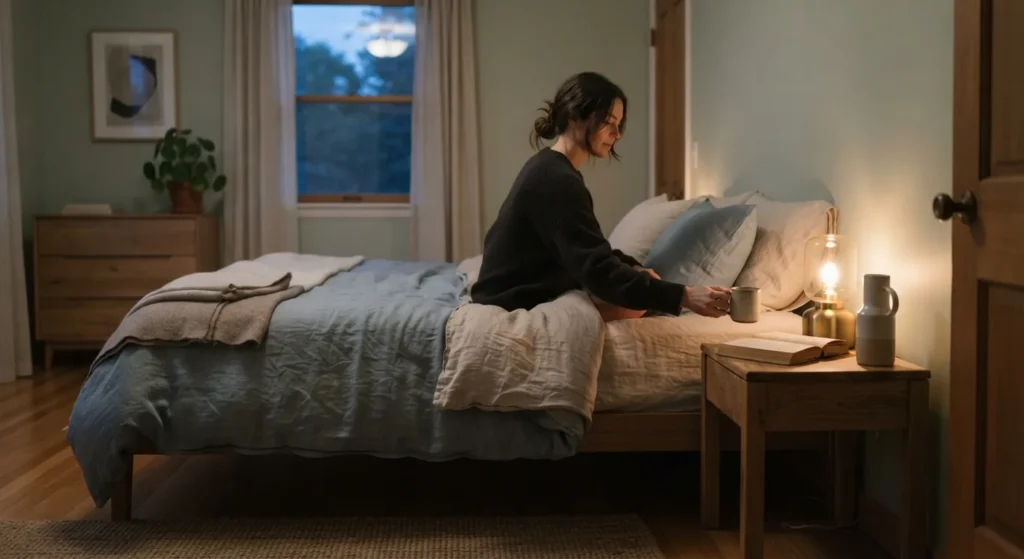
- Bed sizes: which one actually fits your room
- Cotton vs bamboo vs Tencel: the best sheets if you sleep hot
- Light bulbs and sleep: cool white vs warm amber at night
- White noise vs brown noise for a noisy room
- A mattress that is too firm for a side sleeper
- The best position in bed for lower back pain
- A contoured eye mask for a room you can’t make dark
If you can’t switch off at bedtime
A racing mind is one of the most common reasons people lie awake. For insomnia that lasts for months, the treatment the American Academy of Sleep Medicine recommends most strongly is cognitive behavioural therapy for insomnia (CBT-I): a short course that changes your sleep schedule and the thoughts that keep you awake. It is available in person, online and through apps.
- Diaphragmatic breathing for sleep: a technique for a busy mind
- Natural melatonin alternatives: foods, teas and habits
- Does the sleepy girl mocktail work?
- Haptic sleep devices compared with sound machines
- Sleepmaxxing: what works, and when it backfires
If you keep waking up in the night
Waking briefly a few times a night is normal. It becomes a problem when you can’t get back to sleep, or when you wake tired however long you stayed in bed.
- Why do I keep waking up at 4 AM?
- Waking up too often: what broken sleep does to your body
- Segmented sleep and hormones: night waking and melatonin
- Gut bacteria and deep sleep: what the research really shows
If you nap, work nights or feel sleepy all day
- How long should a nap be? Lengths and timing that avoid grogginess
- Biphasic sleep: splitting your sleep in two
- Night shift sleep: using light, sunglasses and blackout curtains
- Getting through the 3 AM to 5 AM slump on a night shift
- Narcolepsy symptoms: when daytime sleepiness is more than tiredness
When to see a doctor
See a doctor if someone notices that your breathing stops and starts in your sleep, if you snore loudly most nights, if you wake up gasping, or if you feel very sleepy in the day even after enough sleep. These are signs of sleep apnea, which needs a proper diagnosis. Also see a doctor if you have trouble sleeping three or more nights a week for three months: that is insomnia, and it can be treated.
How we write our guides
Our guides are told through Sarah Ellis, a fictional character who gives the site one friendly voice. Before anything is published, a person checks every fact, number and study against its source, and each guide lists its sources at the end. Some links are affiliate links, which never decide what we recommend. Read our editorial policy, about us and affiliate disclosure.
Sources
- Watson NF, et al. Recommended amount of sleep for a healthy adult: a joint consensus statement of the American Academy of Sleep Medicine and Sleep Research Society. Sleep, 2015.
- Liu Y, et al. Prevalence of healthy sleep duration among adults, United States, 2014. MMWR, 2016.
- Edinger JD, et al. Behavioral and psychological treatments for chronic insomnia disorder in adults: an AASM clinical practice guideline. J Clin Sleep Med, 2021.
- Okamoto-Mizuno K, Mizuno K. Effects of thermal environment on sleep and circadian rhythm. J Physiol Anthropol, 2012.
- National Heart, Lung, and Blood Institute. Sleep apnea: symptoms.
This article is general information, not medical advice. See our medical disclaimer.


[…] up groggy despite sleeping seven hours. Your fitness tracker shows you spent less than 15% of the night in deep sleep when you should be hitting 20-25%. You’re irritable, foggy, and reaching for your third […]