
Is there a link between TMJ and snoring? Yes, but it isn’t the one most dental clinic pages describe. The strongest evidence ties jaw pain to sleep apnea, not to ordinary snoring. And the most common snoring fix, a mouthpiece that pushes your jaw forward, is the one most likely to make a sore jaw feel worse. This guide shows what the studies say and which fixes leave your jaw alone. Not sure what kind of snorer you are? The free 1-minute snore quiz helps you find out.
I didn’t test these devices myself. Instead, I read the studies behind them, including a 2,604-person study on jaw pain and sleep apnea, plus the makers’ details and buyer reviews. So you get what the research shows, not a sales pitch.
In this article
- How TMJ and snoring are linked
- The trouble with jaw-advancing mouthpieces when you have TMJ
- Is it simple snoring or sleep apnea?
- Ways to ease snoring without a device
- Snoring with dentures: why most mouthpieces fail
- The Good Morning Snore Solution: a TMJ-friendly alternative
- Comparing snoring fixes for a sensitive jaw
- Frequently Asked Questions
- My verdict
The short answer
- Is TMJ linked to snoring? Loosely. Studies link jaw pain to signs of sleep apnea, such as loud snoring with breathing pauses, more than to simple snoring.
- Our pick for TMJ and dentures: The Good Morning Snore Solution. It holds the tongue forward without pushing the jaw or gripping the teeth.
- Be careful with: jaw-advancing mouthpieces if your jaw already hurts, especially generic boil-and-bite ones fitted without a dentist.
- See a doctor first if you stop breathing, gasp or choke in your sleep, or are very sleepy during the day.
How TMJ and snoring are linked
TMJ is the temporomandibular joint, the hinge in front of each ear that lets your jaw open and close. When it hurts, clicks or locks, doctors call it a temporomandibular disorder (TMD), though most people just say “TMJ”.
The best evidence comes from the OPPERA study, which followed 2,604 adults for about three years. People with signs of sleep apnea (loud snoring plus daytime sleepiness, breathing pauses someone noticed, or high blood pressure) were about 73% more likely to develop jaw pain for the first time. The breathing problem came first; the jaw pain followed.
Simple snoring looks different. A 2026 sleep-lab study of 184 people with jaw-muscle pain but no sleep apnea found no link between how much they snored and how much their jaw hurt. So if you snore and your jaw hurts, rule out sleep apnea before you blame the jaw.
Jaw shape does matter for snoring itself. A small or set-back lower jaw leaves less room behind the tongue. When you lie on your back and your muscles relax, the tongue can fall back and narrow the airway, and the soft tissues vibrate as air squeezes past. That vibration is the snoring sound. It’s why people with a set-back jaw often snore, whether or not their jaw hurts.
Try the 10-second tongue check
Stick your tongue out, hold it gently between your teeth and try to snore. If the sound is much weaker, your tongue is part of the problem. See which fix matches your snore.
The trouble with jaw-advancing mouthpieces when you have TMJ
If you search for a snoring mouthpiece for TMJ, most results are mandibular advancement devices (MADs). They hold your lower jaw forward all night to open the airway. For many snorers that works. For a joint that already hurts, it’s a gamble.
The research shows why. In a two-year Dutch trial, 24% of people using a jaw-advancing device had jaw pain in the first months, compared with 6% of people using a CPAP machine. For most it eased with time, and the devices caused no lasting problems with jaw movement. Those were custom devices, fitted and adjusted by a dentist.
A generic boil-and-bite device from a shop has no dentist checking the fit, and many adjust only in coarse steps. If your jaw is already sore, a few weeks of morning pain may be enough to make you give up. Used for years, any jaw-advancing device can also shift your bite a little.
None of this means a jaw device is off limits forever. If your TMJ is mild, a dentist may still fit one and move your jaw forward in small steps. Just don’t start with a generic one on a jaw that already hurts.
Myth vs fact
Myth: Any mouthguard that stops snoring is fine for your jaw.
Fact: Jaw-advancing devices put extra load on the joint, and jaw pain in the first months is common. With a sore jaw, ask a dentist before you try one.
Is it simple snoring or sleep apnea?
This is the most important question. Simple snoring is a noise problem; sleep apnea is a breathing problem. In obstructive sleep apnea the throat narrows or closes again and again during sleep, your breathing stops or gets very shallow, and your brain wakes you briefly to restart it, often without you knowing.
Daytime symptoms are the clue. If you wake up feeling like you haven’t slept, or you fight sleep during the day despite a full night in bed, see a doctor. Sleep apnea needs a diagnosis, and treatment is usually a CPAP machine or an oral appliance fitted by a dentist, not a mouthpiece from a shop. Our guide to whether snoring mouthpieces work explains who they help.
When to see a doctor
- You stop breathing or gasp for air during the night.
- You often wake up with a very dry mouth or a morning headache.
- You are very sleepy during the day.
- Your jaw locks, or opening your mouth is painful (see a dentist).
Ways to ease snoring without a device
Not every solution has to be a piece of plastic in your mouth.
Tongue and throat exercises (myofunctional therapy): This is physical therapy for your mouth: daily exercises that strengthen the tongue and the soft palate. A review of nine studies with 211 adults found that snoring got about half as loud, and time spent snoring fell by about a third. It takes weeks of practice, but it needs nothing in your mouth at night.
Care for the jaw itself: For the jaw pain, a dentist or physiotherapist can show you gentle jaw exercises, which treatment guidelines for long-lasting jaw pain list among the first options. They won’t stop the snoring, but a calmer jaw makes any snoring fix easier to live with.
Sleep position: Snoring is often worst on your back, because the jaw and tongue drop back. Sleeping on your side keeps the airway more open. A pillow that keeps you off your back or a wedge pillow for snoring can help. If your jaw hurts, don’t sleep on the sore side or with your hand under your jaw.
Try this tonight
Sleep on your side with a firm pillow behind your back so you don’t roll over. Keep your head level, not tipped forward or back, and keep your jaw off your hand.
Snoring with dentures: why most mouthpieces fail
If you’re looking for an anti snoring device for denture wearers, you’ll soon find that most of the market isn’t made for you. Jaw-advancing mouthpieces work by gripping the teeth to hold the lower jaw forward. With full dentures, there are no fixed teeth to grip.
Forcing a jaw-advancing device onto removable dentures can loosen them or press on the gums and cause sore spots. If you have partial dentures, crowns or bridges, ask your dentist before trying one.
The answer is to move the focus from the jaw to the tongue. A tongue-retaining device doesn’t need teeth to hold on to, which makes it one of the few over-the-counter options for people snoring with dentures.
The Good Morning Snore Solution: a TMJ-friendly alternative
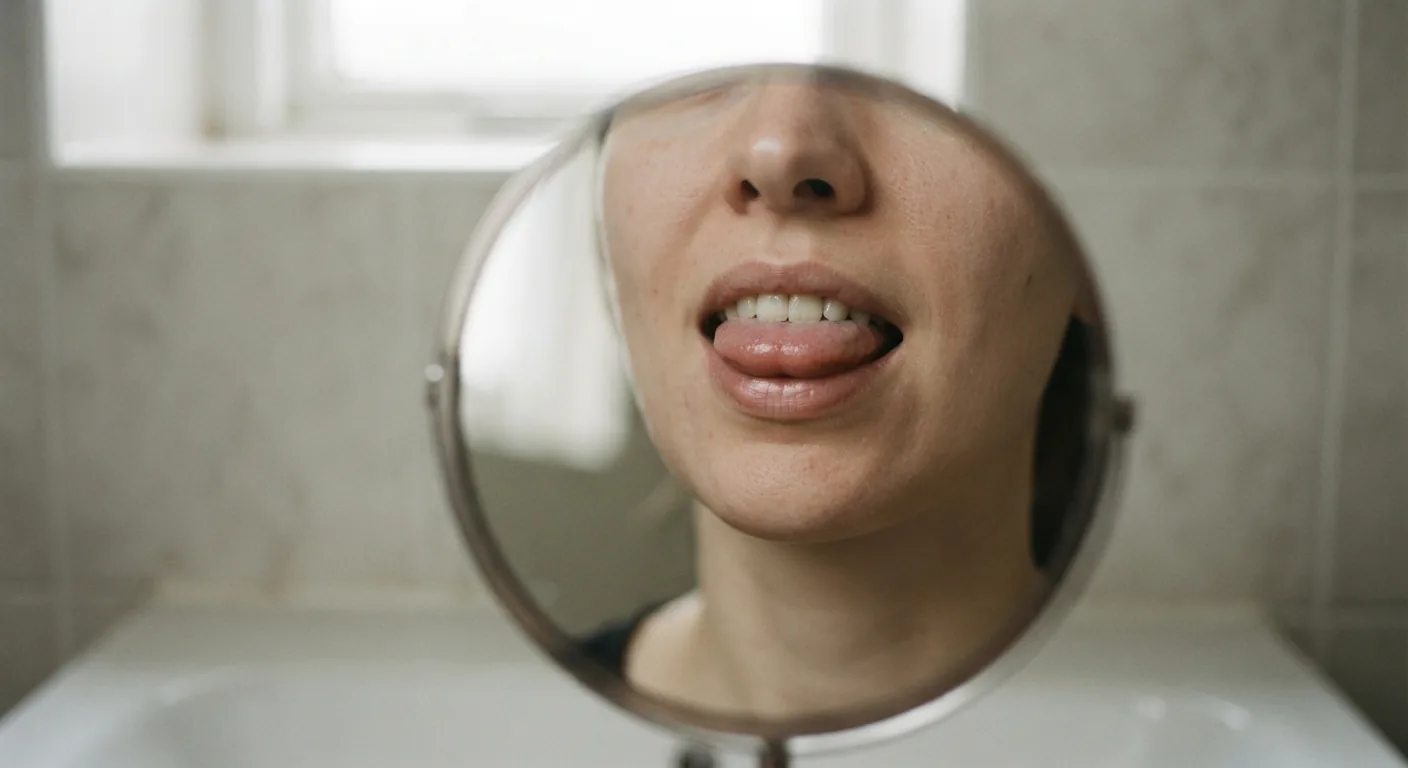
The Good Morning Snore Solution (GMSS) takes a different approach from traditional mouthguards. Instead of pushing the jaw forward, it’s an FDA-cleared over-the-counter tongue-retaining device for reducing snoring in adults 18 and over. It uses a soft, clear mouthpiece with a bulb that holds the tongue forward with gentle suction.
Because nothing grips the teeth and the jaw stays in its natural position, it suits people with jaw pain, TMJ problems or dentures. It avoids the jaw strain and bite changes linked to jaw-advancing devices. Expect a getting-used-to period; extra saliva is common at first.
The facts:
- Price: $79.94 for one mouthpiece (Regular or Small), or $139.94 for a two-pack.
- Shipping: Free on orders over $99 (US, Canada, UK, Australia).
- Guarantee: 30-day money-back guarantee, counted from delivery, on orders from the official store.
- Use: Ready to use, with no boiling or fitting. It lasts about a year.
In a small crossover trial by Dort and Brant (Sleep and Breathing, 2008; Dr. Dort designed the device), snoring events fell from 214.7 to 132.9 per hour, about 38% fewer, and 54% of participants wanted to keep using it. It’s sold for snoring only; it isn’t a treatment for sleep apnea.
The main trade-off is that GMSS needs nose breathing. If your nose is often blocked, it won’t suit you. Never use mouth tape with it: it sits between the lips and teeth, and your nose has to handle all the airflow. For more detail, read our Good Morning Snore Solution review.
Comparing snoring fixes for a sensitive jaw
| Device type | How it works | TMJ friendly? | Denture friendly? | Main trade-off |
|---|---|---|---|---|
| Jaw-advancing mouthpiece (MAD) | Holds the jaw forward | Risky: jaw pain is common at first; ask a dentist | No (needs teeth to grip) | Jaw pain, bite changes over years |
| Tongue-retaining device (GMSS) | Holds the tongue forward | Yes | Yes | Needs nose breathing |
| Nasal dilators | Open the nostrils | Yes | Yes | Only helps snoring from the nose |
| Anti-snore pillows | Keep you off your back | Yes | Yes | Only helps if you snore mostly on your back |
Before you buy: a quick checklist
- Check your breathing: Can you breathe comfortably through your nose? (GMSS needs it.)
- Check your teeth: Do you wear dentures? (A jaw device needs teeth to grip.)
- Check your jaw: Do you have jaw pain or clicking now? (Avoid generic jaw-pushing devices.)
- Check your symptoms: Do you gasp for air or feel very sleepy in the day? (See a doctor first.)
Frequently Asked Questions
Does TMJ cause snoring?
Not directly, as far as studies show. A small or set-back jaw can narrow the airway and lead to snoring, but jaw pain itself hasn’t been shown to cause it. The stronger link runs the other way: in the OPPERA study, signs of sleep apnea came before new jaw pain.
Can snoring cause jaw pain?
Simple snoring doesn’t seem to. Sleep apnea is a different story: people with signs of it were about 73% more likely to develop jaw pain. Grinding your teeth at night is another common cause of morning jaw pain, so mention both to your dentist.
Can a snoring mouthpiece make my TMJ worse?
A jaw-advancing one can, at least at first. In a two-year trial, about a quarter of users had jaw pain in the first months, though it usually eased. If your jaw already hurts, try a tongue-retaining device, or ask a dentist to fit a jaw device and adjust it slowly.
Will a mouthpiece stop the snoring sound completely?
Usually it makes snoring quieter rather than silent. In its small study, the GMSS cut snoring events by about 38%. How well any device works depends on whether your snoring comes from the tongue, the nose or the soft palate.
Is there an anti snoring device for denture wearers?
Yes. A tongue-retaining device is usually the best fit, because it holds the tongue with suction and doesn’t need to grip the teeth. That avoids loosening your dentures or causing the gum soreness a jaw-advancing mouthguard can cause.
My verdict

If you have TMJ pain or wear dentures, don’t start with a jaw-advancing mouthpiece. If your snoring is simple and comes from the tongue, the Good Morning Snore Solution is our pick, because it fixes the airway problem (the tongue) without loading the joint (the jaw). If your jaw pain is mild and you’d rather have a jaw device, let a dentist fit it. And if you have any of the warning signs above, see a doctor first: TMJ and snoring together can be a sign of sleep apnea.
Snoring, but your jaw can't take a mouthguard?
See how the Good Morning Snore Solution holds the tongue forward, what the study found and who it suits.
Read our Good Morning Snore Solution review →Sources: Sanders AE, et al. Sleep apnea symptoms and risk of temporomandibular disorder: OPPERA cohort. Journal of Dental Research, 2013. Martynowicz H, et al. Association of simple snoring and myogenous temporomandibular disorders based on polysomnographic examination. Journal of Oral & Facial Pain and Headache, 2026. Doff MH, et al. Long-term oral appliance therapy in obstructive sleep apnea syndrome: a controlled study on temporomandibular side effects. Clinical Oral Investigations, 2012. Camacho M, et al. Oropharyngeal and tongue exercises (myofunctional therapy) for snoring: a systematic review and meta-analysis. European Archives of Oto-Rhino-Laryngology, 2018. Dort L, Brant R. A randomized, controlled, crossover study of a noncustomized tongue retaining device for sleep disordered breathing. Sleep and Breathing, 2008. Good Morning Snore Solution product details, checked 4 October 2026. We may earn a commission from products we recommend; see our affiliate disclosure. This article is general information, not medical or dental advice.