

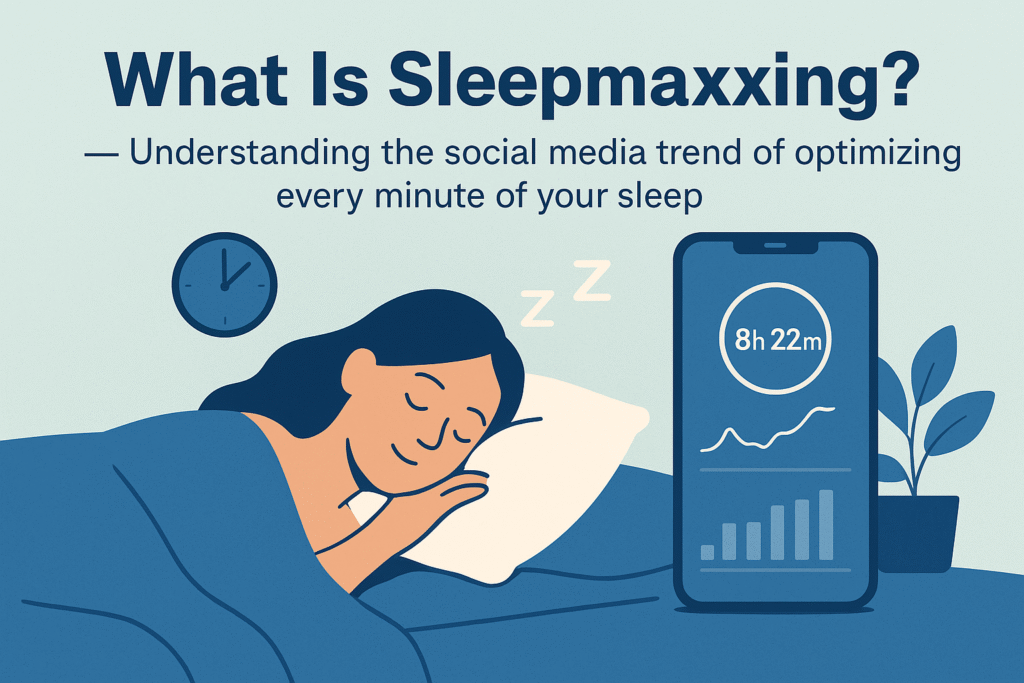
“Sleepmaxxing” is a social media trend about getting the best possible sleep. Videos show mouth tape, magnesium drinks, sleep trackers, cold rooms and long bedtime routines. Some of these ideas are backed by solid research. Others are based on very little. And for some people, chasing perfect sleep becomes a source of stress in itself. Here is what sleepmaxxing is, what actually works, and what to skip.
In this article
The short answer
- Sleepmaxxing means trying to optimise every part of your sleep, often with products and routines from social media.
- The basics have the best evidence: enough hours, a regular schedule, a dark and cool room, and less caffeine and alcohol.
- Mouth taping has weak evidence and may be unsafe for some people.
- Sleep trackers are fairly good at measuring total sleep, but not sleep stages.
- Worrying too much about sleep data can make sleep worse. Doctors call this “orthosomnia”.
What sleepmaxxing is
The name comes from online “maxxing” culture, where people try to maximise one part of their life. Sleepmaxxing posts usually combine several habits into a nightly routine: a supplement drink, blue-light glasses, mouth tape, a weighted blanket, a sleep score to check in the morning, and so on.
The good part is that it gets people to take sleep seriously. In the US, about 1 in 3 adults do not regularly get the 7 hours that experts recommend. The problem is that the trend mixes proven habits with unproven products, and it can be hard to tell them apart.
What has strong evidence
Enough hours
Adults need 7 hours or more a night on a regular basis. No product makes up for not giving yourself enough time in bed. Read why adults need at least 7 hours.
A regular schedule
Going to bed and getting up at similar times every day matters a lot. A 2024 study of about 60,000 UK adults who wore activity trackers found that people with the most regular sleep had a lower risk of early death than those with the least regular sleep. Regularity predicted risk better than total sleep time did.
Light and dark
Daylight in the morning and dim light in the evening help keep your body clock on time. See our guide to evening light and sleep.
Caffeine and alcohol
Caffeine can disturb sleep even when taken 6 hours before bed. Alcohol helps you fall asleep but breaks up sleep later in the night.
Help for insomnia
If you have long-term trouble sleeping, cognitive behavioural therapy for insomnia (CBT-I) is the first treatment doctors recommend. It is safe and its benefits can last after treatment ends.
Popular trends: what the research says
Mouth taping
The idea is to force breathing through the nose. A 2025 review found only 10 small studies with 213 people in total. Two showed some improvement in mild sleep apnea, and most showed no difference. The authors warned that mouth taping may be dangerous for people with a blocked nose or untreated sleep apnea. If you breathe through your mouth at night, see a doctor to find out why, rather than taping it shut. If snoring is why you thought of taping, our snore quiz shows where your snoring comes from.
Magnesium
A 2021 review of three small trials in older adults found that magnesium helped people fall asleep about 17 minutes faster, but the quality of evidence was low. It is cheap and generally safe at normal doses, but it is not a strong sleep aid.
Tart cherry juice and the “sleepy girl mocktail”
Small studies suggest tart cherry juice may help sleep slightly. Read our full look at the sleepy girl mocktail.
Melatonin
Melatonin helps with jet lag and a late body clock, but has only a small effect on general insomnia. In the US, supplements often do not contain the dose on the label. See our guide to melatonin alternatives.
Weighted blankets
In a 2020 Swedish trial, 120 people with insomnia and a mental health condition such as anxiety or depression slept better with a heavy chain blanket than with a light one. Evidence for people without sleep problems is limited.
Sleep trackers: useful, with limits
In a 2021 study comparing seven consumer sleep trackers with a lab sleep test, most devices were good at detecting when people were asleep and fairly good at detecting when they were awake. But their reports of light, deep and REM sleep were inconsistent, and they were less accurate on nights of poor sleep.
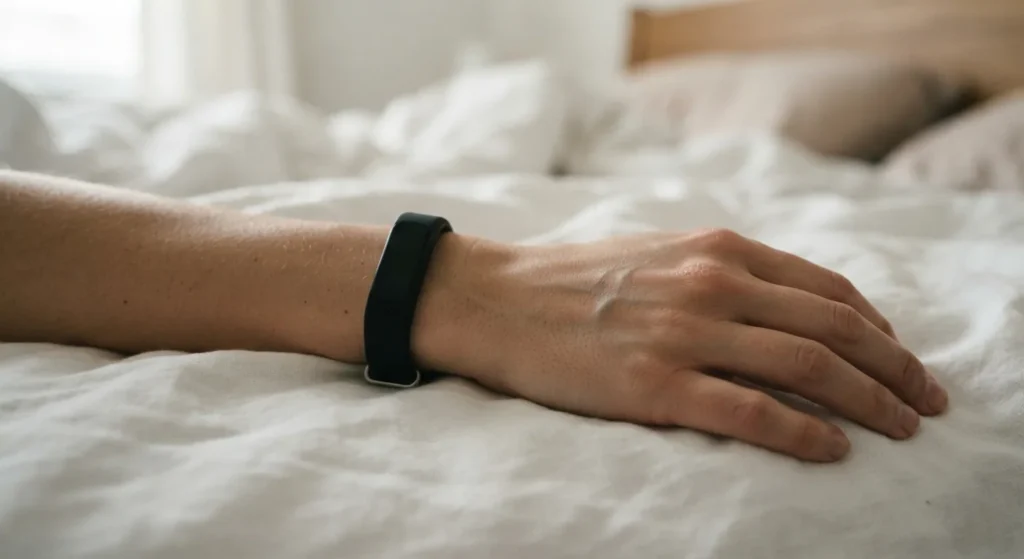
So a tracker can show useful trends, like how much you sleep on average or how regular your bedtime is. It is not reliable for deciding whether you got “enough deep sleep” on a single night.
Myth vs fact
Myth: A low sleep score means you slept badly. Fact: Sleep scores are estimates, and sleep stage data from wearables is often wrong. How you feel during the day is a better guide.
When optimising becomes a problem
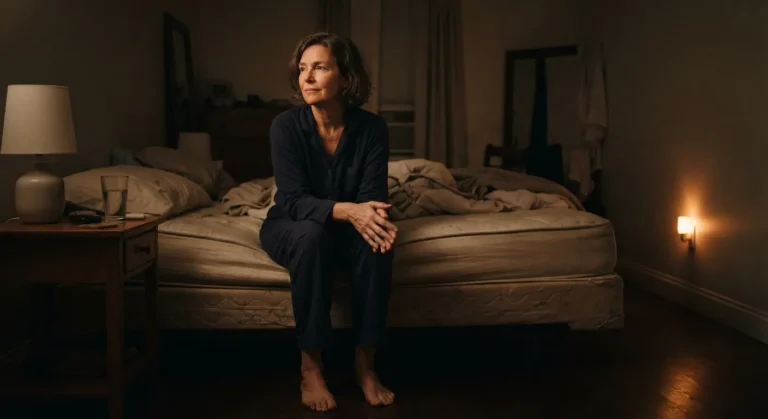
In 2017, sleep doctors described patients who became so focused on their tracker data that they developed insomnia. They called it orthosomnia: the pursuit of perfect sleep. Because sleep is easily disturbed by worry, checking scores, adding rules and trying harder can backfire. Good sleep is partly about letting go.
Signs the routine is working against you:
- You feel anxious if you miss a step of your routine.
- You check your sleep score first thing and it sets your mood for the day.
- Your routine takes over an hour and keeps getting longer.
- You spend a lot of money on products that have not helped.
A simpler approach
Try this
- Pick a wake-up time and keep it every day.
- Count back 7 to 8 hours to set your bedtime.
- Get outside light within an hour of waking.
- Stop caffeine by early afternoon and keep alcohol light.
- Make the bedroom dark, quiet and cool.
- Wind down for 30 to 60 minutes with dim light and no work.
- If you use a tracker, look at weekly averages, not nightly scores.
Our guide on how to sleep better goes through each habit in more detail.
When to see a doctor
See a doctor if you have trouble sleeping most nights for more than a few weeks, if you snore loudly or stop breathing in your sleep, or if you feel very sleepy in the day despite enough time in bed. These problems need proper testing, not more products.
Frequently Asked Questions
Is sleepmaxxing healthy?
The basic habits are healthy. The risk is spending money on weak products, trying unsafe trends like mouth taping, or becoming anxious about sleep.
Is mouth taping safe?
It is not proven safe or helpful. It may be risky if you have a blocked nose, allergies or sleep apnea. Talk to a doctor before trying it.
Should I track my sleep?
If it helps you notice patterns, yes. If it makes you worry, take a break from it. Focus on total sleep and regularity rather than sleep stages.
How much deep sleep do I need?
There is no fixed target for healthy adults, and wearables cannot measure it accurately. If you get enough hours on a regular schedule, your body usually takes care of deep sleep.
Conclusion
Sleepmaxxing gets one big thing right: sleep is worth caring about. But the habits that matter most are simple and mostly free. Give yourself enough time in bed, keep a steady schedule, control light, and go easy on caffeine and alcohol. Treat everything else as optional, and if your sleep routine is causing stress, it is doing more harm than good.
Sources
- Baron KG, et al. Orthosomnia: are some patients taking the quantified self too far? J Clin Sleep Med, 2017.
- Windred DP, et al. Sleep regularity is a stronger predictor of mortality risk than sleep duration. Sleep, 2024.
- Rhee J, et al. Safety and efficacy of mouth taping in patients with mouth breathing, sleep disordered breathing, or obstructive sleep apnea: a systematic review. PLoS One, 2025.
- Mah J, Pitre T. Oral magnesium supplementation for insomnia in older adults: a systematic review and meta-analysis. BMC Complement Med Ther, 2021.
- Chinoy ED, et al. Performance of seven consumer sleep-tracking devices compared with polysomnography. Sleep, 2021.
- Ekholm B, et al. A randomized controlled study of weighted chain blankets for insomnia in psychiatric disorders. J Clin Sleep Med, 2020.
- Watson NF, et al. Recommended amount of sleep for a healthy adult. Sleep, 2015.
- Drake C, et al. Caffeine effects on sleep taken 0, 3, or 6 hours before going to bed. J Clin Sleep Med, 2013.
- Edinger JD, et al. Behavioral and psychological treatments for chronic insomnia disorder in adults: an AASM clinical practice guideline. J Clin Sleep Med, 2021.
This article is general information, not medical advice. See our medical disclaimer.
[…] They can show trends, such as how much you sleep on average, but their sleep stage data is often inaccurate. If checking your score makes you anxious, stop using it. Read more in our guide to sleepmaxxing. […]
[…] a cool, dark bedroom. Our guide to natural melatonin alternatives covers other foods and teas, and our look at sleepmaxxing covers other viral sleep […]