

Many people say they do fine on five or six hours of sleep. Lab studies suggest most of them are wrong, and the tricky part is that they do not notice. Sleep experts recommend at least 7 hours a night for adults. This guide explains where that number comes from, what happens on less, and how to get closer to it.
In this article
The short answer
- Adults need 7 hours of sleep or more on a regular basis, according to the US sleep medicine societies.
- On 6 hours a night for two weeks, people’s performance dropped as much as after one or two nights with no sleep at all.
- They did not feel much sleepier, so they did not realise how impaired they were.
- Short sleep is linked with colds, weight gain, diabetes, heart disease and accidents.
- True “short sleepers” exist, but they are very rare.
Where the 7-hour number comes from
In 2015, the American Academy of Sleep Medicine and the Sleep Research Society asked an expert panel to review the research on sleep and health. They concluded that adults should sleep 7 hours or more per night on a regular basis. Less than that was linked with worse health and more errors. The US Centers for Disease Control and Prevention (CDC) uses the same number.
By that measure, many adults fall short. In a CDC survey of more than 440,000 US adults in 2014, about 1 in 3 said they usually slept less than 7 hours.
What happens on 5 or 6 hours
Your brain slows down, and you do not notice
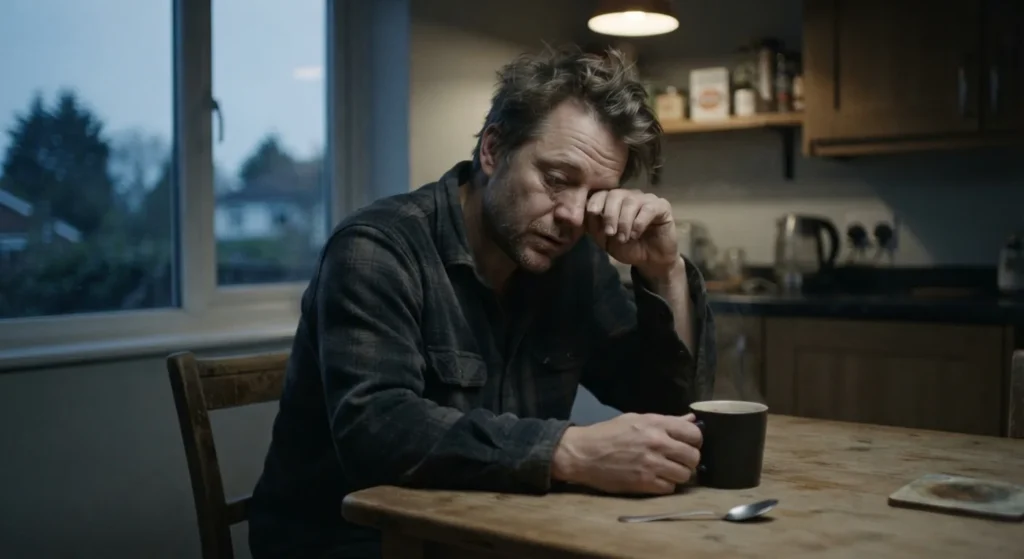
In a well-known 2003 study, 48 healthy adults spent two weeks in a sleep lab, sleeping 4, 6 or 8 hours a night. On 6 hours, their attention and memory got steadily worse each day. By the end, they performed as badly as people kept awake for one or two whole nights. But when asked, they said they felt only a little sleepy. That gap between how you feel and how you perform is the main reason the “I’m fine on five hours” belief is so common.
It is like driving after a drink
In a 2000 study, people who had been awake for 17 to 19 hours performed as badly on some tests as people with a blood alcohol level of 0.05%. That is the legal driving limit in many countries. Being awake from 6 AM to midnight gets you there.
You catch more colds
In a 2015 study, researchers measured how long 164 adults slept for a week, then gave them a cold virus in nose drops. People who slept less than 6 hours were about four times more likely to catch a cold than those who slept more than 7 hours.
You get hungrier
In a small 2004 study, young men slept only 4 hours for two nights. Their level of leptin, a hormone that signals fullness, fell by 18%, and ghrelin, which drives hunger, rose by 28%. They also felt hungrier, especially for sweet and starchy foods. Over time, short sleep is linked with weight gain and type 2 diabetes.
Long-term health risks
Large studies that follow people for years link regular short sleep with high blood pressure, heart disease, stroke, depression and an earlier death. These studies show links, not proof of cause, because people who sleep little may also have other health problems. But lab studies like the ones above show how short sleep could lead to them.
Myth vs fact
Myth: You can train your body to need less sleep. Fact: In studies of sleep restriction, people got used to feeling tired, but their performance kept getting worse. Your need for sleep does not shrink with practice.
What about natural short sleepers?
A few people really do function well on about 6 hours. In 2009, researchers found a mother and daughter with a change in a gene called DEC2 who naturally slept about 6 hours and felt rested. Other rare gene changes have been found since. These people are thought to be very rare. They also tend to wake naturally without an alarm and do not catch up on weekends. If you need an alarm and coffee to get going, and you sleep longer when you can, you are probably not one of them.
Can you catch up at the weekend?
Partly. Sleeping in can reduce sleepiness after a short week, but studies suggest it does not fully undo the effects on attention or blood sugar. It can also shift your body clock later, which makes Sunday night and Monday morning harder. A steady 7 hours every night works better than 5 on weekdays and 10 on weekends.
How to get your 7 hours
Try this
- Count backwards from your alarm. If you get up at 6:30, you need to be asleep by 11:30, so be in bed by about 11.
- Keep the same wake-up time every day, including weekends.
- Set a “lights down” alarm an hour before bed to start winding down.
- Stop caffeine by early afternoon. Caffeine can affect sleep even 6 hours later.
- Keep the bedroom cool, dark and quiet.
- Add 15 minutes at a time. Move your bedtime earlier by 15 minutes every few nights rather than all at once.
For a fuller list, see our guide to sleeping better.

When to see a doctor
If you spend 7 to 9 hours in bed but still wake up tired, something may be disturbing your sleep. Common causes are sleep apnea, restless legs, pain, depression and some medicines. See a doctor, especially if you snore loudly, wake up gasping, or feel sleepy while driving.
Frequently Asked Questions
Is 5 hours of sleep enough?
For almost all adults, no. Regular 5-hour nights lead to slower thinking, more mistakes and a higher risk of health problems, even if you feel used to it.
Is 6 hours of sleep enough?
For most adults, 6 hours is not quite enough. In lab studies, two weeks on 6 hours a night caused clear drops in attention and memory.
Is more sleep always better?
Not always. Adults who regularly sleep more than 9 hours also show higher health risks in large studies, though this may be because illness makes people sleep more. Very long sleep that does not refresh you is worth discussing with a doctor.
Does sleep quality matter as much as quantity?
Both matter. Seven hours of broken sleep will not feel like seven good hours. Read about what broken sleep does to your body.
Can naps make up for short nights?
A short nap can improve alertness for a few hours, but it does not replace a full night. See our guide on how long to nap.
Conclusion
Feeling fine on five hours is not the same as being fine. The research is clear that most adults need 7 hours or more, and that short sleep slowly wears down attention, mood and health. You do not need a perfect routine. Start with a fixed wake-up time and a bedtime that leaves room for 7 hours, and build from there.
Sources
- Watson NF, et al. Recommended amount of sleep for a healthy adult: a joint consensus statement of the AASM and Sleep Research Society. Sleep, 2015.
- Liu Y, et al. Prevalence of healthy sleep duration among adults, United States, 2014. MMWR, 2016.
- Van Dongen HP, et al. The cumulative cost of additional wakefulness. Sleep, 2003.
- Williamson AM, Feyer AM. Moderate sleep deprivation produces impairments equivalent to legally prescribed levels of alcohol intoxication. Occup Environ Med, 2000.
- Prather AA, et al. Behaviorally assessed sleep and susceptibility to the common cold. Sleep, 2015.
- Spiegel K, et al. Sleep curtailment in healthy young men is associated with decreased leptin, elevated ghrelin, and increased hunger and appetite. Ann Intern Med, 2004.
- Cappuccio FP, et al. Sleep duration and all-cause mortality: a systematic review and meta-analysis. Sleep, 2010.
- Drake C, et al. Caffeine effects on sleep taken 0, 3, or 6 hours before going to bed. J Clin Sleep Med, 2013.
- He Y, et al. The transcriptional repressor DEC2 regulates sleep length in mammals. Science, 2009.
- Centers for Disease Control and Prevention. About Sleep.



[…] No. Naps can top up a short night, but they do not replace the deep and dream sleep you get from a full night. Adults still need 7 hours or more in total. Read why adults need at least 7 hours. […]
[…] Adults need 7 hours or more a night on a regular basis. No product makes up for not giving yourself enough time in bed. Read why adults need at least 7 hours. […]