

A wedge pillow for snoring can help, because it stops you lying flat on your back. But buyers often find its problems only later: sliding down in the night, a sore lower back, and a warm block of foam under them. If you snore mostly on your back and can sleep on your side, a pillow that keeps you on your side goes after the cause more directly.
I have not slept on a wedge or on the side-sleeping pillow I recommend below. This guide is based on published studies, the makers’ own details and what buyers report in their reviews.
In this article
The short answer
- A wedge pillow raises your head and upper body. It suits people who must sleep on their back, and people with acid reflux at night.
- A side-sleeping pillow keeps you off your back. It suits people who snore mostly on their back but can sleep on their side.
- My pick for back-sleeping snorers: the Posiform anti-snore pillow from SnoreLessNow, one of the few snoring pillows tested in a sleep lab. Read our Posiform review.
- Neither pillow treats sleep apnea.
Why snoring is worse when you lie on your back

When you lie flat on your back, gravity pulls your tongue and the soft tissue at the back of your mouth toward your throat. The airway gets narrower. Air has to squeeze through a smaller gap, and the soft tissue flutters. That flutter is the snore.
This is why many people snore loudly on their back and quietly, or not at all, on their side. A pillow can deal with this in two ways. A wedge lifts you so you are no longer flat. A side-sleeping pillow stops you lying on your back at all.
You can check this at home. Ask your partner whether the snoring changes when you turn over, or record a few nights with a snore-recording app and note your position. If the loud parts happen on your back, a pillow is worth trying.
Does a wedge pillow for snoring work?

For many back sleepers, a wedge makes snoring quieter. It lifts your whole upper body on one even slope, so gravity pulls the tongue back less. A pile of normal pillows is not the same: it mostly bends your neck, and the pile falls apart during the night.
The same three complaints come up again and again in buyer reviews.
1. You slide down in the night
The slope is always there, and your body slowly moves down it as your muscles relax. Many buyers say they wake up halfway off the wedge with their neck bent. A steep wedge made for acid reflux makes this worse than a lower one.
2. Your lower back feels the gap
When your upper body is raised, a gap can open under your lower back, where the wedge ends and the mattress begins. Some buyers wake up with a stiff lower back because of it. If back pain is already a problem for you, read our guide to the best position in bed for lower back pain before you buy a wedge.
3. The foam gets warm
Most wedges are made of memory foam, and a wedge covers a large part of your back. People who sleep hot often say the foam holds their body heat. A breathable cover that you can take off and wash helps.
Try this tonight if you already own a wedge
- Put a pillow under your knees. It helps stop you sliding down and takes some strain off your lower back.
- Fill the gap under your lower back with a small rolled towel.
- Push the wedge against the headboard so it cannot move.
- Use cotton sheets. Slippery satin sheets make sliding worse.
Wedge pillow vs side-sleeping pillow
The two pillows deal with the same problem in different ways.
| Wedge pillow | Side-sleeping pillow (Posiform) | Normal pillow | |
|---|---|---|---|
| What it does | Raises your head and upper body | Keeps you on your side, head tilted slightly forward | Supports your head only |
| Best for | People who must sleep on their back; acid reflux at night | Snoring that is worse on your back, if you can sleep on your side | Snoring that does not change with position |
| Main downside | You still sleep on your back, and you can slide down | Takes a week or two to get used to | Does nothing about your position |
| Sleep-lab study | Ask the seller for one | Yes, 2018 (see below) | No |
If you can sleep on your side, the side-sleeping pillow goes after the cause. If side sleeping hurts your shoulder or hip, the wedge is the gentler choice. Our guide to a mattress that is too firm for side sleeping may help with that shoulder and hip pain.
The side-sleeping pillow I would choose: the Posiform
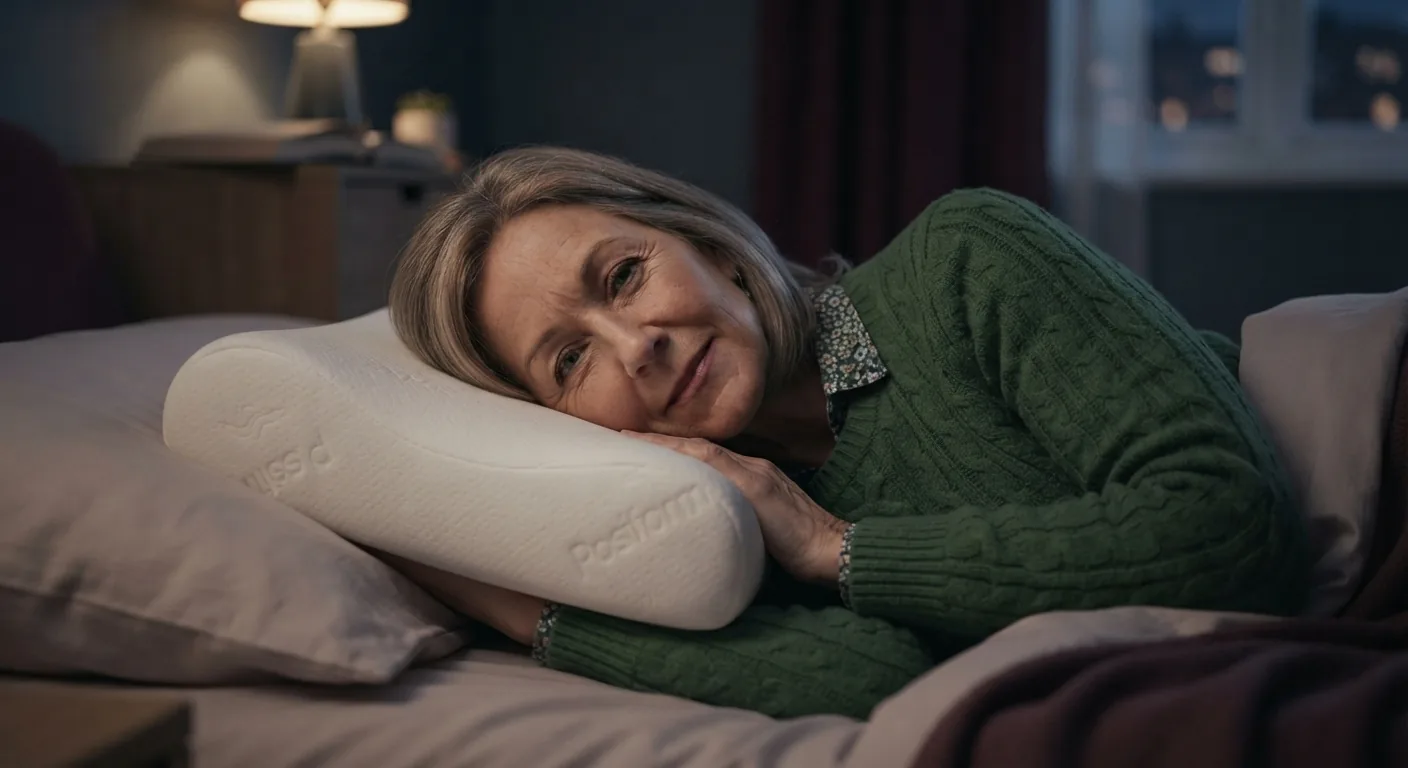
The Posiform anti-snore pillow is sold by SnoreLessNow. It is shaped to keep your head on its side and to stop you rolling onto your back. The maker lists four design features:
- Forehead support. Your head rests on its side, slightly forward.
- A raised ridge down the middle. Rolling onto your back becomes uncomfortable, so you tend to stay on your side without waking up.
- Cut-outs for your ear and shoulder. Side sleeping does not squash your ear or push your shoulder up.
- A slight downward head tilt. This is meant to keep the airway open.
It is made of memory foam with a washable cover. It costs $119.99 on sale (normally $129.99), comes with a 120-night money-back guarantee, and has a 3-year warranty on the foam.
I would choose it over a wedge for one main reason: it is one of the few snoring pillows with a sleep-lab study behind it. Our full Posiform review covers the study, the price and who should skip it.
What the research says

A 2018 study in Sleep and Breathing by Newell, Mairesse and Neu followed 28 adults with positional sleep apnea, which means their breathing problems happened mostly on their back. After one month with the Posiform, the share of the night they spent on their back fell from 52% to 20%. Breathing pauses per hour (the AHI score) fell from 12.1 to 6.
Source: Newell, Mairesse and Neu, Sleep and Breathing, 2018
A 2015 study in Scientific Reports tested a different head-positioning pillow on 25 adults. Snoring events fell from 218 to 115 per hour.
There is also a reality check. A small 2025 trial in Cureus tested the Posiform in 19 people at home for two nights. It cut the time spent on the back by only 7%, which was not a clear result. Two nights is very short for a pillow that most people need a couple of weeks to get used to. Still, it shows the pillow is not an instant fix for everyone, which is why the 120-night guarantee matters.
Which one should you choose?
- You snore mostly on your back and can sleep on your side: choose a side-sleeping pillow such as the Posiform.
- You must sleep on your back, or you have acid reflux at night: choose a wedge.
- You snore in every position: a pillow will not fix it. The 1-minute snore quiz helps you find the cause.
- Your snoring gets quieter when you hold your tongue forward: a tongue device deals with that. Read our Good Morning Snore Solution review.
- Your nose is blocked most nights: start with the nose. Read our guide to nasal dilators for snoring.
Myth vs fact
Myth: A wedge pillow can treat sleep apnea.
Fact: A pillow can reduce the time you spend flat on your back. It does not treat sleep apnea, and it should not replace a doctor’s advice.
When to see a doctor
A pillow is for snoring. See a doctor about sleep apnea if:
- Someone has seen you stop breathing in your sleep.
- You choke or gasp for air in the night.
- You are very sleepy in the day, even after a full night in bed.
- You often wake up with a headache.
Common questions about snoring pillows
Can side sleepers use a wedge pillow for snoring?
You can lie on your side on a wedge, but many side sleepers say the slope pushes their shoulder up and they slide more. If you already sleep on your side and still snore, your position may not be the main cause, so a pillow may not help much.
Is there a pillow for sleep apnea?
No pillow treats sleep apnea on its own. Some doctors use positional therapy for people whose apnea happens only on their back, and the Posiform study was done with those patients. If you think you might have sleep apnea, see a doctor first.
How do I stop sliding down my wedge pillow?
Put a pillow under your knees, push the wedge against the headboard, and use cotton sheets instead of satin. A lower wedge also slides less than a steep one.
What is the best pillow for snoring?
It depends on why you snore. For snoring that is worse on your back, a side-sleeping pillow such as the Posiform. For people who must sleep on their back or have acid reflux, a wedge. For snoring in every position, neither: find the cause first.
How long does it take to get used to a new snoring pillow?
Most people need one to two weeks, especially lifelong back sleepers. Judge it after a few weeks, not after the first night.
My verdict

A wedge pillow for snoring works best for people who must sleep on their back or have acid reflux, as long as they can live with the slope. If you snore mostly on your back and can sleep on your side, I would start with a side-sleeping pillow instead. The Posiform is the one I would try first: it has a sleep-lab study behind it, and you get 120 nights to find out whether it works for you.
Snore mostly on your back?
See how the Posiform pillow works, what the sleep-lab study found, and who should skip it.
Read our Posiform review →I have not tested these pillows myself. This article is based on the studies named above, the makers’ published details and buyer reviews. Posiform price checked on 28 September 2026. This is general information, not medical advice.
Sources: Newell J, Mairesse O, Neu D. Can positional therapy be simple, effective and well tolerated all together? Sleep and Breathing, 2018. Chen W-C et al. Treatment of snoring with positional therapy in patients with positional obstructive sleep apnea syndrome. Scientific Reports, 2015. Aguilar Pelaez et al. Comparison of a vibrating belt versus a positional pillow for positional obstructive sleep apnea. Cureus, 2025.