

Choosing a bed size is not only about how much room you want to sleep in. The bed also has to fit the room, leave space to walk and open doors, and get up the stairs. This guide gives the standard US bed sizes, what each one suits, and a simple way to check whether a bed will fit your bedroom before you buy.
In this article
The short answer
- A queen (60 x 80 inches) suits most couples and fits a room of about 10 x 12 feet or larger.
- A king (76 x 80 inches) gives each partner as much width as a twin bed, but needs a room of about 12 x 12 feet or more.
- A California king is longer and narrower than a king: better for tall people, not bigger.
- A full (54 x 75 inches) is roomy for one adult but tight for two.
- Leave about 24 to 30 inches of walking space around the bed where you can.
US bed sizes at a glance
| Bed size | Width x length (inches) | Width x length (cm, approx.) | Best for | Suggested room size |
|---|---|---|---|---|
| Twin | 38 x 75 | 97 x 191 | Children, one adult in a small room | 7 x 10 ft or more |
| Twin XL | 38 x 80 | 97 x 203 | Tall teens, dorms, one tall adult | 7 x 10 ft or more |
| Full (double) | 54 x 75 | 137 x 191 | One adult who likes space | 9 x 10 ft or more |
| Queen | 60 x 80 | 152 x 203 | Most couples | 10 x 12 ft or more |
| King | 76 x 80 | 193 x 203 | Couples who want more room, families with kids or pets | 12 x 12 ft or more |
| California king | 72 x 84 | 183 x 213 | Tall people | 12 x 12 ft or more, ideally a longer room |
The room sizes are rules of thumb. They assume space for two small nightstands and walking room. Your own furniture and door positions matter more than any chart.
Each size in more detail
Twin and twin XL
Both are 38 inches wide. The twin XL adds 5 inches of length, which matters for anyone around 6 feet tall. Two twin XLs side by side make the size of a king, which is how many split adjustable beds work.
Full (double)
At 54 inches wide, a full gives a single adult plenty of room. Two adults get only 27 inches each, which is narrower than a twin. It is also 75 inches long, so it can be short for taller people.
Queen
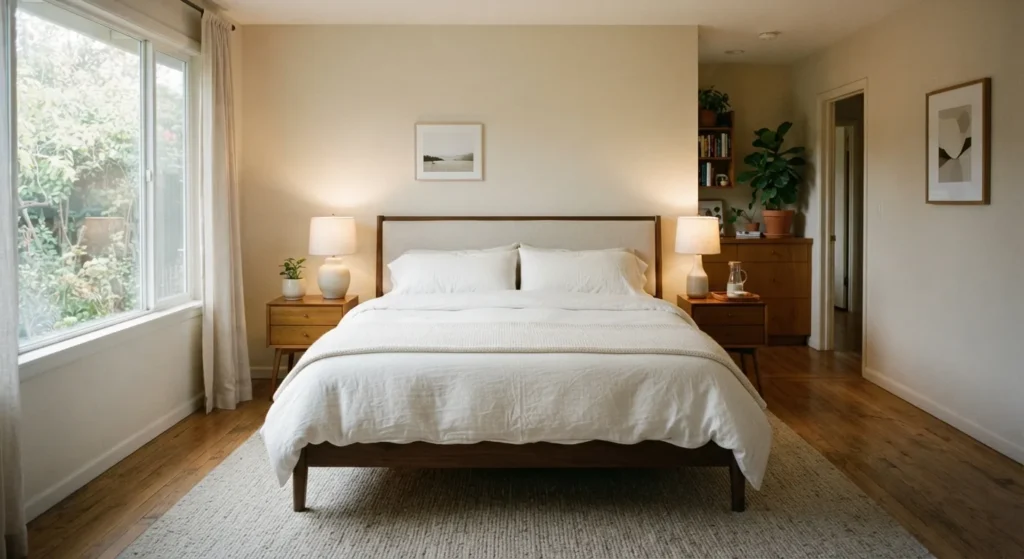
The queen is the most common size for couples in the US. Each person gets 30 inches of width, and the 80-inch length suits most adults. It fits well in a typical bedroom.
King
A king is 16 inches wider than a queen, so each partner gets 38 inches, the same as a twin bed. That extra space can help when one partner moves a lot. A 1994 study of 46 couples found that people moved more in their sleep when sharing a bed, and about a third of movements happened at the same time as their partner’s. A wider bed will not stop that completely, but it reduces how much you feel each other move.
California king
The California king is 4 inches longer and 4 inches narrower than a standard king. Its total area is slightly smaller. It is the best choice if you or your partner are about 6 feet 2 inches or taller. Bedding for it is harder to find and often costs more.
Will it fit? A simple check
Interior designers often suggest about 30 inches of walking space around a bed, and about 24 inches as a practical minimum.
Try this before you buy
- Measure the room wall to wall, and note where doors, closets and windows are.
- Subtract the bed width from the room width, and divide by two for the space on each side.
- Take away the width of your nightstands (usually 18 to 24 inches each) and see what walking space is left.
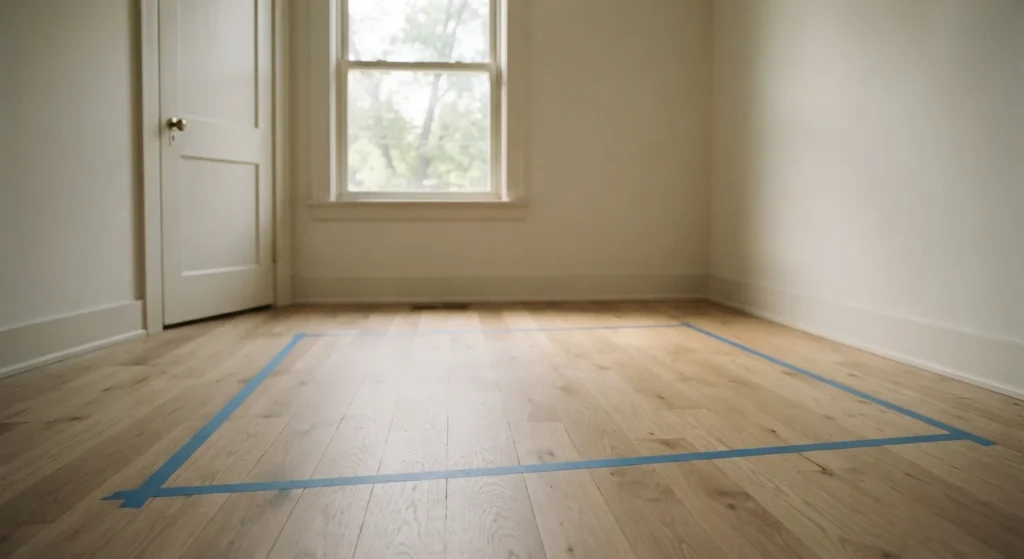
- Mark the bed on the floor with painter’s tape and live with it for a day. Open every door and drawer.
- Measure the route in: front door, hallways, stairs and corners. Foundations and box springs do not bend; mattresses partly do.
Example: a 12 x 12 foot room
- Queen: 144 − 60 = 84 inches left, or 42 inches on each side. Comfortable, even with nightstands.
- King: 144 − 76 = 68 inches left, or 34 inches on each side. With 20-inch nightstands, about 14 inches remain beside each. That is tight, but it can work if the bed is not in a walkway.
Other things to think about
- Bedding cost: king and California king sheets usually cost more than queen, and California king has fewer choices.
- Ceiling height: a tall headboard in a room with 8-foot ceilings can make the room feel smaller.
- Moving home: a king base is harder to move. Many people choose a split foundation for this reason.
- Temperature: two people close together in a smaller bed share more body heat. If one of you sleeps hot, extra width helps. Our guide to cooling sheet fabrics can help too.
- Back pain: size matters less than support. See our guide to the best position for lower back pain and what to do if your mattress is too firm for side sleeping.
Myth vs fact
Myth: A California king is the biggest bed. Fact: It is longer, but narrower. A standard king has slightly more total area: 6,080 square inches against 6,048.
Frequently Asked Questions
What size bed should a couple get?
A queen is the usual minimum for two adults. If you have the room and either of you moves a lot, sleeps hot or is tall, a king or California king gives more comfort.
Can a king bed fit in a 10 x 12 foot room?
It can physically fit, but there will be little space for nightstands or walking. A queen usually works better in a room that size.
What size bed is best for a tall person?
Choose an 80-inch bed (twin XL, queen or king) if you are around 6 feet tall, and a California king (84 inches) if you are 6 feet 2 inches or taller.
How much space should be around a bed?
About 30 inches is comfortable, and about 24 inches is a practical minimum. Allow more where doors or drawers need to open.
Is a full the same as a double?
Yes. In the US, “full” and “double” are two names for the same 54 x 75 inch size.
Are sizes the same in other countries?
No. UK and European sizes are different, and a UK “king” is closer to a US queen. Always check the measurements in inches or centimetres, not just the name.
Conclusion
For most couples, a queen is the practical choice, and a king is worth it if you have a room of 12 x 12 feet or more. For tall sleepers, look at length before width. Whatever you choose, measure the room, the furniture and the route in before you buy, and mark the bed out on the floor first.
Sources
- Pankhurst FP, Horne JA. The influence of bed partners on movement during sleep. Sleep, 1994.
- Okamoto-Mizuno K, Mizuno K. Effects of thermal environment on sleep and circadian rhythm. J Physiol Anthropol, 2012.
- Standard US mattress dimensions as published by mattress makers and retailers, for example Amerisleep’s mattress size chart.