

Narcolepsy is a long-term brain condition that makes it hard to stay awake during the day and hard to sleep well at night. It affects roughly 1 in 2,000 people, but it is often missed for years, because extreme sleepiness is easy to blame on stress, depression or a busy life. This guide explains the symptoms, the two types, how doctors test for it, and how it is treated.
In this article
The short answer
- The main symptom is strong daytime sleepiness, even after a full night in bed.
- Type 1 narcolepsy includes cataplexy: sudden muscle weakness set off by laughing or other strong feelings.
- Type 1 is caused by the loss of brain cells that make orexin (also called hypocretin), a chemical that keeps you awake.
- Diagnosis needs an overnight sleep study followed by a daytime nap test.
- There is no cure yet, but medicines and planned naps control symptoms well for many people.
The main symptoms
Not everyone has every symptom, and they can appear years apart. The most common are:

- Excessive daytime sleepiness. Everyone with narcolepsy has this. It can feel like a constant fog, or like sudden “sleep attacks” in the middle of eating, talking or working. A short nap often helps for a while, but the sleepiness comes back.
- Cataplexy. A sudden loss of muscle tone while awake, usually set off by laughter, surprise or anger. It can be mild, like a drooping face or weak knees, or strong enough to make someone fall. The person stays aware throughout.
- Sleep paralysis. Being unable to move or speak for a few seconds or minutes while falling asleep or waking up.
- Vivid dream-like images when falling asleep (hypnagogic) or waking up (hypnopompic). They can be frightening.
- Broken night sleep. Many people with narcolepsy wake often during the night.
Some people also do “automatic behaviours”: carrying on with a task, such as writing or driving, while partly asleep, with little memory of it later.
Type 1 and type 2
Narcolepsy type 1
Type 1 means daytime sleepiness plus cataplexy, or a very low level of orexin in the spinal fluid. Orexin helps keep you awake and keeps dream (REM) sleep in its place. In type 1, the small group of brain cells that make orexin is lost.
Narcolepsy type 2
Type 2 has daytime sleepiness and the same sleep test results, but no cataplexy, and orexin levels are usually normal. Its cause is less clear, and symptoms are often milder. A small number of people with type 2 later develop cataplexy.
What causes narcolepsy
For type 1, most researchers think the immune system attacks the orexin-making cells by mistake. The evidence for this includes:
- Most people with type 1 carry a gene variant called HLA-DQB1*06:02. It is also common in people without narcolepsy, so having it does not mean you will get it.
- Cases rose after the 2009 H1N1 flu pandemic, and after one H1N1 vaccine used in Europe, which suggests an infection can act as a trigger.
Narcolepsy usually starts in the teens or twenties, but it can begin at any age. It is rarely passed straight from parent to child: the risk for a close relative is higher than average, but still low. In rare cases, narcolepsy follows damage to the brain from a tumour, injury or another illness.
How narcolepsy is diagnosed
A sleep specialist will ask about your sleep and symptoms, and may ask you to keep a sleep diary for a week or two. The main tests are:
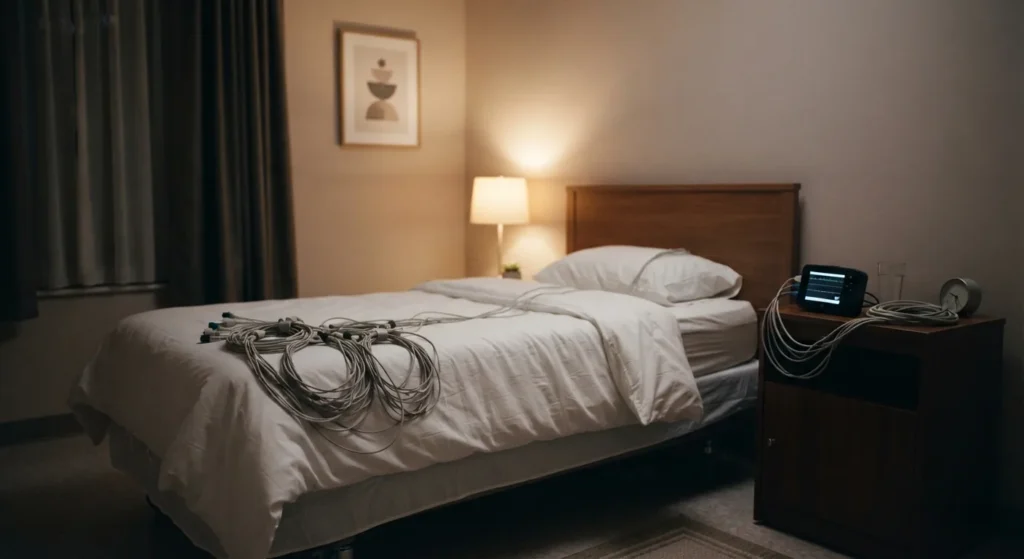
- Overnight sleep study (polysomnography). This records brain waves, breathing, eye movements and muscle activity. It checks for other causes, such as sleep apnea, and makes sure you slept enough the night before the next test.
- Multiple Sleep Latency Test (MSLT). The next day, you get 4 or 5 chances to nap, two hours apart. People with narcolepsy usually fall asleep in 8 minutes or less on average, and go into REM sleep within 15 minutes of falling asleep in at least two of the naps.
- Orexin test. Sometimes doctors measure orexin in spinal fluid, taken with a lumbar puncture. This is used mainly when other results are unclear.
Some medicines, especially antidepressants, can change the results. Your doctor may ask you to stop them for a while before testing, but only under medical advice.
Myth vs fact
Myth: People with narcolepsy just fall asleep suddenly all the time. Fact: Sudden sleep attacks happen, but most people describe constant sleepiness, poor concentration and broken nights. That is one reason diagnosis is often delayed: a 2014 review found average delays of up to 15 years.
Treatment
There is no cure yet, but treatment can bring symptoms under good control. The American Academy of Sleep Medicine’s 2021 guideline lists several medicines with strong evidence for adults with narcolepsy:
- Wake-promoting medicines such as modafinil, solriamfetol and pitolisant, for daytime sleepiness. Pitolisant can also help cataplexy.
- Oxybates (sodium oxybate and lower-sodium versions), taken at night. They improve daytime sleepiness, broken sleep and cataplexy.
- Stimulants such as methylphenidate or amphetamines, used when other options do not work well enough.
- Some antidepressants, used for cataplexy, sleep paralysis and vivid dreams.
Every medicine has side effects and some can interact with others, so treatment is always planned with a specialist. New medicines that act like orexin are being developed and have shown promising results in trials.
Living with narcolepsy
Tips that help day to day
- Planned naps. One or two short naps of 15 to 20 minutes at set times can reduce sleepiness.
- A regular schedule. Same bedtime and wake-up time every day.
- Avoid alcohol and heavy meals during the day, as both can make sleepiness worse.
- Tell people. Workplaces and schools can often adjust hours or allow nap breaks. In the US, narcolepsy can qualify for reasonable accommodations at work.
- Find support. Patient groups can help with practical advice and with feeling less alone.
Driving safety
Falling asleep at the wheel is a real danger. Do not drive if you feel sleepy. Talk to your doctor about whether it is safe for you to drive, and check the rules where you live. Many places require you to report the condition to the licensing authority.
Narcolepsy and other conditions
Several conditions can look like narcolepsy, and some can exist alongside it:
- Sleep apnea, which causes daytime sleepiness from broken breathing at night. Loud snoring is a key sign. If you snore, our 1-minute snore quiz checks for the warning signs of sleep apnea.
- Idiopathic hypersomnia, which also causes strong daytime sleepiness, but without cataplexy. Naps are usually long and not refreshing.
- Not getting enough sleep, which is far more common than narcolepsy.
- Depression and ADHD, which share symptoms such as tiredness and poor focus.
When to see a doctor
See a doctor if you feel very sleepy in the day even after 7 to 9 hours in bed, if you fall asleep without meaning to, or if you have muscle weakness when you laugh or feel strong emotion. Ask to be referred to a sleep specialist.
Frequently Asked Questions
Can narcolepsy be cured?
Not yet. But medicines, planned naps and a steady routine allow many people with narcolepsy to work, study and live full lives.
Is narcolepsy a form of epilepsy?
No. Both affect the brain, but they are different conditions. Cataplexy can be mistaken for a seizure, but the person stays conscious during it.
Is narcolepsy inherited?
Rarely in a direct way. A close relative of someone with narcolepsy has a higher risk than average, but most still never develop it.
Can children have narcolepsy?
Yes. It often starts in childhood or the teenage years. In children it can look like behaviour problems, poor school work or sudden weight gain, so it is easy to miss.
How common is narcolepsy?
Estimates suggest about 1 in 2,000 people, and many of them have not been diagnosed.
Conclusion
Narcolepsy is more than being tired. It is a real brain condition with clear tests and effective treatments. If you or someone you know is very sleepy in the day despite enough time in bed, especially with muscle weakness when laughing, it is worth seeing a sleep specialist. An earlier diagnosis can save years of struggling.
Sources
- Bassetti CLA, et al. Narcolepsy: clinical spectrum, aetiopathophysiology, diagnosis and treatment. Nat Rev Neurol, 2019.
- Scammell TE. Narcolepsy. N Engl J Med, 2015.
- Maski K, et al. Treatment of central disorders of hypersomnolence: an AASM clinical practice guideline. J Clin Sleep Med, 2021.
- Thorpy MJ, Krieger AC. Delayed diagnosis of narcolepsy: characterization and impact. Sleep Med, 2014.
- Scheer D, et al. Prevalence and incidence of narcolepsy in a US health care claims database, 2008-2010. Sleep, 2019.
- Miyagawa T, Tokunaga K. Genetics of narcolepsy. Hum Genome Var, 2019.
- National Institute of Neurological Disorders and Stroke. Narcolepsy.
This article is general information, not medical advice. See our medical disclaimer.