

Melatonin pills are easy to buy, but many people would rather start with food, drinks and habits. Some foods do contain melatonin or nutrients linked to sleep, and a few have been tested in small studies. The effects are modest, so it helps to know which ones have real evidence behind them and which ones are mostly hope.
In this article
The short answer
- Tart cherry juice and kiwifruit have the best food evidence, from small studies.
- Chamomile tea may improve sleep quality a little. Valerian results are mixed.
- Magnesium may help some older adults, but the research is thin.
- Light, a regular schedule and exercise change your own melatonin far more than any food.
- Melatonin supplements often do not contain the dose on the label.
What melatonin does
Melatonin is a hormone your brain makes in the evening, when light fades. It tells your body that night has started. It does not knock you out like a sleeping pill. It works more like a signal for your body clock.
Because of that, the biggest things that change your own melatonin are light and timing, not diet. Bright light in the evening lowers it. A regular bedtime and morning daylight help it rise at the right time.
Why some people look for alternatives
Melatonin supplements are sold as dietary supplements in the US, so they are not checked like medicines. When Canadian researchers tested 31 melatonin products in 2017, the real amount ranged from 83% less to 478% more than the label said. More than 7 in 10 products were not within 10% of the label. Some also contained serotonin, which was not listed.
Common side effects of melatonin are headache, dizziness, nausea and next-day drowsiness. That is one reason some people want to try other options first.
Foods with some evidence
Tart cherry juice
Tart (Montmorency) cherries contain a small amount of melatonin. In a 2012 study, 20 healthy adults drank tart cherry juice concentrate or a placebo drink for 7 days. With the cherry juice, their melatonin levels were higher, and they slept a little longer and more efficiently. It was a small, short study, but it was placebo-controlled.
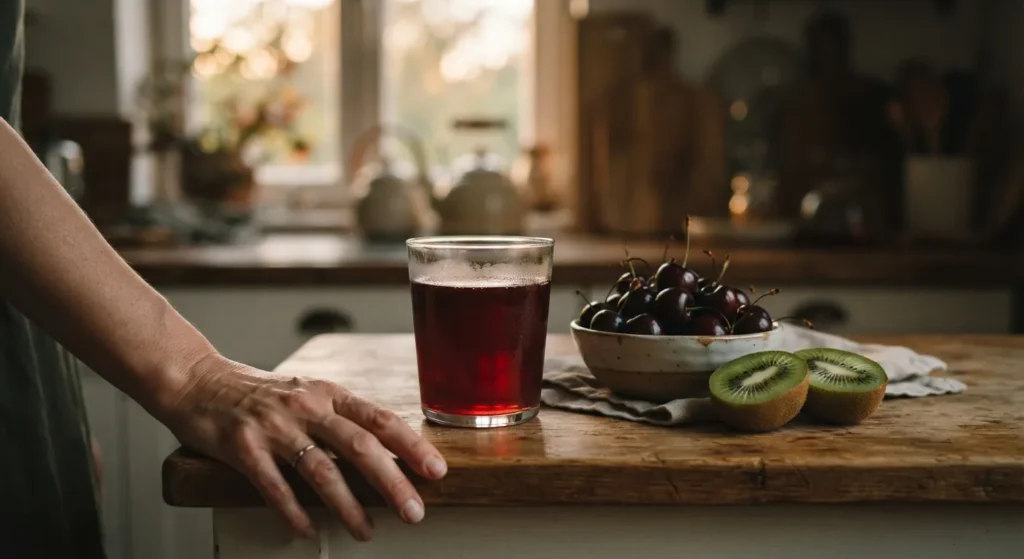
Tart cherry juice is also the main ingredient in the sleepy girl mocktail. Watch the sugar: many juices have a lot of it.
Kiwifruit
In a 2011 study from Taiwan, 24 adults with sleep problems ate two kiwifruits an hour before bed for 4 weeks. They fell asleep faster and slept longer than before. The study had no control group, so some of the effect may simply come from having an evening routine.
Nuts, fish and dairy
Walnuts, almonds, oily fish and milk are often listed as sleep foods because they contain melatonin, tryptophan or omega-3 fats. These are healthy foods, but there is little direct evidence that eating them at night improves sleep. Think of them as part of a good diet, not a treatment.
Herbal teas and herbs
Chamomile
A 2019 review of trials found that chamomile improved sleep quality compared with placebo. The same review found little evidence that it helps insomnia itself. A warm, caffeine-free drink is also a good signal that the day is ending.

Valerian
Valerian root has been studied for decades, and the results are mixed. A 2006 review found a possible small benefit, but warned that the studies were of varying quality. Valerian can cause drowsiness the next day and should not be mixed with alcohol or sleep medicine.
Lavender
Several reviews of small studies suggest that breathing in lavender oil may help people feel more relaxed and rate their sleep a little better. The studies are small and hard to blind, because everyone can smell the lavender.
Supplements that are not melatonin
Magnesium: in a 2012 trial, 46 older adults with insomnia took magnesium or a placebo for 8 weeks. The magnesium group reported better sleep and had higher melatonin levels. It was one small trial in older people, many of whom may have had low magnesium.
Glycine and L-theanine: both have a few small studies behind them, and the evidence is still early.
Ask a doctor or pharmacist before you take any supplement, especially if you take other medicines, are pregnant, or have kidney disease.
Habits that change your own melatonin
Try this tonight
- Dim the lights for the last hour or two before bed, and use warm-coloured bulbs. See our guide to evening light bulbs and sleep.
- Put the phone away or turn the brightness right down.
- Get daylight in the morning, ideally within an hour of waking.
- Keep the same wake-up time every day, weekends included.
- Move during the day. A 2015 review of 66 studies found that regular exercise improves sleep quality and helps people fall asleep a little faster.
Myth vs fact
Myth: Eating melatonin-rich food at night works like a melatonin pill. Fact: Food contains far less melatonin than a typical pill. Its effect, if any, is small. Light and timing matter much more.
When to see a doctor
If you have trouble sleeping three or more nights a week for three months, that is chronic insomnia. The first treatment doctors recommend is cognitive behavioural therapy for insomnia (CBT-I), not pills or supplements. Also see a doctor if you snore loudly, stop breathing in your sleep, or feel very sleepy during the day.
Frequently Asked Questions
Are natural melatonin alternatives as effective as melatonin?
For jet lag and a late body clock, melatonin has better evidence than any food or herb. For general sleep, good habits and CBT-I help more people than either.
How much tart cherry juice should I drink?
Studies have used about 30 ml of concentrate, or around one cup (240 ml) of juice, once or twice a day. Choose a juice without added sugar, and remember it still has natural sugar.
Can I combine chamomile tea and magnesium?
For most healthy adults this is fine, but ask a pharmacist if you take other medicines. Avoid combining valerian with alcohol or sleep medicine.
How long until I notice a difference?
Studies of foods and supplements usually ran for 1 to 8 weeks. Changes in habits often take two to four weeks to show. If nothing helps after a month, talk to a doctor.
Conclusion
A few foods and herbs, mainly tart cherry juice, kiwifruit and chamomile, have small studies suggesting a modest benefit. They are safe for most people and can be part of a calm evening routine. But the strongest natural way to support your own melatonin is free: dim evenings, bright mornings and a steady wake-up time.
Sources
- Erland LA, Saxena PK. Melatonin natural health products and supplements: presence of serotonin and significant variability of melatonin content. J Clin Sleep Med, 2017.
- Howatson G, et al. Effect of tart cherry juice on melatonin levels and enhanced sleep quality. Eur J Nutr, 2012.
- Lin HH, et al. Effect of kiwifruit consumption on sleep quality in adults with sleep problems. Asia Pac J Clin Nutr, 2011.
- Hieu TH, et al. Therapeutic efficacy and safety of chamomile for anxiety, insomnia and sleep quality: a systematic review and meta-analysis. Phytother Res, 2019.
- Bent S, et al. Valerian for sleep: a systematic review and meta-analysis. Am J Med, 2006.
- Abbasi B, et al. The effect of magnesium supplementation on primary insomnia in elderly. J Res Med Sci, 2012.
- Kredlow MA, et al. The effects of physical activity on sleep: a meta-analytic review. J Behav Med, 2015.
- National Center for Complementary and Integrative Health. Melatonin: What You Need To Know.
This article is general information, not medical advice. See our medical disclaimer.



[…] L-tryptophan intake 3-4 hours before bed, combined with a healthy gut microbiome, optimizes natural melatonin […]
[…] Foods and drinks that may help you wind down […]