
Earplugs for a snoring partner help both people in the bed, not just the one wearing them. In a two-month study of couples, partners who wore earplugs were less bothered by the snoring and less sleepy in the day, and the snorers’ own scores improved too. They aren’t a mute button, though, and they do nothing for the snore itself.
I didn’t test these products myself. Instead, I read the evidence behind them, including a study published in the Journal of Laryngology & Otology which looked at how custom-moulded earplugs affected couples dealing with disruptive snoring, plus the makers’ details and buyer reviews. So you get what the research shows, not a sales pitch.
In this article
- Do earplugs actually work for snoring?
- Choosing the right material: Foam, silicone, and wax
- The safety trade-off: What you might miss
- Ear health and the hygiene problem
- The “Seal Break”: Why plugs stop working mid-sleep
- The partner dynamic: How to introduce earplugs
- The Promeed Silk Mask: A combined approach
- Comparing your options
- Frequently Asked Questions
- My verdict
The short answer
- For tonight: well-fitted foam earplugs plus a steady background sound such as a fan.
- Best for maximum silence: Custom-moulded earplugs provide the best seal and comfort for long-term nightly use.
- Best for sensitive ears: Silicone putty earplugs are better than foam because they seal the outer ear rather than pressing into the canal.
- Best for budget: Soft foam plugs usually block the most sound for the lowest price.
- For the long run: find out why your partner snores. Earplugs help the listener, not the snorer.
Do earplugs actually work for snoring?
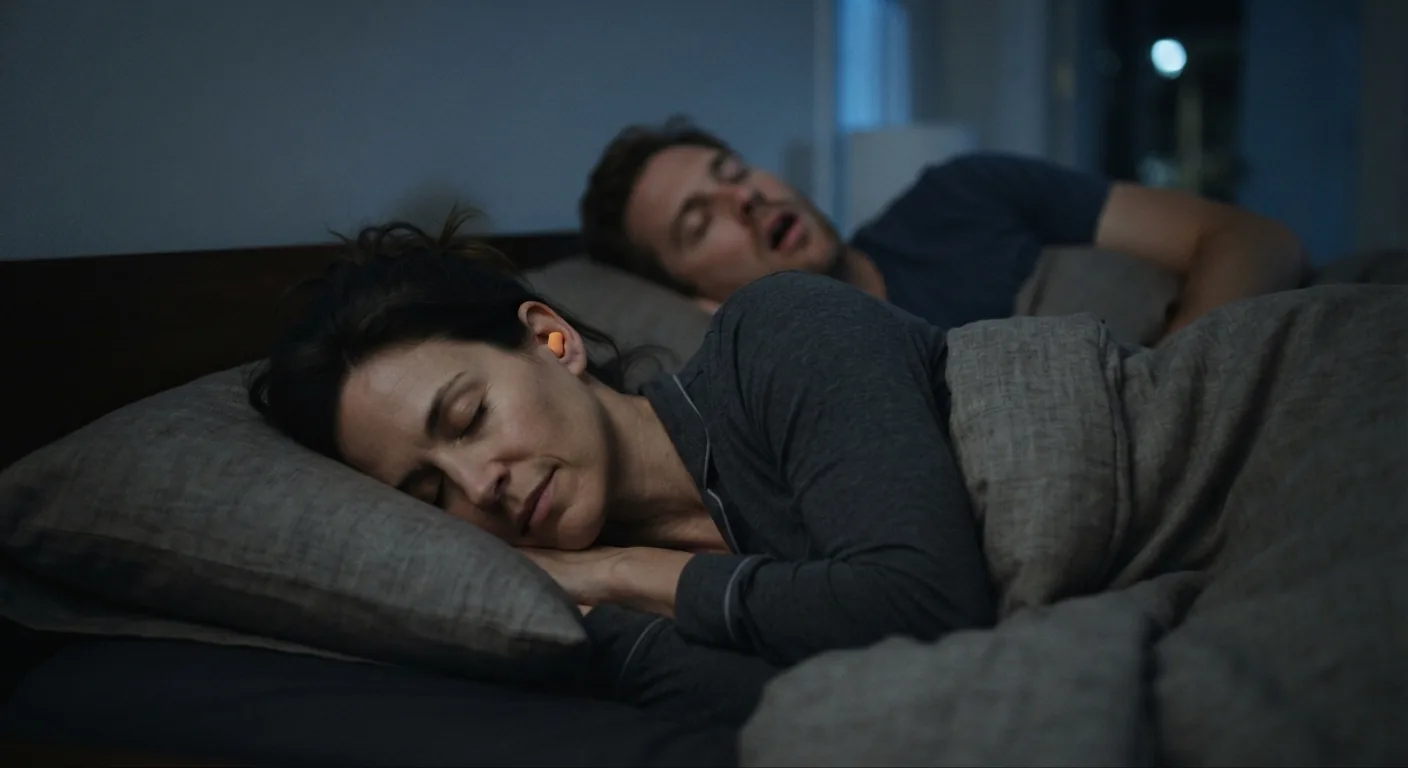
Yes, with one catch: a snore is mostly a low, rumbling sound, and low sounds are the hardest for earplugs to stop.
Earplugs turn high-pitched sounds down more than low ones, and some sound also reaches the inner ear through the bones of the head. That is why a loud snore can still come through, faintly, with good plugs in.
A good seal matters more than anything else. The best evidence comes from a 2006 study from Glasgow: couples dealing with disruptive snoring used custom-moulded earplugs for two months. The partners’ scores for how much the snoring affected them improved, and so did their daytime sleepiness on the Epworth scale. The snorers’ own scores improved as well. The authors call earplugs an effective short-term answer to some of the social effects of snoring, for selected couples.
If you want to get rid of the noise entirely, earplugs alone rarely do the trick. You usually need to pair them with a steady background sound to mask the remaining low-frequency rumble. You can read more about white noise vs brown noise to see which frequency helps you drift off faster.
Choosing the right material: Foam, silicone, and wax

Not all earplugs are built the same. The material determines how they fit, how much they block, and whether they will irritate your ear canal after three nights of use.
Soft foam plugs
These are the standard “roll-and-push” plugs. They usually have the highest NRR (Noise Reduction Rating), which is the number on the pack telling you how many decibels they can block in a laboratory setting. In the real world, you rarely hit that number, but they are still the heavy lifters of noise reduction.
The trade-off is comfort. If you have narrow ear canals, foam can feel like a cork in a bottle. They also require a specific technique to work: you must roll them into a very thin cylinder, pull the top of your ear up and back to open the canal, insert the plug, and hold it with your finger until it expands. If you just push them in, they won’t seal, and you’ll hear every single snore.
Silicone putty
Unlike foam, silicone putty doesn’t go inside the canal. It molds over the opening of the ear. This makes them a better choice for people with sensitive ears or those who find the “pressure” of foam plugs unbearable.
Because they sit flat in the ear opening, some side sleepers find them more comfortable. They usually block a little less sound than a well-fitted foam plug.
Wax earplugs
These are often made of a mix of beeswax and cotton. They are highly moldable and create a very tight seal. The downside? They can be messy, especially in warm weather, and some people find the smell unpleasant.
Custom-moulded plugs
These are made from a medical-grade impression of your own ear. They are the most expensive option, but they solve the “fit” problem entirely. Because they match your anatomy, they provide a consistent seal that doesn’t shift when you move.
Sleep earbuds
These are electronic. Some use Active Noise Cancelling (ANC), which uses microphones to “cancel” incoming sound waves. The trade-off is battery life and the feeling of wearing electronics in your ear all night.
Try this tonight
If you don’t have earplugs yet, try these three steps to improve your odds of sleep:
- Positioning: Encourage your partner to sleep on their side. Many people snore more on their back.
- The “Double-Up”: Use earplugs combined with a fan or a white noise app. The plugs lower the volume; the fan masks the remaining peaks.
- The Ear-Pull: If using foam, remember to pull your earlobe upward and backward before inserting the plug to ensure it actually reaches the canal.
The safety trade-off: What you might miss
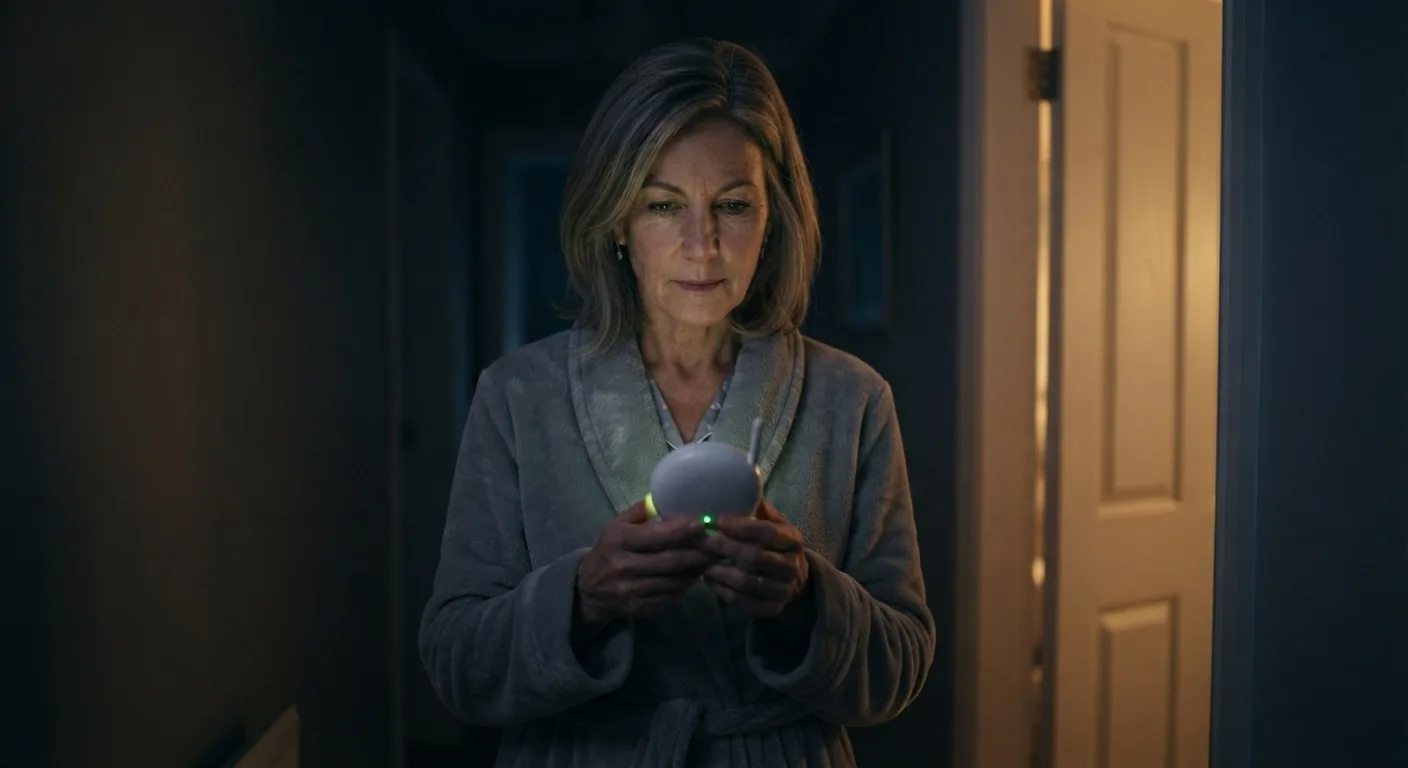
Blocking out a snoring husband or spouse comes with a risk: you are also blocking out everything else. This is the “safety trade-off” that most product guides ignore.
A well-sealed foam plug can make a smoke alarm, a carbon monoxide alarm or a baby monitor much harder to hear.
Test it before you rely on it: put your earplugs in, lie down, and have someone press the test button on the smoke alarm or make a noise on the baby monitor. If you can’t hear it clearly, keep one ear free, use lighter plugs, or move the alarm or monitor closer to the bed.
Ear health and the hygiene problem

Your ears clean themselves by slowly moving wax outward. An earplug pushed in every night can push some of that wax back in.
In some people that builds up into a wax blockage, with muffled hearing and a full feeling in the ear. Reusing dirty foam plugs also puts skin oils and dirt back into the ear canal night after night.
If you use foam, follow the pack and replace them when they get dirty or stop expanding. Wash silicone or custom plugs with mild soap and water, and let them dry completely before you use them again.
When to see a doctor
Stop using earplugs and book an appointment if you experience:
- Fluid or discharge leaking from the ear.
- A persistent itch or redness in the ear canal.
- Sharp pain when inserting or removing the plug.
- Muffled hearing that doesn’t go away after the plug is removed.
The “Seal Break”: Why plugs stop working mid-sleep
You’ve probably had this experience: you fall asleep in blissful silence, only to wake up at 3:00 AM with one earplug hanging halfway out of your ear and your partner snoring at full volume.
This is the “seal break.” When you toss and turn, the friction between your ear and the pillow pushes the plug out. Because foam and silicone rely on a perfect airtight seal to block low-frequency sound, even a millimeter of movement can let the noise flood back in.
For side sleepers, this is a constant battle. This is why custom-moulded plugs or silicone putty (which grips the outer ear) often perform better for people who move in their sleep. They are less likely to be “levered” out by a pillow.
The partner dynamic: How to introduce earplugs

Telling a partner you need earplugs can feel like a critique of their body. It can lead to feelings of guilt for the snorer or resentment for the sleeper.
The key is to frame it as a tool for your sleep needs, not a punishment for their noise. Instead of saying, “Your snoring is driving me crazy,” try, “I’ve realized I’m a very light sleeper, and these earplugs help me stay asleep so I’m not a zombie tomorrow.”
Once you’ve handled the immediate noise, you can look at the cause. Earplugs help the listener; they do nothing for the snorer’s airway. If you want to fix the root cause, you can take this free snore quiz to figure out what type of snoring your partner has.
A ten-second check helps too. Ask your partner to stick their tongue out, hold it gently between their teeth and try to snore. If the sound is much weaker, the tongue is part of the problem. See which fix matches the snore.
For tongue snoring (the tongue falls back into the throat), read our Good Morning Snore Solution review. If the issue is nasal, nasal dilators might be a better bet. Addressing the cause is the only way to eventually stop wearing the plugs.
The Promeed Silk Mask: A combined approach
For many, snoring isn’t the only enemy. Light leakage from a partner’s phone or a gap in the curtains can be just as disruptive. This is where a combined solution makes sense.
The Promeed 3D contour eye mask is a cupped mulberry silk mask that sits around the eyes instead of pressing on them, and it comes with two earplugs in the box. Promeed doesn’t publish a noise rating for those earplugs, so if noise is your main problem, pick earplugs with a rating on the pack. Read our contoured eye mask review for the price, the 60-day returns and who it suits.
It suits people who need the room dark as well as quiet. It is not for anyone who dislikes wearing something on the face. For the rest of the night-time plan, from earplug fit to a spare bed on bad nights, see our guide to sleeping with someone who snores.
Comparing your options
| Type | Noise Block (NRR) | Comfort | Best For… | Main Trade-off |
|---|---|---|---|---|
| Soft Foam | Very High | Low to Medium | Budget/Max silence | Pushes wax deep |
| Silicone Putty | Medium | High | Sensitive canals | Less noise reduction |
| Wax | Medium/High | Medium | Tight seal | Can be messy |
| Custom-Moulded | High | Very High | Long-term use | Expensive |
| Sleep Buds | Variable (ANC) | Medium | Low-frequency rumble | Battery/Electronics |
Before you buy: a quick checklist
- Check your ear size: If you have tiny canals, avoid standard foam; look for “small” or “slim” versions.
- Evaluate your safety: Do you need to hear a baby or a smoke alarm? If yes, avoid high-NRR foam.
- Consider your sleep position: If you are a side sleeper, prioritize silicone putty or custom plugs to avoid the “seal break.”
- Plan for hygiene: If you buy foam, buy them in bulk because they should be replaced frequently.
When the snorer should see a doctor
Earplugs only treat the symptoms (the noise), not the cause. Your partner should see a doctor if they:
- Gasp or choke during sleep.
- Stop breathing for several seconds (observed by you).
- Are excessively sleepy during the day despite a full night’s sleep.
- Have high blood pressure or other cardiovascular issues.
These can be signs of obstructive sleep apnea, which earplugs cannot help and which requires medical treatment.
Frequently Asked Questions
How effective are earplugs for snoring?
They help many people. Well-fitted plugs turn a snore down a lot but rarely silence it, because low sounds get through more easily. Pairing them with a steady background sound helps cover what is left.
Why choose earplugs over other noise-canceling options?
Earplugs are portable, generally cheaper than sound-proofing a room, and provide a physical barrier that doesn’t require a power outlet. They are the fastest way to get immediate relief without changing your bedroom furniture.
How often should I replace foam earplugs used for snoring?
Follow the pack: some foam plugs are made for one use, others for a few nights. Replace them as soon as they look dirty or stop expanding fully.
Are silicone putty earplugs better than foam for sensitive ears?
Yes, because they do not enter the ear canal. They create a seal over the opening, which eliminates the internal pressure and irritation often caused by expanding foam plugs.
Why do I still hear the snore even with “high NRR” plugs?
Partly because some sound travels through the bones of the head to the inner ear, so no plug can block all of it, and partly because low, rumbling sounds pass through earplugs more easily than high ones. A background sound helps cover the rest.
My verdict
For tonight, well-fitted soft foam plugs and a fan or white noise are the cheapest way to sleep through a snoring partner. If you sleep on your side or find foam uncomfortable, try silicone putty or custom-moulded plugs. If light wakes you too, add a contoured eye mask. And because earplugs only help the listener, the real fix is finding out why your partner snores.
Want the snoring itself to stop?
Find out why your partner snores in one minute, then see the fix that matches.
Take the free snore quiz →