
Some snoring starts in the nose. When your nostrils are narrow, or they close up a little every time you breathe in, you pull air harder or switch to breathing through your mouth. Both make the soft tissue in your throat vibrate more. A nasal dilator holds the nostrils open so air can flow in easily.
I looked at how nasal dilators work, what the research says, and one reusable dilator in detail: the Airflow Clip from SnoreLessNow. I have not used it myself. The facts below come from the maker’s published details, a large research review, and what buyers report.
The short answer
- A nasal dilator helps when your nose is part of the problem: nostrils that close when you breathe in, or a stuffy nose at night.
- It will not fix snoring that comes from your tongue or throat, and it does not treat sleep apnea. A 2016 review of 14 studies found that dilators improve breathing through the nose but not sleep apnea.
- The Airflow Clip is a reusable dilator that sits just inside the nose. The trial pack costs $17.99, includes small, medium and large sizes, and one clip lasts up to 90 days.
In this article
How to tell if your nose is part of your snoring
You can check this in ten seconds. Close one nostril with a finger. Keep your mouth shut and breathe in through the other nostril. Then try the other side.

- The open nostril closes up or feels tight. The soft side of your nose is collapsing as you breathe in. This is the case where a dilator helps most.
- Your nose is blocked most nights anyway. A dilator can make breathing easier, but it is also worth finding out why your nose is blocked, for example allergies.
- Air flows in easily on both sides. Your nose is probably not the main cause. Your tongue or your sleep position is more likely.
Two more signs point to the nose: waking up with a dry mouth, and snoring that gets worse when you have a cold. To check all the common causes at once, take our 1-minute snore quiz.
Nasal dilators vs nasal strips
There are two kinds of nasal dilator. Internal dilators, like the Airflow Clip, sit just inside the nostrils and push the walls gently outward. External dilators are the adhesive strips you stick across the outside of your nose.
| Internal dilator (Airflow Clip) | Nasal strip | |
|---|---|---|
| Where it goes | Just inside the nostrils | On the outside of the nose |
| How it works | Pushes the nostril walls gently outward | A springy band lifts the sides of the nose |
| Reusable | Yes, up to 90 days per clip | No, a new strip every night |
| On your skin | No glue | Adhesive, which can irritate skin |
| Getting used to it | Feels odd for the first nights | Easy to start with |
Internal dilators suit people who use one every night, because a single clip replaces months of strips. Strips are fine for the odd night with a cold.
What the research says
The best overview is a 2016 review in Pulmonary Medicine by Camacho and colleagues at Stanford. They pooled 14 studies of internal dilators and nasal strips.
- Dilators clearly improved breathing through the nose.
- They did not improve sleep apnea. In 147 patients, breathing pauses went from 28.7 to 27.4 per hour, which is no real change.
- Internal dilators did slightly better than strips, with about 5 fewer full breathing stops per hour.
So a dilator is a tool for nose-related snoring and easier breathing, not a treatment for sleep apnea. SnoreLessNow says the Airflow Clip “increases airflow by an impressive 40%”. That is the maker’s own figure, and I could not find a published study behind it.
The Airflow Clip in detail
These details are from the SnoreLessNow product page, checked on 28 September 2026:
- Price: $17.99 for the trial pack with small, medium and large sizes. Buying two saves $5.
- Material: BPA-free. The maker calls the design Swiss-engineered.
- How long it lasts: up to 90 days per clip.
- Cleaning: wash it with warm water and mild soap after each use, then let it air dry.
- Reviews: 4.8 out of 5 from 313 reviews on the maker’s site.
- Shipping: free in the US on orders over $40.
- Guarantee: the page mentions both a 30-day money-back guarantee and a 120-night guarantee with a 14-night adjustment period. Check which one applies at checkout.
The maker also calls it “FDA-registered”. That means the company is listed with the FDA. It is not the same as FDA clearance, which some anti-snoring mouthpieces have.
How to get used to a nasal dilator
- Start with the trial pack. The right size stays in place without pressing hard. If it hurts, try the next size down.
- Put it in just before bed. It sits just inside the nostrils, not deep in the nose.
- Give it a week or two. Most people notice it for the first few nights, and the maker builds a 14-night adjustment period into its guarantee.
- Clean it every morning and replace it after 90 days.
Quick checklist: is it right for you?
A good fit if:
- Your nostril closes up or feels tight when you breathe in.
- Your nose often feels blocked at night, or you wake with a dry mouth.
- Nasal strips helped you, but you are tired of the glue and the cost.
Look at something else if:
- Air flows freely through both sides of your nose.
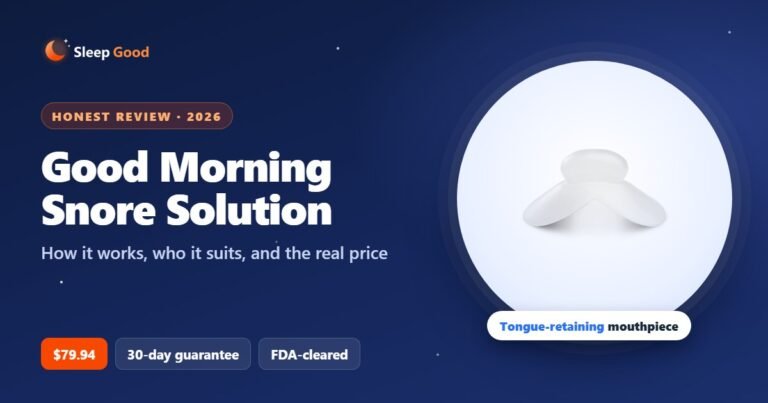
- Your snoring gets much quieter when you hold your tongue forward. A tongue device such as the Good Morning Snore Solution targets that.
- You snore mostly on your back. Read our anti-snore pillow review.
- You have a badly bent septum or nasal polyps. An ear, nose and throat doctor can tell you what will help.
When to see a doctor
If someone has seen you stop breathing, choke or gasp in your sleep, or you feel very sleepy in the day even after a full night, get checked for sleep apnea. A dilator can make breathing easier, but it does not treat sleep apnea. See a doctor too if your nose is blocked most of the time, or if a dilator causes pain or nosebleeds.
Frequently asked questions
Do nasal dilators work for snoring?
They work when the nose is part of the problem, for example nostrils that close when you breathe in. Research shows they improve breathing through the nose. They do not help snoring that comes from the tongue or throat.
Are nasal dilators safe to use every night?
For most adults, yes. Keep the dilator clean, use the right size, and stop if it causes pain, sores or bleeding.
Nasal dilator or nasal strips: which is better?
Both open the nose. An internal dilator is reusable and has no glue, so it suits nightly use. Strips are easier to start with and fine for the odd night.
How long does a reusable nasal dilator last?
The Airflow Clip lasts up to 90 days, according to the maker. Replace it sooner if it cracks or loses its shape.
Can a nasal dilator help sleep apnea?
Not in a meaningful way. The 2016 research review found no real change in sleep apnea with nasal dilators. If you might have sleep apnea, see a doctor.
Can I use a nasal dilator with mouth tape?
Mouth tape only makes sense if you can breathe freely through your nose. A dilator can help with that, but never tape your mouth if your nose is still blocked, and talk to a doctor first if you might have sleep apnea.
My verdict
If the nostril check shows your nose closing up, or your nose is stuffy most nights, a nasal dilator is the cheapest and simplest thing to try. The Airflow Clip trial pack lets you find your size for $17.99, and one clip lasts about three months. If your nose is clear, look at the other causes first with our 1-minute snore quiz.
sleepgood.org is reader-supported. When you buy through links on this page, we may earn a commission at no extra cost to you. We have not tested the Airflow Clip ourselves. This review is based on the maker’s published details, the research named above and buyer reviews. Prices checked on 28 September 2026. This article is general information, not medical advice.
Sources: Camacho M, Malu OO, Kram YA, et al. Nasal Dilators (Breathe Right Strips and NoZovent) for Snoring and OSA: A Systematic Review and Meta-Analysis. Pulmonary Medicine, 2016. SnoreLessNow, Airflow Clip Nasal Dilator product page.