
Tongue exercises for snoring can work, and there’s better evidence for them than most people expect. In a randomized trial, three months of daily mouth and throat exercises cut snoring measured in a sleep lab by about half, while the comparison group, who used nasal strips, saw no change. The catch: it takes weeks of daily practice, not a few tries. Not sure your snoring comes from your tongue? The free 1-minute snore quiz helps you find out.
I didn’t test these exercises or products myself. Instead, I read the studies behind them, including that three-month trial of 39 snorers, plus the makers’ details and buyer reviews. So you get what the research shows, not a sales pitch.
In this article
The short answer
- Do they work? Yes, for many snorers, if you do them daily. Trials saw results after 8 weeks to 3 months.
- How long each day: The trials used about 15 to 30 minutes a day.
- For a faster fix: If the tongue is the cause, the Good Morning Snore Solution is our pick while you build up the exercises.
- See a doctor first if you gasp, choke or stop breathing in your sleep, or feel very sleepy during the day.
Why tongue exercises for snoring can work
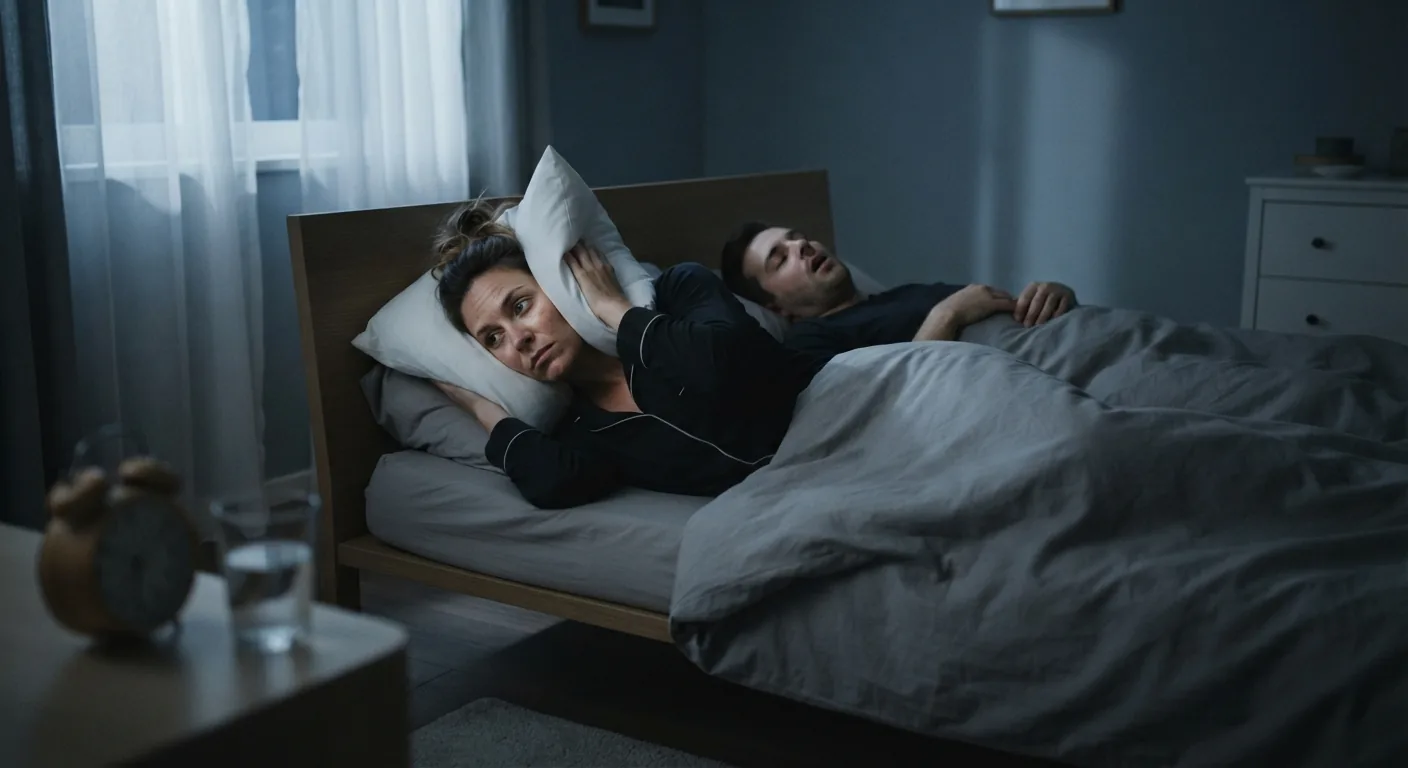
Snoring happens when the soft tissues in your throat relax during sleep and narrow the airway, so they vibrate as air passes. The tongue is a big part of this. When you sleep, especially on your back, it can fall back and narrow the space behind it.
Myofunctional therapy, physical therapy for the mouth and throat, trains the tongue, the soft palate and the throat walls so they hold their shape better. It’s the same idea as physiotherapy for a weak knee: regular, specific exercise rather than a one-off fix.
Try the 10-second tongue check
Stick your tongue out, hold it gently between your teeth and try to snore. If the sound is much weaker, your tongue is part of the problem. See which fix matches your snore.
What the studies found
This isn’t just a wellness trend. Several trials have tested mouth and throat exercises:
- Snoring, measured in a sleep lab: In a 2015 trial in Chest, 39 snorers did daily exercises or used nasal strips with breathing exercises for three months. The exercise group’s loud snores fell from about 100 to about 48 an hour; the other group didn’t change.
- Snoring and sleep apnea: In a 2009 trial, 31 people with moderate sleep apnea did about 30 minutes of exercises a day for three months. Snoring got quieter and less frequent, daytime sleepiness improved, and their sleep apnea became milder.
- A phone game: In a 2019 trial, snorers played voice-controlled games for 15 minutes a day for 8 weeks. Snores per hour fell by 22%, compared with about 6% in the comparison group.
- All the studies together: A 2018 review of nine studies with 211 adults found snoring got about half as loud, and time spent snoring fell by about a third.
The studies were small, and the people in them practised every day under some supervision. Expect slower results if you skip days.
Source: Ieto et al., Chest, 2015
6 tongue and throat exercises for snoring

These six are based on the kinds of exercises used in the trials above. Do them slowly and gently, sitting upright, breathing through your nose. Start with 5 to 10 of each and build up over a few weeks, aiming for 15 to 30 minutes a day in total.
- Tongue slide: Put the tip of your tongue on the roof of your mouth just behind your top front teeth. Slide it slowly backward along the roof as far as is comfortable, then forward again.
- Tongue press up: Press your whole tongue flat against the roof of your mouth, as if sucking it up there. Hold for a few seconds, then relax.
- Tongue press down: Keep the tip of your tongue touching the back of your lower front teeth and press the back of your tongue down against the floor of your mouth. Hold for a few seconds, then relax.
- The “Ahh” lift: Say “Ahh” in short bursts, then hold it for longer. Watching in a mirror, you’ll see the soft palate and the little uvula at the back rise each time.
- Cheek push: Put a clean finger inside one cheek and press your cheek muscles inward against it. Repeat on the other side.
- Chew and swallow: When you eat, chew on both sides of your mouth, and swallow with your tongue against the roof of your mouth and your teeth together, not pushing forward against your teeth.
The phone-game trial used vowel sounds in a similar way: a long “ee” (as in “see”) pulls the tongue forward, and switching between “ee”, “oo” and “ah” works the tongue back and forth.
Myth vs fact
Myth: A few tongue exercises before bed will stop snoring tonight.
Fact: The trials ran for 8 weeks to 3 months of daily practice. Exercises change how the muscles hold up over time; they don’t work like a device you put in tonight.
Common mistakes to avoid

- Clenching your jaw: Keep your teeth slightly apart and your jaw loose during the tongue presses. A tight jaw tires the wrong muscles, and if you have TMJ and snoring together, it can make jaw pain worse.
- Pushing on your front teeth: The target is the roof of your mouth, not the back of your teeth.
- Holding your breath: Breathe steadily through your nose throughout.
- Doing it in bursts: A long session once a week does less than a short one every day. The trials were daily.
- Stopping too early: Give it at least 8 weeks before you decide.
You’ll also see “mewing”, resting your tongue on the roof of your mouth all day, promoted on social media. Keeping your tongue up and breathing through your nose is a normal part of myofunctional therapy, but there are no trials of mewing itself for snoring.
How to track your progress

You can’t hear yourself snore, so measure it:
- Record a night before you start with a snoring app, then record again every two to four weeks on a similar night (same pillow, no alcohol).
- Ask your partner to rate how loud and how often you snore, from 0 to 10, at the start and every few weeks.
- Notice your days: if you’re still exhausted every afternoon, or your partner hears pauses in your breathing, see a doctor rather than doing more exercises.
Try this tonight
- Do the six exercises once to learn them, slowly, in front of a mirror.
- Record tonight’s snoring with an app, so you have a starting point.
- Set a daily reminder at a time you’ll keep, like after brushing your teeth.
While you build up: a device for tonight
Exercises are free, but slow. If your partner can’t wait two or three months for quieter nights, a device can help in the meantime, and you can keep doing the exercises alongside it.
If the tongue check points to your tongue, a tongue-retaining device holds the tongue forward while you sleep, so it can’t fall back. Unlike most snoring mouthpieces, it doesn’t push your lower jaw forward.
The Good Morning Snore Solution (GMSS)
The Good Morning Snore Solution is an FDA-cleared over-the-counter tongue-retaining device for reducing snoring in adults 18 and over. A soft, clear mouthpiece with a bulb holds the tongue forward with gentle suction. Nothing grips the teeth and the jaw isn’t pushed forward, so it suits people with jaw pain, TMJ problems or dentures. It’s ready to use, with no boiling or fitting, and lasts about a year.
In a small crossover trial by Dort and Brant (Sleep and Breathing, 2008; Dr. Dort designed the device), snoring events fell from 214.7 to 132.9 per hour, about 38% fewer, and 54% of participants wanted to keep using it.
The trade-offs: It needs nose breathing, so if your nose is often blocked, look at nasal dilators or treating the congestion first. Never use it with mouth tape. It’s sold for snoring only; it isn’t a treatment for sleep apnea.
Price: $79.94 for one mouthpiece (Regular or Small), or $139.94 for a two-pack. There’s a 30-day money-back guarantee, counted from delivery, on orders from the official store, and free shipping on orders over $99 (US, Canada, UK, Australia).
When to see a doctor
- You stop breathing or gasp for air during the night.
- You wake up choking.
- You feel very sleepy during the day, even after a full night in bed.
- You have high blood pressure that is hard to control.
Comparing your options
| Option | When it helps | Effort | Best for | Main downside |
|---|---|---|---|---|
| Tongue and throat exercises | After 8 weeks to 3 months | 15 to 30 minutes a day | Long-term muscle tone | Slow; easy to give up |
| Tongue-retaining device (GMSS) | From the first nights, after getting used to it | Wear it to sleep | Tongue-based snoring | Needs nose breathing |
| Jaw-advancing mouthpiece | From the first nights | Wear it to sleep | Snoring from a jaw that drops back | Jaw pain is common at first |
| Anti-snore pillow | From the first nights | Sleep on it | Snoring mostly on your back | No help if you snore on your side too |
Before you buy: a quick checklist
- Check your nose: Can you breathe comfortably through your nose? A tongue-retaining device needs it.
- Check your jaw: Do you have jaw pain or dentures? Avoid devices that push the jaw forward.
- Check your time: Can you give 15 to 30 minutes a day for two to three months? If not, a device may suit you better.
- Check your symptoms: Do you gasp for air or feel very sleepy in the day? See a doctor first.
Frequently Asked Questions
Do tongue exercises for snoring really work?
In trials, yes. A review of nine studies found snoring got about half as loud, and a randomized trial measured about half as many loud snores after three months. The studies were small, and the results came from daily practice.
How long do mouth exercises for snoring take to work?
The trials measured results after 8 weeks to 3 months of daily practice. Some partners notice a change earlier, but give it at least 8 weeks before you judge it.
How often should you do them?
Every day. The trials used about 15 to 30 minutes a day; you can split that into two or three shorter sessions.
Can singing or playing a wind instrument help snoring?
Possibly. In a 2006 trial, 25 people with snoring and moderate sleep apnea learned the didgeridoo and practised about 25 minutes a day for four months; their partners reported less disturbed sleep. Singing has been studied far less.
What if I do the exercises but still snore?
Your snoring may come from somewhere the exercises don’t reach, like a blocked nose or sleeping on your back. Try the tongue check and the snore quiz, and see a doctor if you have any of the warning signs above.
My verdict

Tongue exercises for snoring are worth trying if you can commit to 15 to 30 minutes a day for two to three months; the trials back them. If your tongue is the cause and you need quieter nights sooner, the Good Morning Snore Solution is a jaw-friendly fix to use while you build up the exercises. And if you have any of the warning signs above, see a doctor first.
Need quieter nights sooner?
See how the Good Morning Snore Solution holds the tongue forward, what the study found and who it suits.
Read our Good Morning Snore Solution review →Sources: Ieto V, et al. Effects of oropharyngeal exercises on snoring: a randomized trial. Chest, 2015. Guimarães KC, et al. Effects of oropharyngeal exercises on patients with moderate obstructive sleep apnea syndrome. American Journal of Respiratory and Critical Care Medicine, 2009. Goswami U, et al. Smartphone-based delivery of oropharyngeal exercises for treatment of snoring: a randomized controlled trial. Sleep and Breathing, 2019. Camacho M, et al. Oropharyngeal and tongue exercises (myofunctional therapy) for snoring: a systematic review and meta-analysis. European Archives of Oto-Rhino-Laryngology, 2018. Puhan MA, et al. Didgeridoo playing as alternative treatment for obstructive sleep apnoea syndrome: randomised controlled trial. BMJ, 2006. Dort L, Brant R. Sleep and Breathing, 2008. Good Morning Snore Solution product details, checked 4 October 2026. We may earn a commission from products we recommend; see our affiliate disclosure. This article is general information, not medical advice.