

Scientists are finding links between the bacteria in your gut and how well you sleep. The research is real and interesting, but it is still early. Most of it shows connections, not proof that changing your gut bacteria will give you more deep sleep. This guide explains what is known, what is not, and the sensible steps that are good for both your gut and your sleep.
In this article
The short answer
- People with a more varied gut microbiome tend to sleep more efficiently, in small studies.
- A diet higher in fiber was linked with more deep sleep in a controlled study.
- Butyrate, made by gut bacteria from fiber, increased sleep in mice and rats.
- No study has shown that a particular probiotic or “gut protocol” reliably improves deep sleep in people.
- Eating more fiber, plants and fermented foods is a safe, sensible step anyway.
What is the gut-brain axis?
Your gut and your brain are in constant contact. They are linked through the vagus nerve, through hormones, through the immune system, and through substances that gut bacteria produce. Researchers call this two-way connection the gut-brain axis.
The trillions of bacteria in your gut, your gut microbiome, break down fiber you cannot digest yourself. In the process they make short-chain fatty acids such as butyrate, and they affect how some building blocks of brain chemicals, such as the amino acid tryptophan, are used. That is why scientists suspect the microbiome could influence sleep.
What the research shows so far
| Study | Who or what | What it found | What it does not show |
|---|---|---|---|
| St-Onge et al., Journal of Clinical Sleep Medicine, 2016 | 26 adults in a sleep lab | Eating more fiber was linked with more deep (slow-wave) sleep; more saturated fat with less; more sugar with more awakenings | It did not test gut bacteria directly |
| Smith et al., PLoS One, 2019 | 26 healthy men, sleep tracked for 30 days | A more varied gut microbiome went with better sleep efficiency and more total sleep | A link, not cause and effect; a small group |
| Szentirmai et al., Scientific Reports, 2019 | Mice and rats | Butyrate given by mouth or into the liver’s blood supply increased non-REM sleep for several hours | Animals, not people |
Together, these studies make the gut-sleep link worth taking seriously. They do not yet tell you which bacteria matter most, or how to change them to sleep better. You may read claims online that one bacterium “controls” deep sleep, or that a gut plan will raise your deep sleep by a set percentage. We could not find good evidence for those claims.
Myth vs fact
Myth: Fix your gut bacteria and your deep sleep will follow. Fact: Gut health and sleep are linked, and they likely affect each other in both directions, but the research is early. Diet is one factor among many.
Does sleep affect your gut too?
Very likely, yes. Studies in people and animals suggest that short or irregular sleep can change the make-up of gut bacteria, and that shift work and irregular meal times disturb the daily rhythms that gut bacteria follow. So the arrow points both ways: better sleep habits may help your gut, and a healthier diet may help your sleep.
Fiber: the best-supported step
Fiber is food for gut bacteria, and it is the one diet change with direct sleep research behind it (the St-Onge study above). Most American adults eat far less fiber than the US dietary guidelines suggest: about 22 to 34 grams a day for adults, depending on age and sex.
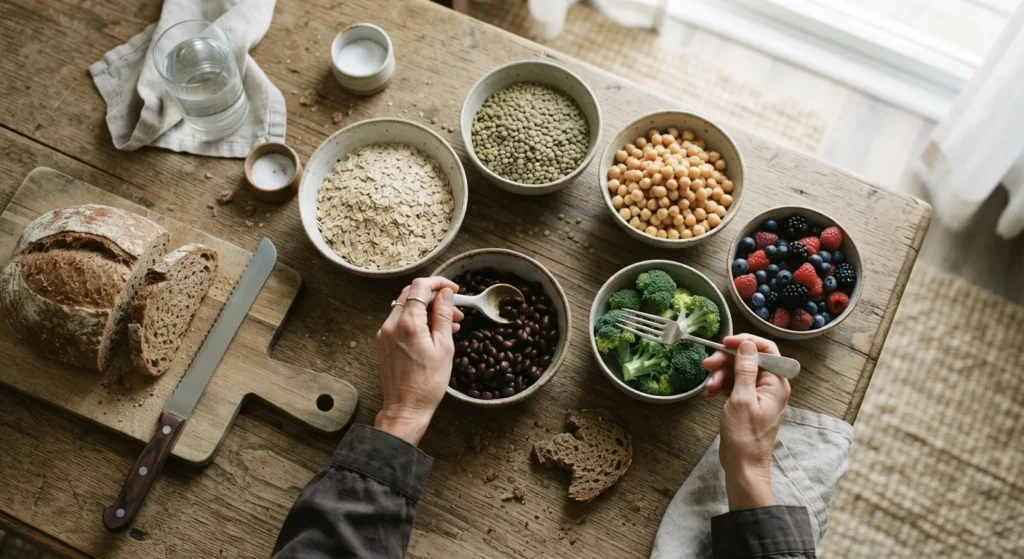
- Whole grains: oats, barley, brown rice, whole-wheat bread.
- Beans and lentils.
- Vegetables and fruit, especially onions, garlic, leeks, asparagus, bananas and berries.
- Resistant starch: potatoes, rice or pasta that have been cooked and cooled, and slightly green bananas.
- Nuts and seeds.
Increase fiber slowly over a few weeks and drink enough water. A sudden large increase can cause gas and bloating.
Fermented foods and probiotics
Fermented foods such as yogurt, kefir, sauerkraut and kimchi contain live bacteria. A 2021 study at Stanford (Wastyk and colleagues, Cell) found that a diet high in fermented foods increased the variety of gut bacteria over 10 weeks. That study did not measure sleep.

Probiotic supplements for sleep have been tested in a number of small trials, with mixed results. Some found small improvements in how people rated their sleep; others found no effect. Results depend on the strain, the dose and the person, so there is no single probiotic we can recommend for sleep.
Habits that help both your gut and your sleep
- Eat more fiber and more different plants across the week.
- Cut back on sugar and highly processed food, which were linked with lighter, more broken sleep in the St-Onge study.
- Eat your last big meal two to three hours before bed, to avoid heartburn and to keep meal times regular.
- Keep alcohol low, especially in the evening: it disturbs the second half of the night.
- Keep a regular sleep and wake time.
- Use antibiotics only when a doctor says you need them, and finish the course as prescribed.
When to see a doctor
Ongoing poor sleep, loud snoring with pauses in breathing, or daytime sleepiness need a medical check, not just a diet change. So do gut symptoms such as ongoing pain, diarrhea, blood in the stool or weight loss. Talk to a doctor before taking supplements if you have a health condition or take medicines.
Frequently Asked Questions
Can a probiotic help me sleep?
Possibly a little, for some people, but the trials are small and their results mixed. A probiotic is not a proven sleep treatment.
Should I test my gut microbiome?
Home microbiome tests can tell you which bacteria were in a sample, but scientists cannot yet say what a “good” result for sleep looks like. The results are unlikely to change what you should eat.
Does warm milk before bed help?
Milk contains tryptophan, but probably not enough to make you sleepy. A warm drink can still be a relaxing part of a bedtime routine.
How long before diet changes affect sleep?
Gut bacteria respond to diet within days, but effects on sleep in people have not been measured well. Give healthy changes a few weeks, and look at the bigger sleep habits at the same time.
The bottom line
Your gut and your sleep are connected, and the research is promising. For now, the best advice is simple: eat more fiber and plants, keep sugar, alcohol and late meals in check, and keep a regular schedule. Be wary of products or plans that promise a fixed increase in deep sleep through your gut.
Sources
- St-Onge MP, et al. Fiber and saturated fat are associated with sleep arousals and slow wave sleep. J Clin Sleep Med, 2016.
- Smith RP, et al. Gut microbiome diversity is associated with sleep physiology in humans. PLoS One, 2019.
- Szentirmai É, et al. Butyrate, a metabolite of intestinal bacteria, enhances sleep. Sci Rep, 2019.
- Wastyk HC, et al. Gut-microbiota-targeted diets modulate human immune status. Cell, 2021.
This article is general information, not medical advice. See our medical disclaimer.