
The fastest way to sleep with someone who snores is to block the sound tonight: properly fitted earplugs, a steady background noise, and, on bad nights, another room. For a long-term fix, find out whether the snoring comes from the nose, the tongue or sleeping on the back, because each one has a different fix. The free 1-minute snore quiz helps you work that out together.
I have not bought, used or tested the products mentioned here. This guide is based on published studies, the makers’ details and buyer reviews.
In this article
- How to sleep when someone is snoring: a plan for tonight
- Why the snoring is happening (and how to tell where it’s coming from)
- Blocking the noise: Tools for the non-snorer
- Environmental triggers that make snoring worse
- The Conversation: How to talk about it without starting a fight
- Long-term structural changes and devices
- The Good Morning Snore Solution (GMSS)
- The Strategic Sleep Divorce
- Comparing your options
- Common questions about sleeping with a snorer
- My verdict
The short answer
- Immediate relief: Properly fitted foam earplugs and a white noise machine.
- For tongue-based snoring: The Good Morning Snore Solution is our pick: it holds the tongue forward and leaves the teeth and jaw alone.
- For back-sleeping snoring: help them stay on their side, for example with a side-sleeping pillow.
- If they stop breathing, choke or gasp: a doctor’s check for sleep apnea comes first.
How to sleep when someone is snoring: a plan for tonight
When you are wide awake in the middle of the night next to a loud snorer, you need a plan that works now. Here it is, in order.
First, check your earplugs. Most people don’t insert them correctly. If you’re using foam, you have to roll them into a very tight, thin cylinder, pull the top of your ear up and back to open the canal, insert the plug, and hold it with your finger until it expands. If you just push them in, they sit on the surface and do nothing.
Second, introduce a sound buffer. If you don’t have a dedicated machine, a fan or a white noise app on your phone works. The goal isn’t to drown out the snoring entirely—which often requires a volume that is too loud to sleep through—but to reduce the “spike” of the noise. This makes the snoring a background hum rather than a sudden alarm. You can read more about white noise vs brown noise to see which frequency helps you fade out faster.
Third, the gentle nudge. Don’t shake them awake; that usually leads to an argument and an adrenaline spike for both of you. A light touch on the shoulder or a gentle nudge to encourage them to roll onto their side can often clear the airway for an hour or two.
Finally, the exit strategy. If it’s 3:30 AM and nothing is working, go to the guest room or the sofa. This isn’t a failure of your relationship; it’s a tactical retreat for your mental health. One night of decent sleep makes you a much more patient partner the next morning.
Try this tonight
- The Earplug Roll: Roll foam plugs tight, pull your ear up, insert, and hold for 30 seconds.
- The Side-Sleeper Prompt: Place a long body pillow behind your partner to make rolling onto their back less likely.
- No nightcap: Skip alcohol in the evening on nights you both need good sleep; it relaxes the throat muscles.
Why the snoring is happening (and how to tell where it’s coming from)
Snoring happens when air can’t flow freely through the nose and throat, causing the surrounding tissues—like the soft palate or the tongue—to vibrate. The fix depends entirely on where the blockage is.
If the sound is “nasal” or comes with heavy breathing through the mouth, the issue is likely in the nose. This is where nasal dilators can help by physically opening the nostrils. If the snoring is a deep, guttural sound, it’s usually the soft palate or the tongue collapsing backward into the throat.
Weight plays a role here. Excess tissue around the neck can put pressure on the airway, making it more likely to collapse. While losing weight is often cited as a cure, it’s a slow process that doesn’t help you sleep tonight.
Try the 10-second tongue check
Stick your tongue out, hold it gently between your teeth and try to snore. If the sound is much weaker, your tongue is part of the problem. See which fix matches your snore.
Blocking the noise: Tools for the non-snorer

When you are the one losing sleep, you have the most control over your own environment. You can’t force your partner to stop snoring instantly, but you can change how you hear it.
Noise machines are the standard recommendation, but not all noise is the same. White noise is a steady hiss (like a radio between stations), while pink noise is deeper and more balanced (like steady rain). For many, the lower frequencies of pink or brown noise are less grating and better at masking the low-frequency rumble of a snore.
Earplugs are more effective but have trade-offs. Silicone plugs seal the outer ear and are better for people who find foam plugs irritating. However, the biggest downside is “occlusion”—the feeling of your own heartbeat drumming in your ears, which some people find more distracting than the snoring itself.
Environmental triggers that make snoring worse
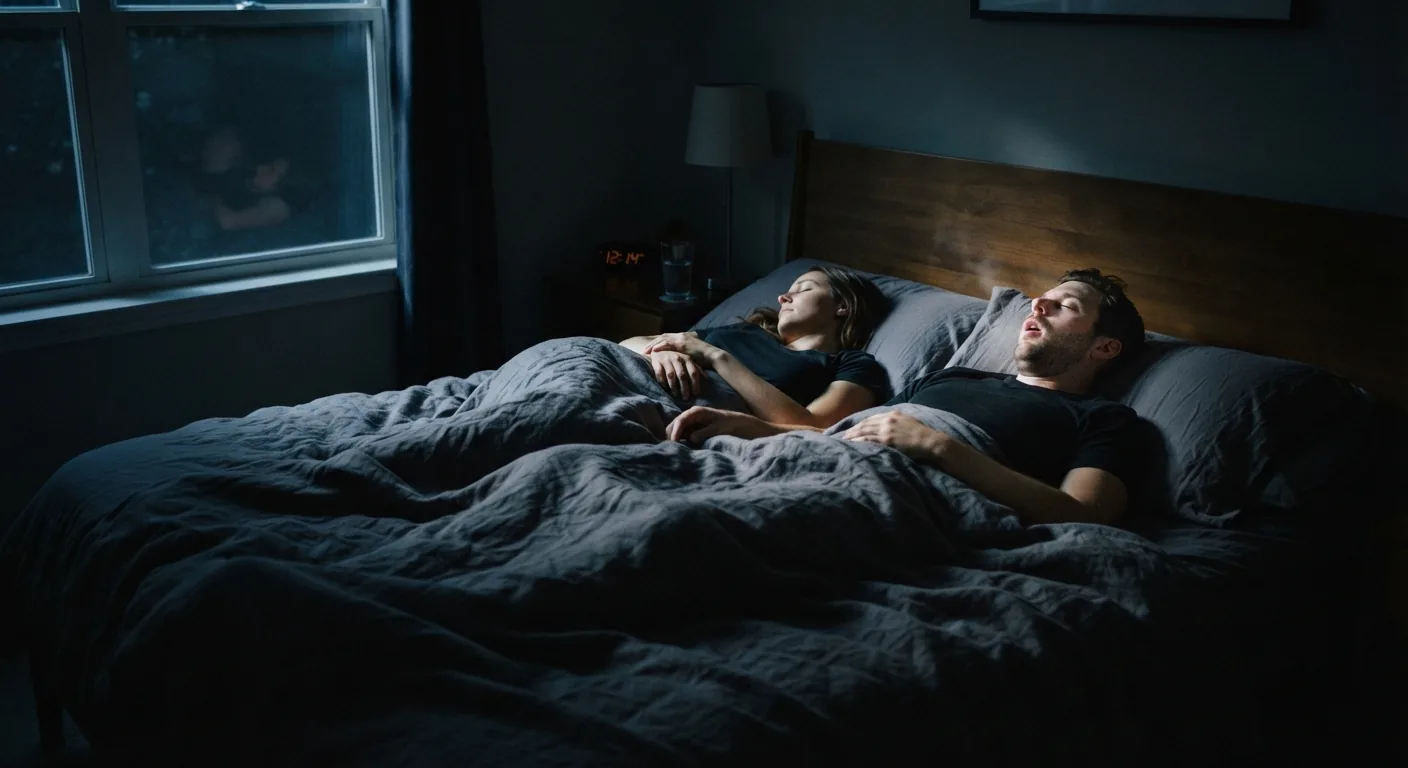
Snoring isn’t a constant; it fluctuates based on what happened in the six hours before bed. If you notice your partner snores more on Fridays than Tuesdays, look at the triggers.
Alcohol is the biggest culprit. It acts as a muscle relaxant, causing the muscles in the throat and the soft palate to go slack. This increases the likelihood of airway collapse. The same applies to certain sedatives or sleep medications.
Room temperature and humidity also matter. Cold, dry air can irritate the nasal lining, causing swelling and congestion. This forces the snorer to breathe through their mouth, which almost always increases the volume of the snoring. In dry winter air, a humidifier may make the nose more comfortable, though it will not fix snoring that comes from the tongue or sleeping position.
The Conversation: How to talk about it without starting a fight

Telling someone they snore is a minefield. The snorer often feels embarrassed or defensive, while the non-snorer feels resentful and exhausted. The goal is to move from “You are ruining my sleep” to “We have a sleep problem that we need to solve together.”
Avoid bringing it up at 3 AM when you’re both frustrated. Wait until the next afternoon. Use “I” statements focused on your health rather than “You” statements focused on their noise.
Try these scripts:
- Instead of: “You were snoring so loud last night I couldn’t sleep.”
- Try: “I’ve been struggling to stay asleep lately and I’m feeling really exhausted during the day. I think the snoring is the main cause, and I’d like us to find a way to fix it so we both feel better.”
- Instead of: “You need to wear a mouthpiece or something.”
- Try: “I’ve been reading about different types of snoring—some are nasal and some are tongue-based. Would you be open to taking a quick snore quiz to see what’s happening?”
Long-term structural changes and devices
If earplugs aren’t enough, you have to address the physical cause. For many, the issue is positional. Back-sleeping allows gravity to pull the tongue and soft palate backward.
A wedge pillow raises the upper body, which can make snoring quieter for people who must sleep on their back. If they can sleep on their side, a pillow that keeps them there tackles the cause more directly.
For those whose snoring is caused by the tongue, mechanical intervention is usually required. This is where mouthpieces come in. Some push the lower jaw forward (mandibular advancement), but these can be hard on the teeth and jaw. Others focus solely on the tongue.
The Good Morning Snore Solution (GMSS)
The Good Morning Snore Solution is an FDA-cleared, over-the-counter tongue-retaining device designed specifically for adults 18 and over. Unlike many mouthpieces, it does not grip the teeth or push the jaw forward. Instead, it uses a soft, clear bulb and gentle suction to hold the tongue forward, keeping the airway open.
This makes it a strong option for people who suffer from jaw pain, TMJ problems, or those who wear dentures. It comes ready to use—no boiling or custom fitting required—and generally lasts about a year. It is available in Regular or Small sizes for $79.94 for one mouthpiece, or $139.94 for a two-pack. Orders from the official store include a 30-day money-back guarantee from the date of delivery, and shipping is free on orders over $99 in the US, Canada, UK, and Australia.
A small crossover trial by the device’s designer (Dort and Brant, 2008) found that snoring events fell from 214.7 to 132.9 per hour—a reduction of about 38%. In that study, 54% of participants wanted to continue using the device. It was a small study, led by the person who designed the device.
Source: Dort and Brant, Sleep and Breathing, 2008
Who it is for: Simple snoring caused by the tongue. It’s a great option for those who find jaw-advancement devices uncomfortable.
Who should skip it: People who cannot breathe through their nose, as the device sits between the lips and teeth, requiring nasal breathing. It is also not a treatment for sleep apnea.
Myth vs fact
Myth: Mouth tape is the best way to stop snoring.
Fact: Mouth tape only works if the nasal passages are completely clear. If the snoring is caused by a collapsed tongue or soft palate, taping the mouth shut can actually make breathing more difficult and will not stop the vibration of the tissues.
The Strategic Sleep Divorce
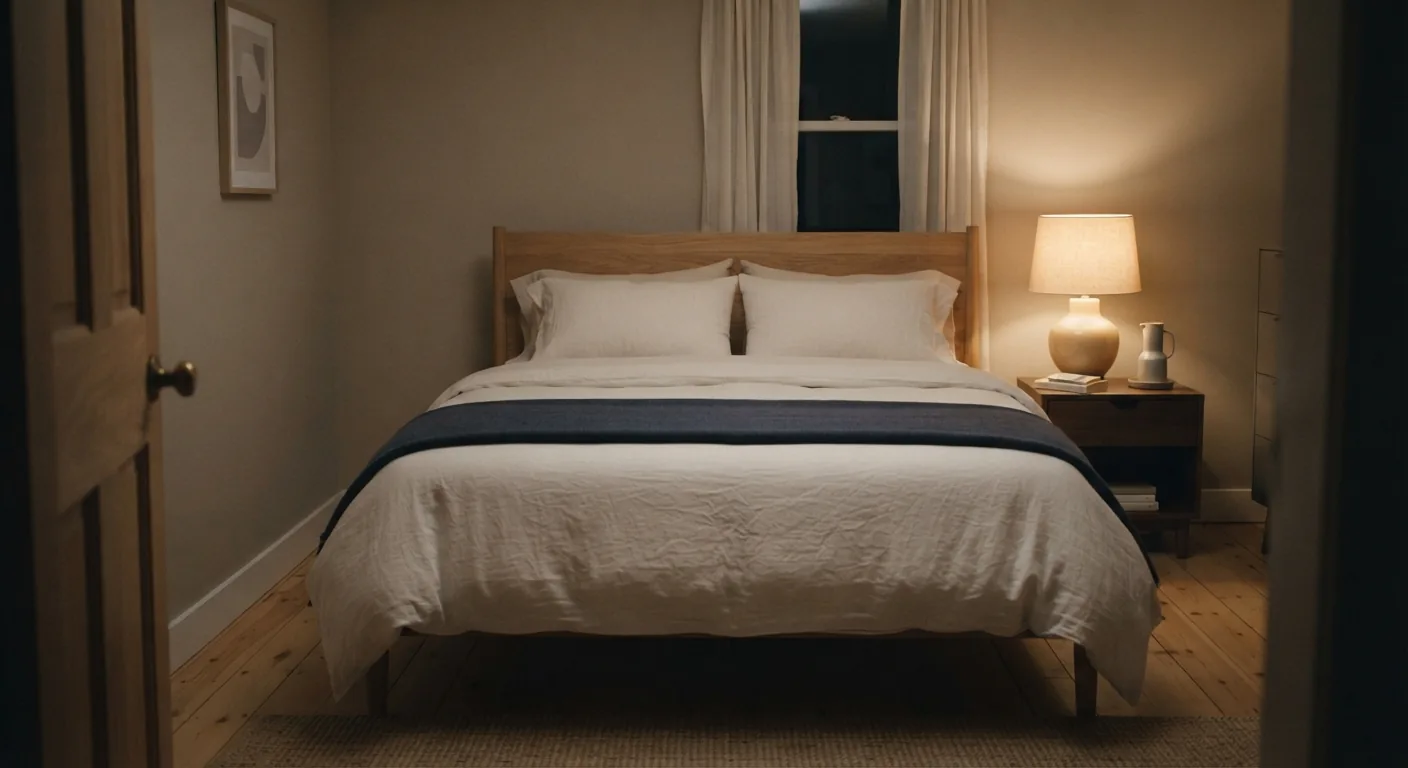
The term “sleep divorce” sounds clinical and cold, but in reality, it’s often a strategic health decision. Sleeping in separate beds or rooms isn’t necessarily a sign of a failing relationship; sometimes, it’s the only way to save one.
| Approach | Pros | Cons |
|---|---|---|
| Same Bed (with tools) | Intimacy, shared warmth, convenience. | High risk of disrupted sleep for the non-snorer. |
| Same Room (Separate Beds) | Proximity, easy communication. | Requires more space; one person still hears the noise. |
| Separate Rooms | The quietest option for the non-snorer. | Loss of physical intimacy and “pillow talk.” |
If you choose separate rooms, the key is to maintain intimacy elsewhere. Many couples find that “scheduling” intimacy or spending time together in the living room before splitting for the night removes the resentment. When both partners are well-rested, the relationship usually improves far more than it would if they were fighting over a pillow every night.
Comparing your options
| Method | Best For… | Cost | Trade-off |
|---|---|---|---|
| Earplugs/White Noise | Immediate relief for the listener. | Low | Doesn’t stop the snoring; can be irritating. |
| Wedge Pillows | Back-sleepers. | Medium | Bulky; not everyone likes the angle. |
| GMSS Mouthpiece | Tongue-based snoring. | $79.94+ | Requires nose breathing. |
| Separate Rooms | Severe snoring/Insomnia. | Free (if you have a spare room) | Loss of shared sleeping space. |
Before you buy: a quick checklist
- Identify the source: Is it the nose, the tongue, or the position?
- Check for apnea: Does the snorer gasp or stop breathing? (If yes, see a doctor first).
- Test the basics: Have you tried properly fitted earplugs and a humidifier?
- Discuss the goal: Is the priority immediate silence or a long-term cure?
When to see a doctor
- If the snorer stops breathing or chokes during the night.
- If the snorer is excessively sleepy during the day despite “sleeping” 8 hours.
- If they have high blood pressure as well as loud snoring.
- If the snoring is accompanied by waking up gasping for air.
Common questions about sleeping with a snorer
Can sleeping with a snorer affect your health?
It can. Being woken again and again breaks your sleep into pieces, even when you do not remember waking, and that leaves you tired, irritable and foggy the next day. Over weeks, poor sleep also affects mood and health, so it is worth fixing rather than putting up with.
How do I stop my partner from snoring without waking them up?
The most effective non-disruptive method is a gentle physical nudge to get them to roll onto their side. If they are a habitual back-sleeper, placing a long pillow or a “snore-blocker” foam wedge behind them can prevent them from rolling back onto their spine without you having to wake them.
What happens if I use mouth tape with a tongue-retaining device?
You should not do this. Devices like the GMSS require the user to breathe through their nose because the mouthpiece occupies the space between the lips and teeth. Taping the mouth shut while using a device that relies on nasal airflow can be dangerous if the nose becomes congested.
Can snoring ruin a marriage?
It rarely ruins a relationship on its own, but the lost sleep can build resentment and push couples apart. Treating the snoring, or sleeping apart on bad nights without blame, usually fixes the tension.
Is it normal to sleep in separate rooms because of snoring?
Yes. Many couples sleep apart some or all nights because of snoring, and it can help both people feel better and get along better. It works best when you agree on it together and keep time together before bed.
What are the best earplugs for blocking snoring?
Soft foam earplugs usually block the most sound if you insert them properly. Silicone or wax plugs that cover the ear opening suit people who find foam uncomfortable. Check the noise reduction rating (NRR) on the pack: a higher number means more sound blocked.
My verdict

Tonight, use properly fitted earplugs and a steady background sound, and do not feel guilty about another room on bad nights. For the long term, help your partner find the cause. If the tongue check makes their snoring quieter and they breathe easily through the nose, a tongue-retaining mouthpiece is a simple fix to try, and our Good Morning Snore Solution review explains how it works, what the research shows and who should skip it. If they stop breathing or gasp in their sleep, a doctor comes first.
Is the tongue behind the snoring?
See how the Good Morning Snore Solution works, what the study found and who it suits.
Read our Good Morning Snore Solution review →Sources: Dort L, Brant R. A randomized, controlled, crossover study of a noncustomized tongue retaining device for sleep disordered breathing. Sleep and Breathing, 2008. Good Morning Snore Solution product details, checked 4 October 2026. This article is general information, not medical advice.