
I couldn’t find a single study that tests a bedroom humidifier for snoring. What the research does show is that dry air dries out your nose and airways, and that a dirty humidifier can make you ill. So a humidifier for snoring can help in one situation, and it needs looking after.
I didn’t test these myself. Instead, I read the research behind them, including a small study of warm, humid air and the nose, plus the EPA’s humidifier guidance and the makers’ details. So you get what the research shows, not a sales pitch.
In this article
The short answer
- Does it work? It may ease snoring that dry air makes worse, mostly in winter with the heating on. It won’t fix snoring from your tongue, jaw or sleeping position.
- The goal: Keep your bedroom at about 40% to 50% humidity, refill with fresh water every day and clean the tank every third day.
- Still snoring in a humid room? Then dry air isn’t the main cause. Check your nose, your tongue (the Good Morning Snore Solution is our pick for tongue snoring) and your sleeping position.
- Next step: If you aren’t sure why you snore, take the free snore quiz.
Does a humidifier help snoring? If dry air makes your throat scratchy and your nose stuffy at night, adding moisture may make breathing through your nose easier and the snoring a little softer. But if the snoring comes from your tongue, your jaw or lying on your back, moist air won’t change it.
Does a humidifier help snoring? What dry air does to your nose

Your airways have a built-in cleaning system called mucociliary clearance. When the air is too dry, this system slows down. A 2024 review in the International Journal of Hygiene and Environmental Health found that dry indoor air increases eye and airway symptoms.
Warm, moist air seems to help the nose itself. In a small 2019 trial in PLoS One, 37 healthy men wore a heated, humidifying mask or a placebo mask for 10 minutes each. The humid mask lowered the resistance to air in the nose and eased the feeling of a dry nose and throat.
However, there are three big caveats to that study. First, it used a mask, not a room humidifier. Second, it didn’t actually measure snoring. Third, the mask maker, Kao Corporation, took part in the study. So it hints that moist air can help the nose, but it says nothing direct about snoring.
Measure before you buy
Put a hygrometer, a small humidity meter sold at hardware stores (EPA), next to your bed for a few nights. If it reads well under 40% while you sleep, dry air may be part of the problem. If it already reads 40% to 50%, a humidifier is unlikely to change much.
Is dry air causing your snoring?

You can’t know if a humidifier will help unless you know if dryness is part of your specific problem. Ask yourself these questions:
- Does your snoring get noticeably worse in the winter when the heating is on?
- Do you wake up with a dry mouth or a parched throat?
- Do you feel like your nose is stuffy at night, but clears up after a hot shower?
If you answered yes to several of these, dry air may be part of your snoring. If you snore just as much in every season, the cause is more likely in your nose, mouth or throat. You might be dealing with snoring with your mouth closed or a tongue that falls back, which no amount of mist will fix.
Finding the right humidity level
More moisture isn’t always better. Too much helps mold and dust mites grow. The EPA says not to humidify a home above 50% (Use and Care of Home Humidifiers), and its guide to mold and moisture says to keep indoor humidity below 60%, ideally between 30% and 50%.
At the dry end, the same 2024 review found that the risk of flu and COVID infection is lowest between 40% and 60% humidity. Put the two together, and the sweet spot for a bedroom is about 40% to 50%.
Don’t guess: it’s hard to feel the difference between 45% and 65%. Leave the hygrometer in the bedroom and turn the humidifier down or off when it goes over 50%.
Cool mist vs warm mist: Which one should you choose?
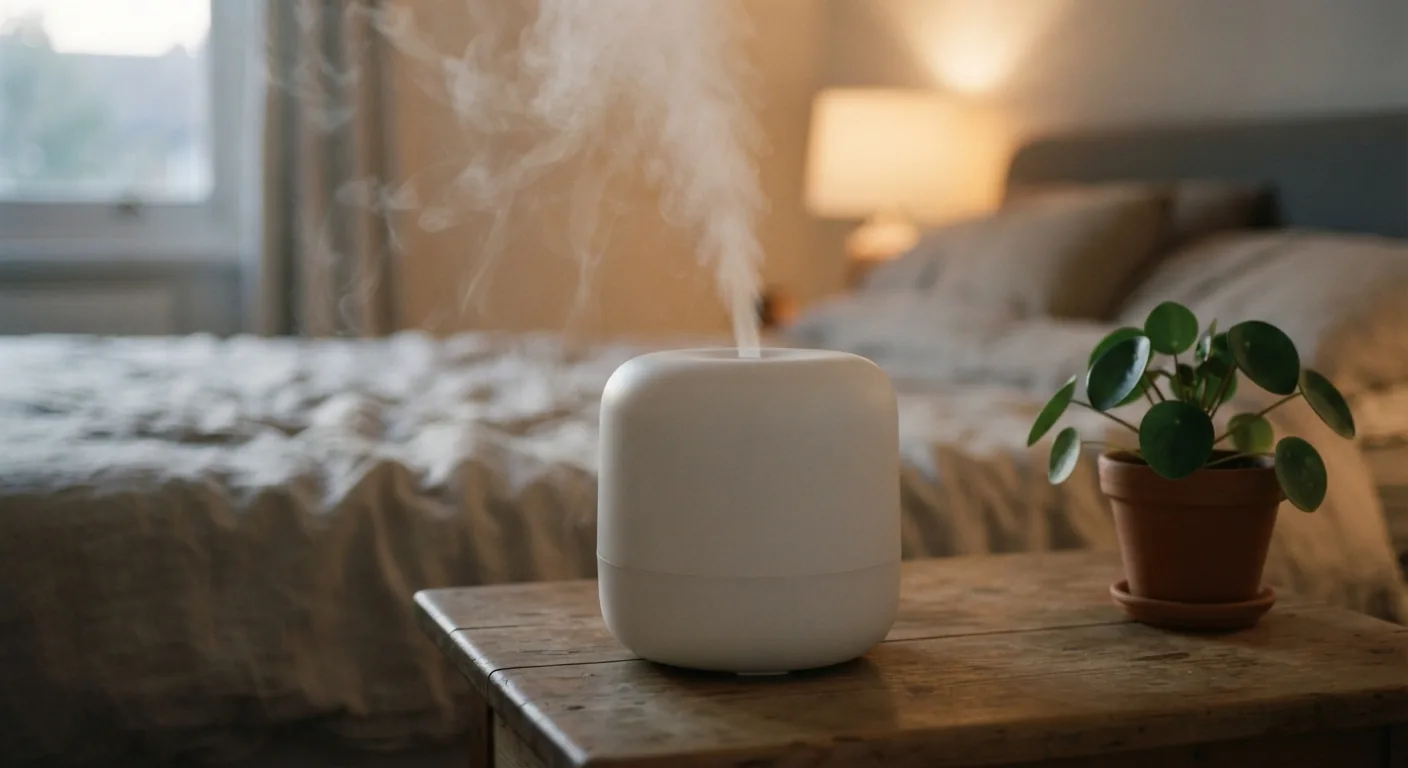
The EPA (humidifier guide) sorts home humidifiers into four types. What matters most for your lungs is how much of the water’s germs and minerals each one sends into the air.
| Type | How it works | What it spreads | The catch |
|---|---|---|---|
| Ultrasonic (cool mist) | Sound vibrations turn water into a cool mist. | The most germs and minerals; tap water can leave “white dust”. | Needs careful cleaning and low-mineral water. |
| Impeller (cool mist) | A fast-spinning disk throws water into a cool mist. | Also among the most germs and minerals. | Same as ultrasonic. |
| Evaporative | A fan blows air through a wet wick or filter. | Generally little, if any. | Germs can still grow in standing water, so it needs cleaning too. |
| Steam vaporizer (warm mist) | Heats water into steam. | Generally little, if any; no mineral dust. | Steam and hot water can burn: keep it out of children’s reach. |
When you shop, check the maker’s room-size rating against your bedroom, and its noise rating: a machine that hums or gurgles all night can keep you awake on its own.
The danger of a dirty humidifier
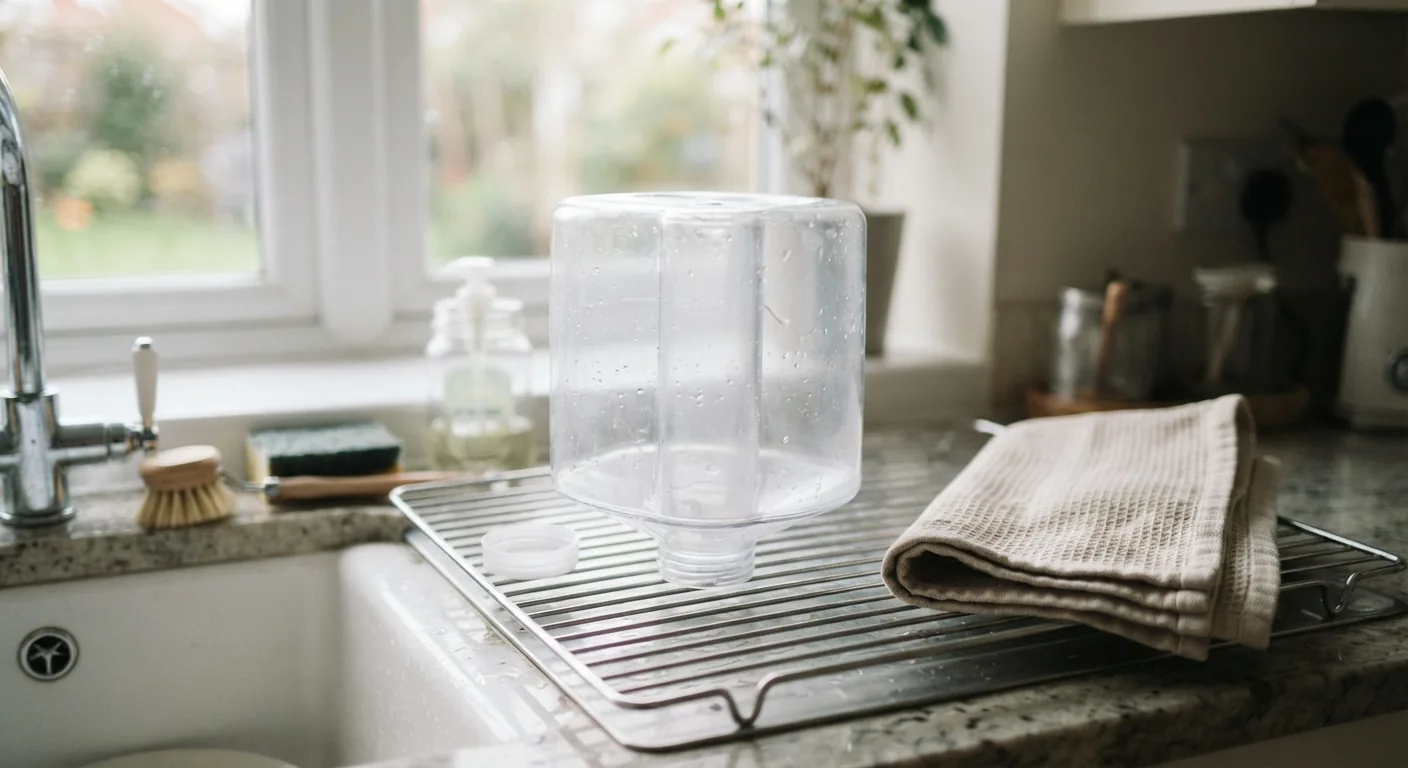
A humidifier keeps water standing in a tank, and germs grow in standing water. The EPA says breathing mist from a dirty humidifier has been linked to a kind of lung inflammation, and that young children, older people and anyone with lung disease or allergies may be more sensitive.
It is rare, but real. A nationwide study in Japan found 430 cases of “humidifier lung”, a lung inflammation from breathing contaminated mist, between 2011 and 2021, and cases rose over that time. In South Korea, a disinfectant that people added to humidifier water caused lung inflammation (pneumonitis), and cases fell after it was taken off the market in 2011 and 2012 (Park 2025).
The lesson: never add chemicals or disinfectant to the water. Follow the EPA’s routine instead:
- Every day, empty the tank, wipe all surfaces dry and refill it with fresh water. Distilled water has the fewest minerals.
- Clean portable units every third day.
- Use the cleaner the maker recommends. If it gives none, wipe the parts that touch water with 3% hydrogen peroxide, then rinse the tank with several changes of water.
Myth vs fact
Myth: A little disinfectant in the water keeps a humidifier clean.
Fact: In South Korea, disinfectant added to humidifier water caused lung inflammation. Clean the tank, rinse it well, and fill it with plain water only.
Still snoring in a humid room?

If your bedroom sits at 40% to 50% and the snoring hasn’t changed, dry air isn’t the main cause. Check the other common causes: your nose, your tongue and your sleeping position. The free snore quiz linked above walks you through them in a minute.
Try the 10-second tongue check
Stick your tongue out, hold it gently between your teeth and try to snore. If the sound is much weaker, your tongue is part of the problem.
The nose: If your nostrils narrow when you breathe in, a nasal dilator holds them open. A review of 14 studies found that dilators improve breathing through the nose, though they did not improve sleep apnea. The Airflow Clip from SnoreLessNow is an FDA-registered dilator that you can reuse for up to 90 days. On the maker’s site (checked 18 October 2026) it costs $14.99 for one size, or $17.99 for a trial pack of all three sizes, with a 30-day money-back guarantee. It doesn’t add moisture. You can read more in our Airflow Clip review. If you’re dealing with a cold or allergies, check our nasal spray guide.
The tongue: If the tongue check made a big difference, your tongue is likely falling back toward your throat while you sleep. A tongue mouthpiece like the Good Morning Snore Solution holds it forward with gentle suction. It’s FDA-cleared to reduce snoring in adults and costs $79.94, or $139.94 for a two-pack (checked 18 October 2026). It needs nose breathing, so a dry or blocked nose matters here too. It does not treat sleep apnea. Read the full details in our review of the Good Morning Snore Solution.
Your position: If you mostly snore flat on your back, gravity pulls your tongue back. A side-sleeping pillow helps you stay off your back (see our anti-snore pillow review), and a wedge pillow raises your upper body if you can’t sleep on your side.
The Good Morning Snore Solution
If you’ve ruled out dry air and a blocked nose and the tongue check points to your tongue, the Good Morning Snore Solution is our pick. It’s a soft mouthpiece that holds your tongue forward with gentle suction, and it is FDA-cleared to reduce snoring in adults.
Who it suits: People whose snoring comes from the tongue and who can breathe comfortably through their nose. If your nose is often blocked, deal with that first.
Who should skip it: Anyone who can’t breathe through their nose, and anyone with signs of sleep apnea until a doctor has checked. It is not a sleep apnea treatment.
The facts: It costs $79.94 for a single unit and comes with a 30-day money-back guarantee.
Before you buy: a quick checklist
- Get a hygrometer: Check your bedroom’s humidity before you buy a humidifier.
- Plan the water: Low-mineral water, such as distilled water, avoids the “white dust” that tap water leaves from cool-mist machines.
- Plan the cleaning: Fresh water every day and a full clean every third day. If that won’t happen, don’t buy one.
- Find the cause: Do the tongue check. If your tongue is the main cause, a humidifier alone won’t fix it.
When to see a doctor
Humidifiers and nasal dilators are for simple snoring. See a doctor about a sleep test if you have any of these:
- Gasping or choking during sleep.
- Morning headaches.
- Strong sleepiness in the day, even after a full night in bed.
- High blood pressure.
- Pauses in breathing noticed by a partner.
FAQ
Does a humidifier help snoring?
It may help if dry air dries out your nose and throat, but no study has tested a humidifier for snoring. It won’t stop snoring that comes from your tongue, jaw or sleeping position.
Is a cool mist or warm mist humidifier better for snoring?
Neither helps snoring more. Warm-mist (steam) and evaporative humidifiers generally put fewer germs and minerals into the air, according to the EPA, but steam can burn. Ultrasonic and impeller cool-mist machines spread the most, so they need careful cleaning and low-mineral water.
What humidity is best for sleeping?
About 40% to 50%. That’s under the EPA’s 50% limit for humidifiers, which keeps mold and dust mites down, and inside the 40% to 60% range where a 2024 review found the lowest risk of flu and COVID infection.
Can a humidifier make snoring worse?
It can, indirectly. A dirty tank sends germs into the air, and humidity above 50% helps dust mites and mold grow, which can trigger allergies and a stuffy nose. Keep it clean and keep it at 50% or below.
How do I know if my room is too humid?
Use a hygrometer. The EPA also says that condensation or moisture collecting on windows, walls or pipes is a sign to act: dry the surface and lower the humidity.
My verdict
If you wake up with a parched throat in winter, a humidifier kept at about 40% to 50% is a sensible, low-risk thing to try, as long as you clean it. It won’t fix snoring from your tongue, nose or sleeping position, so if the snoring carries on, do the tongue check or take the snore quiz.
Still snoring in a humid room?
The free 1-minute snore quiz checks your nose, mouth, tongue and sleep position, and shows which fix matches.
Take the free snore quiz →Sources
- EPA, Use and Care of Home Humidifiers (last updated 29 April 2026)
- EPA, A Brief Guide to Mold, Moisture and Your Home
- Wolkoff 2024, International Journal of Hygiene and Environmental Health (PMID 38154254)
- Fujita 2019, PLoS One (PMID 30726268)
- Sakamoto 2026, BMJ Open Respiratory Research (PMID 42230300)
- Park 2025, Epidemiology and Health (PMID 41414823)
- Camacho 2016, Pulmonary Medicine (PMID 28070421)
This article is general information, not medical advice. See our medical disclaimer.