
Here’s a fun one: SnoreRx costs half what VitalSleep costs, yet over a year you can pay about the same for either. 🤯 The reason is in SnoreRx’s own small print. Its FAQ says one lasts “around 6 to 11 months”, while VitalSleep says its mouthpiece lasts about 1 to 2 years. So if you’re about to click “buy” on a SnoreRx, give me five minutes first.
I didn’t test these myself. Instead, I read the studies behind them, including a 2024 trial of jaw mouthpieces for snoring in JAMA Otolaryngology, plus the makers’ details and buyer reviews. So you get what the research shows, not a sales pitch. One more honest note: we don’t sell SnoreRx and earn nothing from it. We do review VitalSleep, and we may earn a commission if you buy it through that review.
The short answer
SnoreRx is a real, FDA-cleared jaw mouthpiece that adjusts from 1 to 6 mm, for $59.99 (Plus: $99.99). If you live in the US, VitalSleep is the better value: $119.95, but 60 nights to return it instead of 30, a 1-year warranty, 8 mm of adjustment, and a life about twice as long.
In this article
- What is SnoreRx, and how does it work?
- SnoreRx vs SnoreRx Plus: is the hinge worth $40?
- Why SnoreRx reviews don’t agree
- Does SnoreRx work? What the research says
- SnoreRx vs VitalSleep: side by side
- Is your snore a jaw snore? Check before you buy
- Who should skip SnoreRx (and VitalSleep)
- How to give a jaw mouthpiece a fair trial
- Frequently asked questions
- My verdict
What is SnoreRx, and how does it work?
SnoreRx is a mandibular advancement device (MAD): two trays that clip over your top and bottom teeth and hold your lower jaw slightly forward while you sleep. Your tongue is attached to your lower jaw, so it comes forward too. That leaves more room at the back of your throat, and less floppy tissue to rattle like a flag in a hurricane.
You fit it yourself with “boil and bite”: soften it in hot water, bite into it, and it keeps the shape of your teeth. Then you slide the lower tray forward 1 millimetre at a time, up to 6 mm. You squeeze both sides to unlock it, and a numbered gauge shows your setting. The maker says it has no screws or springs.
Is it FDA approved? Not quite, and the difference matters. SnoreRx is FDA-cleared to reduce snoring in adults: the FDA agreed it is similar to devices already on the market. I found three clearances in the FDA’s database: K112205 (November 2011), K153200 (2016) and K170825 (2017). None of them covers sleep apnea. Our check of which snoring mouthpieces are FDA cleared explains what each label means.
So that’s the original. But most people end up staring at two boxes on the SnoreRx site, and wondering what the extra $40 buys.
SnoreRx vs SnoreRx Plus: is the hinge worth $40?
Both are molded the same way and adjust in the same 1 mm steps. The Plus adds two things, according to SnoreRx:
If you hate the feeling of your jaw being held shut, the hinge is the reason to pay more. If you just want to find out whether a jaw mouthpiece quiets your snoring at all, the original does the same job for less. Either way, you’d hope the reviews could settle it. They can’t, and here’s why.
Why SnoreRx reviews don’t agree

I read the review pages that come up first when you search “SnoreRx”, then checked each claim against SnoreRx’s own site on 27 October 2026. Plot twist: they disagree with the maker, and with each other.
| Claim | What review pages say | What SnoreRx says today |
|---|---|---|
| Price | $99, Plus $124 (one page, last changed in 2022) | $59.99, Plus $99.99 |
| How long it lasts | 9-11 months, 11-15 months, or “up to a year and a half” | “around 6 to 11 months”, sooner if you grind your teeth |
| Fitting times | Boil 2 min, bite 3 min, cool 10 min (one page) | 60 seconds in hot water, bite 30 seconds, cool 5 minutes |
| Re-molding | “three attempts” | Two impressions in total |
| FDA | “FDA-approved” | Cleared to reduce snoring, not approved |
The fitting times matter most. The impression is what holds a boil-and-bite mouthpiece in place at night, and a mouthpiece that slips out was the main problem in one of the trials below. So follow the paper instructions in the box, not a review. And keep the lifespan in mind, because it changes the whole price comparison later on.
Does SnoreRx work? What the research says
Honest answer: nobody has published a study of SnoreRx itself. I searched PubMed and found none, and none for VitalSleep either. What we do have is good research on jaw mouthpieces in general, and it says two things.
91%
of snorers were rated “much” or “very much” improved by their partner after 4 weeks with a jaw mouthpiece (21 of 23), against 58% with a nose and sleep-position routine

One: jaw mouthpieces work for plain snoring. The sleep medicine and dental sleep medicine academies recommend them for adults who snore without sleep apnea (Ramar et al., 2015). In the 2024 trial above, 42 couples finished, and the mouthpiece clearly won. But here’s the catch: it was a custom device, fitted by a specialist dentist.
Two: boil-and-bite devices did worse than dentist-made ones. In a trial of 35 people with mild sleep apnea, the custom device worked for 60% and the boil-and-bite one for 31% (Vanderveken et al., 2008). A third gave up on the boil-and-bite one, mostly because it didn’t stay in overnight. A 2017 trial of 25 people found the same gap: a complete response in 64% with custom, 24% with ready-made (Johal et al., 2017).
Those trials didn’t test SnoreRx or VitalSleep, and the people in them had mild sleep apnea. Still, the message is clear. A SnoreRx-type mouthpiece is a sensible, cheaper first try. If it keeps falling out or does nothing at your highest comfortable setting, a dentist-made one is the next step. Our guide to whether snoring mouthpieces work goes deeper. So if you’re starting with a boil-and-bite, which one?
SnoreRx vs VitalSleep: side by side
These are the two adjustable boil-and-bite mouthpieces people compare most. Everything below comes from each maker’s own site and the FDA database, checked on 27 October 2026.
| Feature | SnoreRx | SnoreRx Plus | VitalSleep |
|---|---|---|---|
| Price | $59.99 | $99.99 | $119.95 |
| Adjusts | 1-6 mm | 1-6 mm | Up to 8 mm |
| Hinge | ❌ | ✅ | ❌ |
| Sizes | One | One | Standard and Small |
| Money back | 30 nights | 30 nights | 60 nights |
| Warranty | ❌ None | ❌ None | ✅ 1 year |
| Lasts (maker) | 6-11 months | 6-11 months | 1-2 years |
| Ships to | US and abroad | US and abroad | US only |
Now the cost per year. Take each maker’s own lifespan, and a $59.99 SnoreRx that lasts 6 to 11 months costs about $65 to $120 a year. A $119.95 VitalSleep that lasts 1 to 2 years costs about $60 to $120 a year. Same ballpark. The difference is in what you get for it.
Where SnoreRx wins
- Less money up front. $59.99 is the cheapest way to try an adjustable mouthpiece.
- It ships outside the US. SnoreRx sends orders to Canada and Australia from local warehouses, and to other countries from California. VitalSleep only ships within the US.
- The Plus has a hinge, if a fixed jaw feels claustrophobic.
Where VitalSleep wins
- Twice the time to decide. 60 nights to return it, against 30. Since you move a jaw mouthpiece 1 mm every few nights, 30 nights can run out before you reach your setting.
- A 1-year warranty with free replacements. SnoreRx has none, and even the hand-picked reviews on its own home page include one buyer whose mouthpiece “started falling apart” after about a month.
- More room to adjust: up to 8 mm, against 6.
- A small size, about 10% smaller. “SnoreRx too big for mouth” shows up in Google’s suggestions, and SnoreRx comes in one size.
Stock check: on 27 October 2026, VitalSleep’s site showed the Standard size sold out until 24 November, with the Small size in stock. Check the VitalSleep review for today’s link before you decide.
But either one only helps if your snoring comes from the place it works on. Does yours?
Is your snore a jaw snore? Check before you buy
A jaw mouthpiece helps when the noise comes from the back of your throat, as your jaw and tongue fall back. It does little for a blocked nose, and it’s not the best tool if you only snore on your back.
Try this tonight. Stick your tongue out, hold it gently between your teeth and try to snore. If the sound is much quieter, your tongue is likely part of the problem. See which fix matches your snore. A jaw mouthpiece pulls the tongue forward too, but a tongue device holds it directly, with nothing pressing on your teeth.
- Dentures, crowns at the front or jaw pain? A jaw mouthpiece isn’t for you. The Good Morning Snore Solution holds the tongue instead ($79.94), and our guide to tongue retaining devices covers the studies. Got a sore jaw already? Read TMJ and snoring first.
- Snore mostly on your back? Our sleep position guide may save you the money.
- Not sure at all? The free 1-minute snore quiz checks the four common causes and tells you which fix fits.
Who should skip SnoreRx (and VitalSleep)
The two makers’ warning lists are almost the same. Skip both if any of these is you:
- You’re under 18.
- You have a TMJ disorder or jaw pain, loose teeth, severe gum disease or an abscess.
- You wear dentures, braces or another dental appliance. SnoreRx needs your four upper and four lower front teeth to be natural.
- You had a dental implant in the last 12 months. With crowns, bridges or older implants, ask your dentist first.
- You have central sleep apnea or another breathing disorder.
See a doctor first if someone has seen you stop breathing, choke or gasp in your sleep, if you’re very sleepy in the day after a full night, or if you have high blood pressure. Neither mouthpiece is cleared for sleep apnea, and a quieter night can hide it.
SnoreRx lists the side effects too: sore teeth or gums, jaw pain, extra saliva, harder mouth breathing, and teeth that shift or a bite that changes. Most early soreness fades. If your teeth move or your bite feels different, stop and see your dentist.
How to give a jaw mouthpiece a fair trial
Most “it didn’t work” stories are really “I gave up on night two”. These steps follow SnoreRx’s own instructions; VitalSleep’s are close.
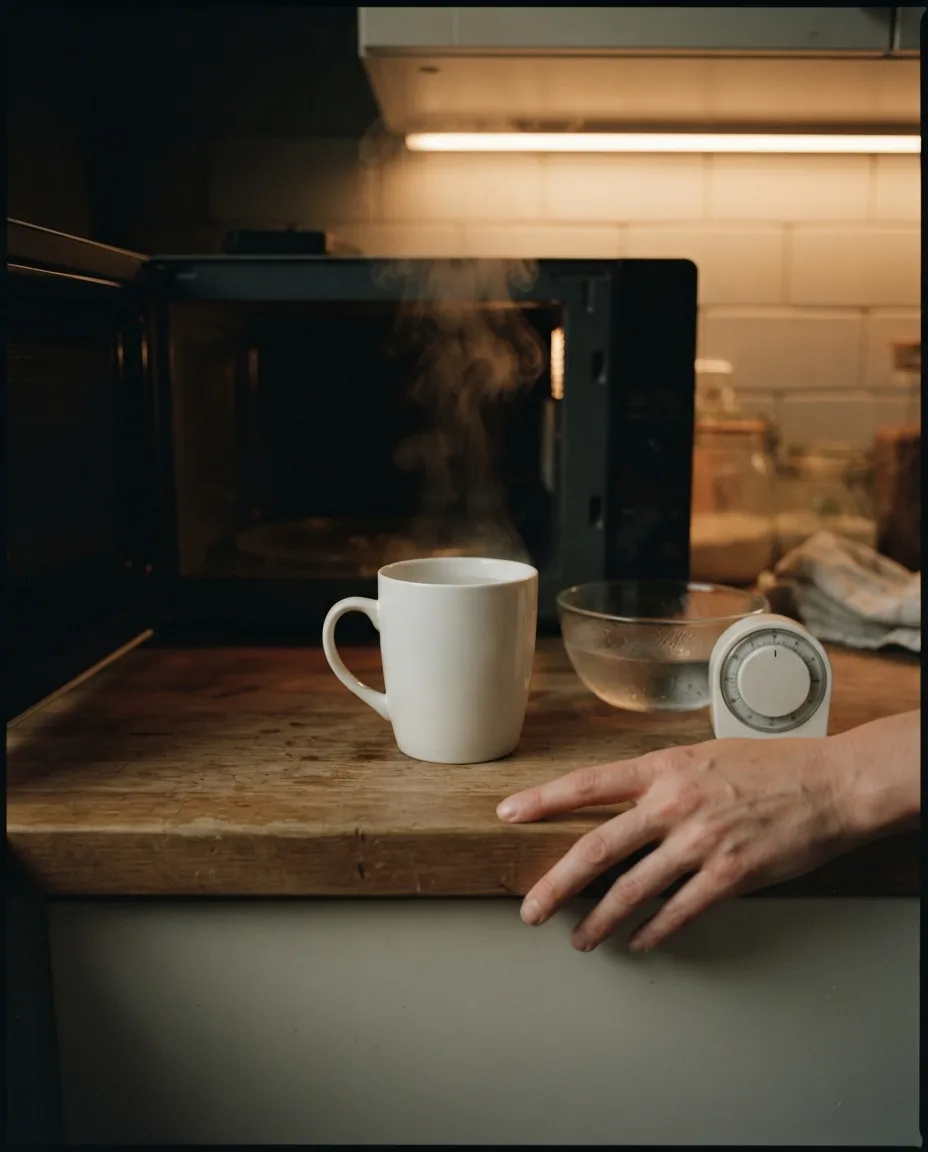
- Mold it exactly as the box says For SnoreRx: a mug of water brought to a full boil in the microwave (not a pan on the stove), 60 seconds in the water, a quick dip in cool water, bite for 30 seconds, then 5 minutes in cool water.
- Wear it awake first SnoreRx suggests 1 to 3 hours while you’re awake over the first two or three days, so it feels less bulky at bedtime.
- Start at the lowest setting Wear each setting for at least 3 to 5 nights before moving 1 mm forward. SnoreRx says most people settle between 3 and 5 mm.
- Ask for a verdict, or record it Ask whoever sleeps next to you after each change, or use a snore-recording app. Our guide on sleeping next to a snorer has ideas for them in the meantime. 😴
- Watch the calendar Count your return window from the start. If you’re still snoring at the furthest setting you can wear, ask for the refund before it runs out.
That last step is where the 30-night window bites. Start at 1 mm, give each setting 3 to 5 nights, and you only reach 5 mm after about two to three weeks. That doesn’t leave much time to change your mind.
Frequently asked questions
Does SnoreRx really work?
It can, for snoring that comes from the jaw and tongue falling back. Jaw mouthpieces are a recommended treatment for snoring, but no study has tested SnoreRx itself, and boil-and-bite devices did worse than dentist-made ones in trials.
What is the difference between SnoreRx and SnoreRx Plus?
The Plus has a hinge, so your jaw can open and close, and it comes apart for cleaning. Both adjust 1 to 6 mm. SnoreRx costs $59.99 and the Plus $99.99 (checked 27 October 2026).
Is SnoreRx FDA approved?
It’s FDA-cleared, not approved: cleared as an aid to reduce snoring in adults, first in 2011 (K112205). It is not cleared to treat sleep apnea.
How long does SnoreRx last?
SnoreRx says around 6 to 11 months, and less if you grind or clench your teeth. VitalSleep says its mouthpiece lasts about 1 to 2 years.
Is SnoreRx or VitalSleep better?
For most US buyers, VitalSleep: it costs more up front, but it has a 60-night return window, a 1-year warranty, 8 mm of adjustment and a small size. SnoreRx is the better pick outside the US, where VitalSleep doesn’t ship.
My verdict
SnoreRx is a legit, FDA-cleared jaw mouthpiece at a fair price, and outside the US it’s one of the best adjustable options you can get. In the US, though, I’d pick VitalSleep. Per year it costs about the same, and it gives you twice the time to return it, a warranty, more adjustment and a smaller size. That’s exactly what a boil-and-bite mouthpiece needs, because the fit is where these devices win or lose.
And if the tongue check says your tongue is the culprit, or you have dentures, skip the jaw devices and look at the Good Morning Snore Solution instead.
Leaning towards an adjustable jaw mouthpiece?
Our VitalSleep review covers the fit, the sizes, the research and who should skip it.
Read our VitalSleep review →Sources
- Ioerger P et al. Mandibular advancement vs combined airway and positional therapy for snoring: a randomized clinical trial. JAMA Otolaryngol Head Neck Surg 2024 (PubMed)
- Vanderveken OM et al. Comparison of a custom-made and a thermoplastic oral appliance for the treatment of mild sleep apnea. Am J Respir Crit Care Med 2008 (PubMed)
- Johal A et al. Ready-made versus custom-made mandibular repositioning devices in sleep apnea: a randomized clinical trial. J Clin Sleep Med 2017 (PubMed)
- Ramar K et al. Clinical practice guideline for the treatment of obstructive sleep apnea and snoring with oral appliance therapy: an update for 2015. J Clin Sleep Med 2015 (PubMed)
- FDA 510(k) database: K112205, K153200 and K170825 (SnoreRx); K092942 and K201719 (VitalSleep), checked 27 October 2026
- SnoreRx FAQ and home page: prices, settings, fitting, lifespan, who should not use it, shipping, checked 27 October 2026
- VitalSleep product page and FAQ (see our VitalSleep review), checked 27 October 2026
- Review pages compared: Sleep Foundation, Sleep Doctor and SnoreLab SnoreRx reviews, read 27 October 2026
This article is general information, not medical advice. See our medical disclaimer.