
Your partner says you sounded like a leaf blower at 2 a.m. You heard nothing, slept “fine”, and secretly suspect they’re exaggerating. 😅 So why do people snore, and why do some of us rattle the windows while others sleep in silence?
Here’s the surprising part. In a 2024 Harvard sleep-lab study of 40 people and more than 165,000 breaths, how loud a snore got depended as much on how hard the person was breathing as on how narrow their airway was. Snoring isn’t just “a floppy throat”. It’s a sound, made in one of a few places, and once you know where yours starts, you know what to try.
I didn’t test these myself. Instead, I read the studies behind them, including Vena and colleagues’ 2024 snore loudness study, plus the makers’ details and buyer reviews. So you get what the research shows, not a sales pitch.
The short answer
People snore when air squeezes through a narrowed airway during sleep and makes soft tissue vibrate: the soft palate, the tongue or the nose. Sleep relaxes the throat muscles, and a blocked nose, alcohol, back sleeping and extra weight narrow it further. Find where yours starts with our free snore quiz.
In this article
What actually makes the snoring sound?
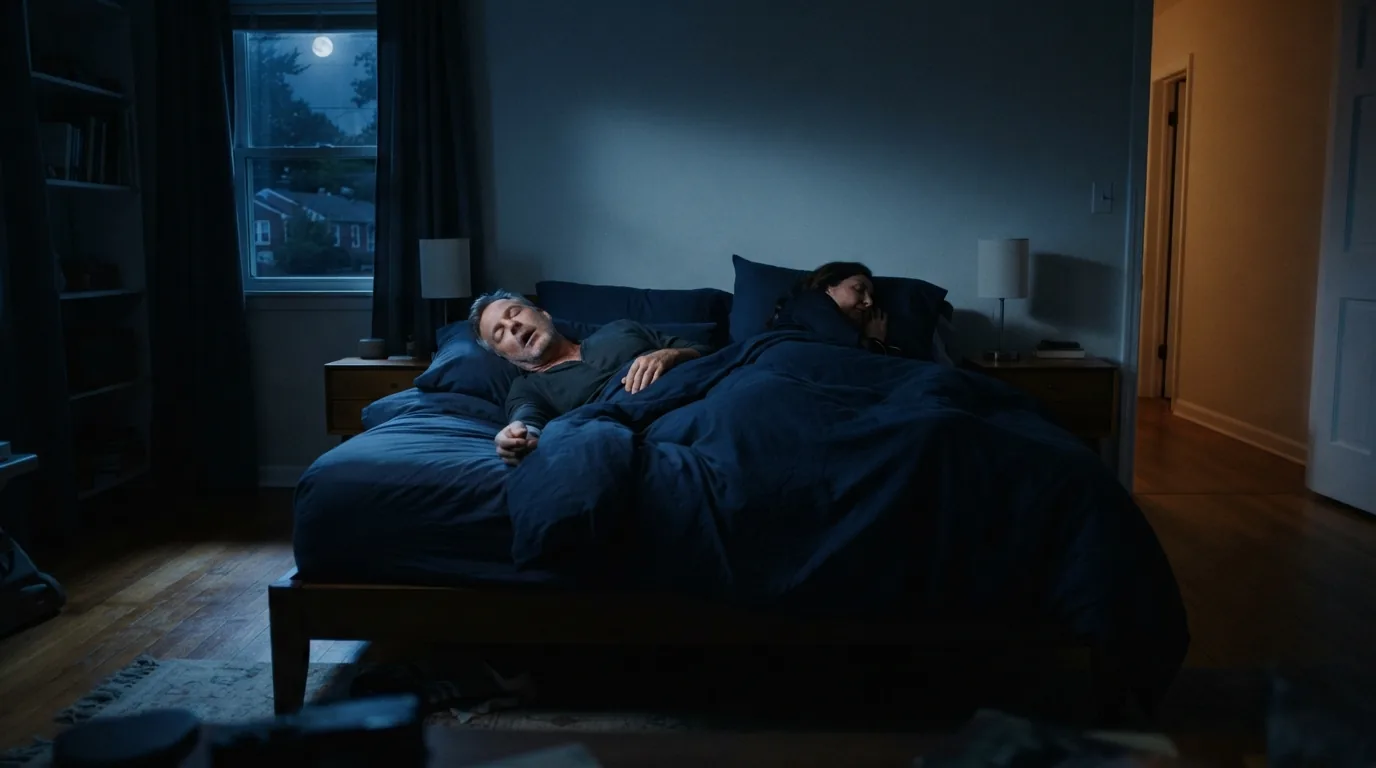
Vibration. Snoring is the noise of air moving fast and unevenly (turbulent airflow) past soft tissue at the back of your mouth, nose and throat. Think of a flag snapping in a strong wind, or blowing across a blade of grass. 🌬️
So why don’t you snore while you’re awake? Because when you fall asleep, the muscles that hold your throat open lose some of their tone and relax. Your lungs still want the same amount of air, so it has to squeeze through a smaller space, and the floppy bits flutter. The National Sleep Foundation explains it in just these terms.
The usual suspects are:
Everyone’s muscles relax in sleep, though. So why are some people silent and others legendary?
Why do some people snore and others don’t?

Because some airways start out narrower or floppier than others. About 37 million Americans admit they snore regularly, according to the National Sleep Foundation, and the same few traits keep showing up.
The shape of your airway
A low, thick soft palate, a long uvula, big tonsils, a large tongue or a set-back jaw all leave less room. A crooked wall inside the nose (a deviated septum) blocks airflow on the way in. None of this is your fault, and it often runs in families.
Being a man (sorry, guys)
More men (42%) than women (31%) say they snore, in the NSF’s figures. A Harvard team that measured men’s and women’s airways found a likely reason: men’s throat airway was substantially longer, with a bigger soft palate, and their computer model showed the male airway collapses more easily on anatomy alone (Malhotra and colleagues, 2002). Women snore too, and are often missed: see what causes snoring in women.
Weight, age and hormones
Extra weight around the neck presses on the airway. In a Wisconsin study of 690 adults, a 10% weight gain went with about 32% more breathing pauses per hour of sleep, and a 10% loss with about 26% fewer (Peppard and colleagues, 2000). That study counted pauses rather than snores, but it’s the same narrowing.
With age, throat muscles lose tone, and menopause and pregnancy change things too. If you never used to snore, our guide to snoring all of a sudden walks through each trigger.
A nose that’s often blocked
In the Wisconsin Sleep Cohort, 4,916 adults aged 30 to 60 reported on their nights. Those with severe nasal congestion nearly every night had about three times the odds of habitual snoring (Young and colleagues, 2001). Allergies, a deviated septum or nostrils that collapse when you breathe in all count.
So that’s who snores. But even a regular snorer has quiet nights and terrible ones. What changes?
Why do people snore louder on some nights?
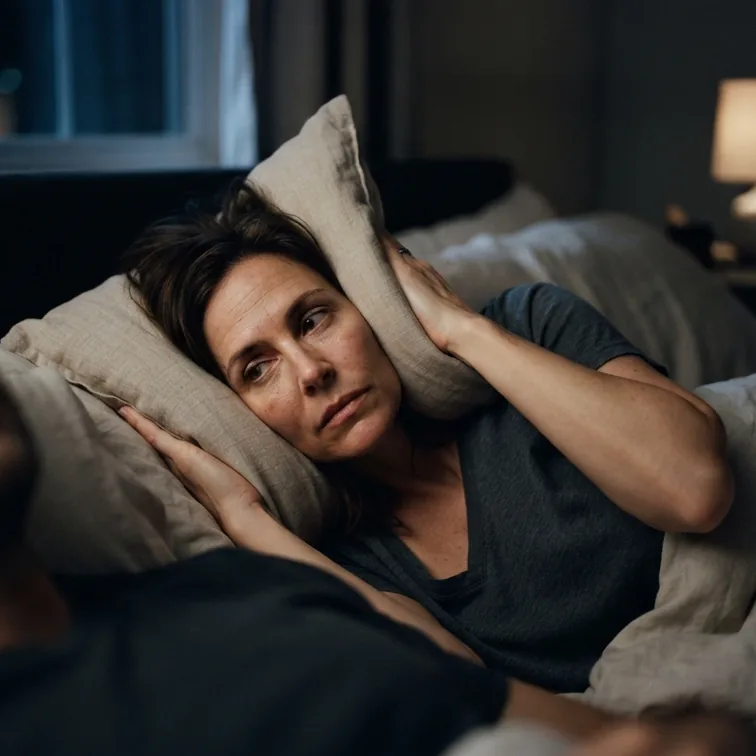
Because something that night narrows the airway further, or makes you breathe harder against it. Usually both. 🔊
That second part is the new bit. In the 2024 study, Brigham and Women’s Hospital researchers measured the airflow, the breathing effort and the snore volume of 40 people across 165,063 breaths (Vena and colleagues). With a narrowed airway, the snore got clearly louder as breathing effort rose: about 3.4 decibels more for each step up in effort. With an open airway, harder breathing barely changed the sound.
Plot twist: when the airway closed almost completely, the snore got quieter, by about 10 decibels. 🤯 So a snore that suddenly goes silent isn’t always good news. It can mean the airway has nearly shut. More on that below.

After a few drinks

Alcohol relaxes the throat muscles even more. In a small 1982 sleep-lab study, alcohol before bed turned the plain snoring of two chronic snorers into obstructive sleep apnea in the first hour of sleep (Issa and Sullivan). A 2020 review of 13 lab studies with 279 people linked drinking with worse snoring and about 4 more breathing pauses per hour. Holiday party season, take note. 🍷
On your back
Gravity pulls the tongue and soft palate backward. In a Dutch study of 76 snorers without sleep apnea, 65.8% snored more on their back than in other positions, and a higher body weight made back snoring worse (Benoist and colleagues, 2014). Our sleep position guide covers how to stay off your back, and when that isn’t enough.
With a cold, allergies or dry winter air
A stuffy nose makes you suck air harder, which is exactly the “more effort” that turned up the volume in the 2024 study. Then you switch to mouth breathing. For tonight, see how to sleep with a stuffy nose; for heated rooms in winter, our humidifier for snoring guide; and for sprays, which nasal spray helps.
Tiredness and sleeping pills belong on this list too: both let the airway relax more deeply. So now you know the “why”. The useful question is: where does your snore start?
Where does your snore start? The snore types
Each snore type has its own clue, and its own fix. Here’s the cheat sheet, with the guide or review for each one.
| Snore type | The clue | What usually helps |
|---|---|---|
| 👃 Nose | Worse with a cold or allergies; quieter when you hold the nostrils open | Treat the stuffiness; a nasal dilator such as the Airflow Clip for nostrils that collapse |
| 👅 Tongue | Quieter with your tongue held forward | A tongue retaining device such as the Good Morning Snore Solution; tongue exercises |
| 🦷 Jaw | Quieter when you push your lower jaw forward | A jaw-advancing mouthpiece such as VitalSleep (see do mouthpieces work) |
| 👄 Mouth | Loud with your mouth open, quiet with it closed | Nose breathing first; mouth tape only with a clear nose (Intake review) |
| 🛏️ Back | Mostly or only on your back | Side sleeping; a positional pillow like the Posiform |
Snoring with your mouth shut? That points away from the mouth and toward the tongue or soft palate: see snoring with your mouth closed. Jaw pain or clicking? Read TMJ and snoring before buying any mouthpiece.
Find your snore type in 2 minutes

You can do most of this awake, lying in bed, by making the snoring sound on purpose. Silly? A bit. Useful? Very, and it costs nothing. Grab your partner as the judge. 👂
- The nose test Press one nostril shut and breathe in through the other. If it collapses or whistles, your nose is part of the story.
- The mouth test Snore with your mouth open, then closed. Can you only do it with your mouth open? You may be a mouth snorer.
- The tongue test Stick your tongue out, hold it between your teeth and try to snore. Much quieter? Your tongue is likely involved.
- The jaw test Push your lower jaw forward and try again. Quieter means the jaw position matters.
- The position check Ask your partner (or a recording app) whether you snore mostly on your back.
You can also try the tongue check tonight. Stick your tongue out, hold it gently between your teeth and try to snore. If the snoring gets much quieter, your tongue is likely part of the cause. See which fix matches your snore.
Want it done for you? The free snore quiz asks these questions and shows the fix that matches your answers, and See Your Snore animates where your snore starts.
For tongue snorers, the quiz’s first pick is the Good Morning Snore Solution, which holds the tongue forward by gentle suction. In a 2008 crossover trial of this kind of device, snoring fell from about 215 to 133 snores an hour (Dort and Brant). Our Good Morning Snore Solution review covers who it suits and who should skip it (dentures, jaw pain, a blocked nose).
When snoring is more than a noise

Most snoring is just loud. But snoring is also the most common sign of obstructive sleep apnea (OSA), where the airway closes again and again in sleep and breathing stops for a few seconds each time.
When to see a doctor
- Someone sees you stop breathing, gasp or choke in your sleep.
- Loud snoring that goes quiet, then ends with a snort.
- You’re sleepy in the daytime, nod off while driving, or wake with headaches.
- You have high blood pressure.
- Snoring that starts in pregnancy: in a study of 1,719 pregnant women, snoring that began in pregnancy was linked with high blood pressure in pregnancy and preeclampsia. Mention it at your next check-up.
Anti-snoring gadgets don’t treat sleep apnea, so get checked first if any of these sound familiar. Many people now start with a test at home: our guide to the at-home sleep apnea test explains how it works, and our Lofta review covers one option. For the bigger picture, our snoring statistics page collects 40 facts with sources.
And if you’re the one lying awake next to the snorer, you deserve sleep too: see how to sleep with someone who snores. 💤
FAQ: why people snore
Why do people snore?
Because air squeezes through an airway narrowed in sleep and makes the soft palate, tongue or nose vibrate. Relaxed muscles, a blocked nose, alcohol, back sleeping and extra weight make that narrowing worse.
Why do people snore when they drink?
Alcohol relaxes the throat muscles that keep the airway open. A 2020 review of 13 sleep-lab studies linked drinking with worse snoring and more breathing pauses.
Why do men snore more than women?
Men tend to have a longer throat airway and a larger soft palate, which collapse more easily. Women snore too, especially after menopause and in pregnancy.
Why do people snore on their back?
Gravity lets the tongue and soft palate fall back into the airway. In one study, about two in three snorers without sleep apnea snored more on their back.
Is snoring bad for you?
Plain snoring is mostly a noise problem. Snoring with breathing pauses, gasping, daytime sleepiness or high blood pressure can mean sleep apnea, so see a doctor.
The bottom line on why people snore
Snoring is a sound made where your airway narrows in sleep: the nose, the soft palate or the tongue. Anatomy, being male, weight and a blocked nose decide who snores. Alcohol, back sleeping and colds decide how loud the night gets.
Honestly? Don’t buy anything until you know your type. Do the 2-minute check or the quiz, start with the free fixes (side sleeping, a clear nose, and a mocktail instead of a nightcap), and pick a device only for the snore type you actually have. And if there are pauses or gasps, a doctor comes first.
Which snorer are you?
Answer a few quick questions and see the fix that matches your snore type.
Take the free snore quiz →Sources
- Vena D, Gell L, Messineo L, et al. Physiological Determinants of Snore Loudness. Ann Am Thorac Soc. 2024. PubMed 37879037
- Benoist LB, Morong S, van Maanen JP, et al. Evaluation of position dependency in non-apneic snorers. Eur Arch Otorhinolaryngol. 2014. PubMed 23722310
- Malhotra A, Huang Y, Fogel RB, et al. The male predisposition to pharyngeal collapse: importance of airway length. Am J Respir Crit Care Med. 2002. PubMed 12421747
- Young T, Finn L, Palta M. Chronic nasal congestion at night is a risk factor for snoring in a population-based cohort study. Arch Intern Med. 2001. PubMed 11427099
- Peppard PE, Young T, Palta M, et al. Longitudinal study of moderate weight change and sleep-disordered breathing. JAMA. 2000. PubMed 11122588
- Issa FG, Sullivan CE. Alcohol, snoring and sleep apnea. J Neurol Neurosurg Psychiatry. 1982. PubMed 7077345
- Burgos-Sanchez C, Jones NN, Avillion M, et al. Impact of Alcohol Consumption on Snoring and Sleep Apnea: A Systematic Review and Meta-analysis. Otolaryngol Head Neck Surg. 2020. PubMed 32513091
- O’Brien LM, et al. Pregnancy-onset habitual snoring, gestational hypertension, and preeclampsia: prospective cohort study. Am J Obstet Gynecol. 2012. PubMed 22999158
- Dort L, Brant R. A randomized, controlled, crossover study of a noncustomized tongue retaining device for sleep disordered breathing. Sleep Breath. 2008. PubMed 18461376
- National Sleep Foundation. What Are the Common Causes of Snoring? 12 November 2020. thensf.org
This article is general information, not medical advice. See our medical disclaimer.