
In a four-year study of 690 adults, a 10% weight gain predicted about a 32% rise in breathing pauses during sleep. That is the most common answer to “why am I snoring all of a sudden”: something changed. It might be your weight, a drink before bed, a blocked nose, a new medicine, the way you sleep, or your hormones. Find the change, and you usually find the fix.
I didn’t test these myself. Instead, I read the studies behind them, including that four-year study of 690 adults on weight and breathing in sleep, plus the makers’ details and buyer reviews. So you get what the research shows, not a sales pitch.
In this article
- Weight gain and sudden snoring
- Alcohol and smoking
- A blocked nose: colds, allergies and the season
- Sleeping pills, new medicines and your sleeping position
- Menopause and pregnancy
- No trigger? Find your snore type
- For tongue snorers: the Good Morning Snore Solution
- Why am I snoring all of a sudden? A quick self-check
- Frequently asked questions
- My verdict
The short answer
- Look for what changed: weight gain, alcohol, a blocked nose, smoking, sleeping pills, sleeping on your back, menopause or pregnancy. Each one is linked to snoring or to breathing pauses in sleep.
- Fix that first: side sleeping, less alcohol in the evening, treating a stuffy nose, and stopping smoking are the NHS’s first steps.
- No trigger, or still snoring? Your snore type matters. The free snore quiz shows which fix matches it. For snoring from the tongue, our pick is the Good Morning Snore Solution.
- See a doctor if you gasp, choke or stop breathing in your sleep, or feel very sleepy in the day.
Weight gain and sudden snoring

You don’t need to gain a lot of weight for it to show up at night. In a Wisconsin study of 690 adults, checked twice four years apart, a 10% weight gain predicted about a 32% increase in the apnea-hypopnea index: the number of times breathing pauses or gets very shallow per hour of sleep. A 10% weight loss predicted about a 26% decrease.
To be clear, this study measured breathing pauses, not how loud the snoring was. But it also found that a 10% weight gain came with six times the odds of moderate-to-severe sleep-disordered breathing. So if the snoring started after the scales crept up, it is worth taking seriously.
Source: Peppard et al., JAMA 2000 (690 adults, 4 years)
Try this tonight
Sleep on your side. The NHS suggests a special pillow or a bed wedge to help keep you there. Our wedge pillow guide explains what a wedge can and can’t do.
Alcohol and smoking

A drink in the evening is one of the easiest triggers to test. A review of 13 sleep-lab studies with 279 people found that alcohol was linked to worse snoring, about four more breathing pauses per hour, and lower oxygen levels at night, in people already prone to snoring or sleep apnea. The NHS advice is simple: don’t drink too much alcohol.
Smoking matters too. In a study of 811 adults, people who smoked had about 2.3 times the odds of snoring compared with people who had never smoked. Former smokers were not at higher risk once other factors were taken into account. That hints that stopping may help, though a study like this can’t prove it.
A blocked nose: colds, allergies and the season

If the snoring started with a cold, hay fever or the heating coming on, look at your nose. A study of 4,916 adults aged 30 to 60 found that people whose nose was blocked at night always or almost always were three times as likely to be habitual snorers. This held even for snorers without sleep apnea.
For a stuffy nose, our nasal spray guide compares the types and their limits. If the air is dry in winter, read what a humidifier for snoring can and can’t do.
You’ll also see nasal dilators such as the Airflow Clip. They are made for one problem: nostrils that pinch shut when you breathe in. A clip holds the nostrils open; it does nothing for a nose blocked by a cold or allergies. Our Airflow Clip review explains how to tell which one you have.
Sleeping pills, new medicines and your sleeping position
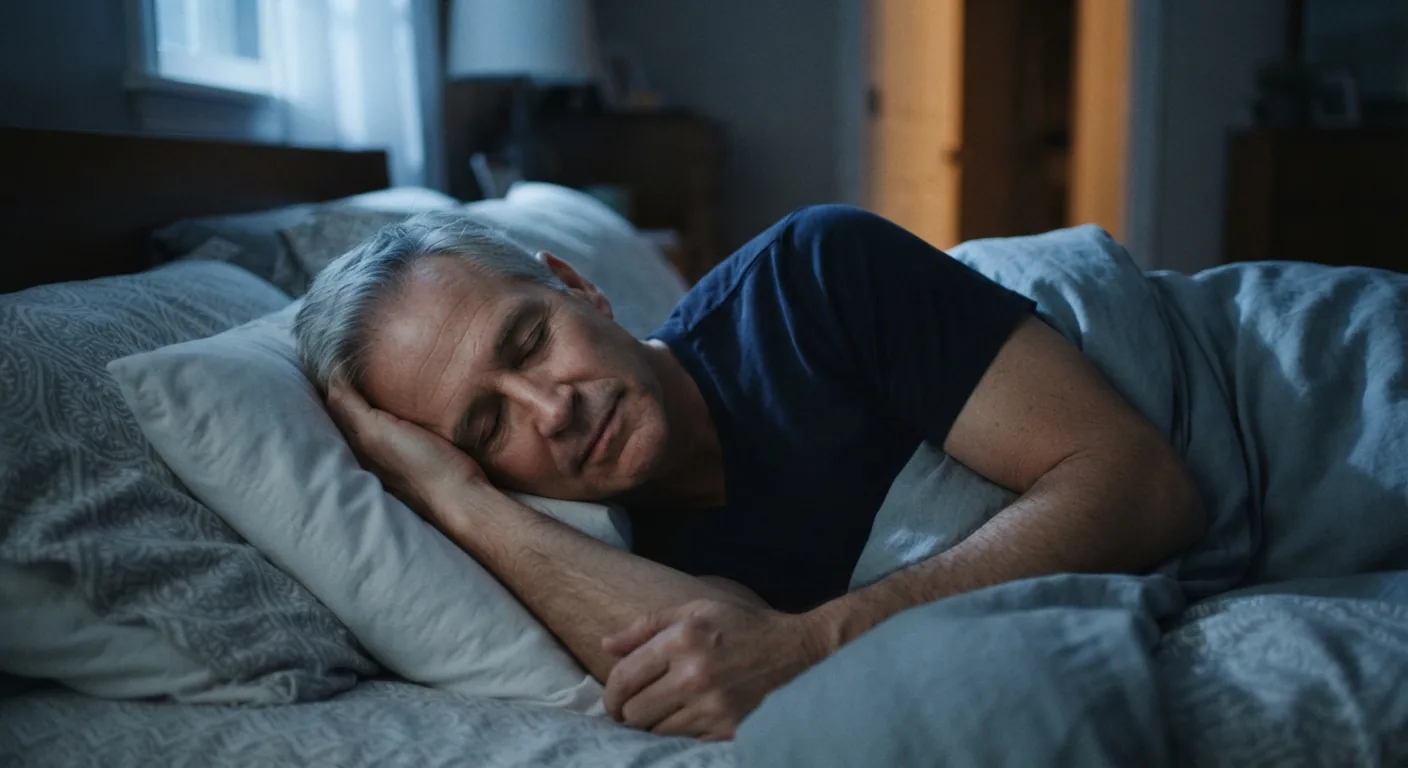
The NHS says sleeping pills “can sometimes cause snoring”. If the snoring began around the time you started a new medicine, don’t stop it on your own. Ask your doctor or pharmacist whether it could be the cause, and whether there is another option.
Sleeping on your back is the other common change. A new bed or pillow, an injury, or a partner who now takes “your” side can all leave you on your back more often. The NHS lists back sleeping as a reason people snore, and suggests sleeping on your side, or sewing a tennis ball to the back of your sleepwear so lying on your back feels uncomfortable.
Our guide to the best sleep position for snoring covers the options. If you snore mostly on your back, the Posiform pillow review looks at a pillow made to keep you on your side. It won’t help if you snore in every position.
Menopause and pregnancy

For women, new snoring can come with a change in life stage. In the Wisconsin Sleep Cohort, 589 women had sleep-lab tests. After menopause, the odds of sleep-disordered breathing (5 or more breathing pauses an hour) were 2.6 times those before menopause, even after allowing for age, weight and smoking. Around the menopause itself (perimenopause), the odds were not clearly higher. Again, this measured breathing pauses, not snoring alone. The researchers say women around menopause who snore, or feel sleepy in the day, should be checked.
Pregnancy is another time snoring often starts. In a study of 1,719 women in the third trimester, 34% snored, and 25% said the snoring had started during pregnancy. Snoring that began in pregnancy was linked to higher odds of high blood pressure in pregnancy and preeclampsia. If you have started snoring while pregnant, tell your midwife or doctor.
When it’s more than snoring: see a doctor
- You wake up gasping or choking.
- Someone notices your breathing stops and starts while you sleep.
- You feel very sleepy in the day, even after a full night in bed.
- You have high blood pressure.
- The snoring doesn’t get better after you’ve fixed the trigger.
New, loud snoring can be a sign of sleep apnea, and no article can rule that out. A doctor can arrange a sleep test.
No trigger? Find your snore type
Some people can’t find anything that changed, or they fix the trigger and still snore. Then the question is where the sound comes from: your nose, your mouth, your tongue or your sleeping position. The free snore quiz takes about a minute and matches your answers to a fix.
You can also try the tongue check tonight. Stick your tongue out, hold it gently between your teeth and try to snore. If the snoring gets much quieter, your tongue is likely part of the cause. See which fix matches your snore.
For tongue snorers: the Good Morning Snore Solution
If the tongue check made a difference, the Good Morning Snore Solution is our pick. It holds the tongue forward with gentle suction. It is FDA-cleared to reduce snoring in adults 18 and over. It is not a treatment for sleep apnea. It costs $79.94, or $139.94 for a two-pack, with a 30-day guarantee from delivery and free shipping on orders over $99.
- It suits: adults whose snoring quiets down in the tongue check, and who can breathe easily through their nose.
- Skip it if: you have sleep apnea (see a doctor instead), you can’t breathe through your nose at night, or you’re under 18.
Prefer to start without a device? Our guide to tongue exercises for snoring covers what the trials found.
Why am I snoring all of a sudden? A quick self-check
| What changed? | What to try | Read next |
|---|---|---|
| You gained weight | Side sleeping now; losing some weight over time | Sleep positions |
| You drink in the evening | Cut back, and see if the snoring changes | – |
| A cold, allergies or dry air | Treat the stuffy nose; keep the bedroom air from getting too dry | Nasal sprays |
| You smoke | Stopping; former smokers weren’t at higher risk | – |
| A new medicine or sleeping pills | Ask your doctor or pharmacist; don’t stop on your own | – |
| You sleep on your back more | Side sleeping, a tennis ball, or a positional pillow | Posiform pillow review |
| Menopause or pregnancy | Tell your doctor or midwife | – |
| Nothing obvious | The tongue check and the snore quiz | Snoring with your mouth closed |
If your snoring keeps someone else awake while you work on it, our guide on sleeping next to someone who snores has ideas for them.
Frequently asked questions
Can you suddenly start snoring for no reason?
There is usually a reason you haven’t spotted yet, such as a little weight gain, a new medicine, a blocked nose, or menopause. If you can’t find one, the snore quiz helps you work out your snore type.
Why am I snoring so loud all of a sudden?
The same triggers apply: alcohol, a blocked nose, weight gain, sleeping pills or sleeping on your back. New, loud snoring can also be a sign of sleep apnea, so see a doctor if it comes with gasping, choking or daytime sleepiness.
Is sudden snoring a sign of sleep apnea?
It can be, but many people snore without sleep apnea. Only a sleep test can tell, so talk to a doctor if you have any of the warning signs above.
Can a cold make you snore?
Yes, it can. In a study of 4,916 adults, people whose nose was blocked at night most of the time were three times as likely to snore regularly.
Does losing weight stop snoring?
It may help. In the four-year Wisconsin study, a 10% weight loss predicted about 26% fewer breathing pauses per hour. That study didn’t measure snoring itself, so the effect on the noise may differ from person to person.
My verdict
Sudden snoring usually has a trigger. Go through the list: weight, alcohol, your nose, smoking, medicines, your sleeping position and hormones, and fix what you can. If nothing changed, or the snoring carries on, find your snore type. And if there’s gasping, choking or daytime sleepiness, see a doctor first.
Still not sure why you snore?
Answer a few quick questions and see the fix that matches your snore type.
Take the free snore quiz →Sources
- Peppard PE, Young T, Palta M et al. Longitudinal study of moderate weight change and sleep-disordered breathing. JAMA, 2000 (PMID 11122588)
- Burgos-Sanchez C et al. Impact of alcohol consumption on snoring and sleep apnea: a systematic review and meta-analysis. Otolaryngology-Head and Neck Surgery, 2020 (PMID 32513091)
- Young T, Finn L, Palta M. Chronic nasal congestion at night is a risk factor for snoring in a population-based cohort study. Archives of Internal Medicine, 2001 (PMID 11427099)
- Wetter DW, Young TB et al. Smoking as a risk factor for sleep-disordered breathing. Archives of Internal Medicine, 1994 (PMID 7944843)
- Young T, Finn L, Austin D, Peterson A. Menopausal status and sleep-disordered breathing in the Wisconsin Sleep Cohort Study. American Journal of Respiratory and Critical Care Medicine, 2003 (PMID 12615621)
- O’Brien LM et al. Pregnancy-onset habitual snoring, gestational hypertension, and preeclampsia: prospective cohort study. American Journal of Obstetrics and Gynecology, 2012 (PMID 22999158)
- NHS, Snoring (checked 19 October 2026)
- Good Morning Snore Solution prices and terms: goodmorningsnoresolution.com (checked 19 October 2026)
This article is general information, not medical advice. See our medical disclaimer.