
The best sleep position for snoring is on your side. It is the simplest answer, but the numbers show why it matters: in a sleep-lab study of 76 snorers without sleep apnea, 65.8% of them snored more on their back than in other positions. If you are one of them, the way you lie matters more than you might think.
I didn’t test these myself. Instead, I read the studies behind them, including a sleep-lab study of 76 snorers without sleep apnea, plus the makers’ details and buyer reviews. So you get what the research shows, not a sales pitch.
In this article
- Why you snore when you sleep on your back
- Is your snoring actually positional?
- The best sleep position for snoring: side, back, stomach or raised
- How to stay off your back: what works?
- The Posiform anti-snore pillow
- Managing side-sleeping pain
- The partner’s role in positional therapy
- When position is not enough
- FAQ
- My verdict
The short answer
- The goal: Sleep on your side. Your tongue and soft palate are less likely to fall back and narrow your airway.
- The problem: It’s easy to roll onto your back in your sleep without noticing.
- Can’t sleep on your side? Raising your upper body helps a little.
- The pick for back-snorers: The Posiform anti-snore pillow is designed to make back-sleeping uncomfortable so you stay on your side.
- The limit: If you still snore loudly on your side, changing your position won’t solve the problem.
Why you snore when you sleep on your back
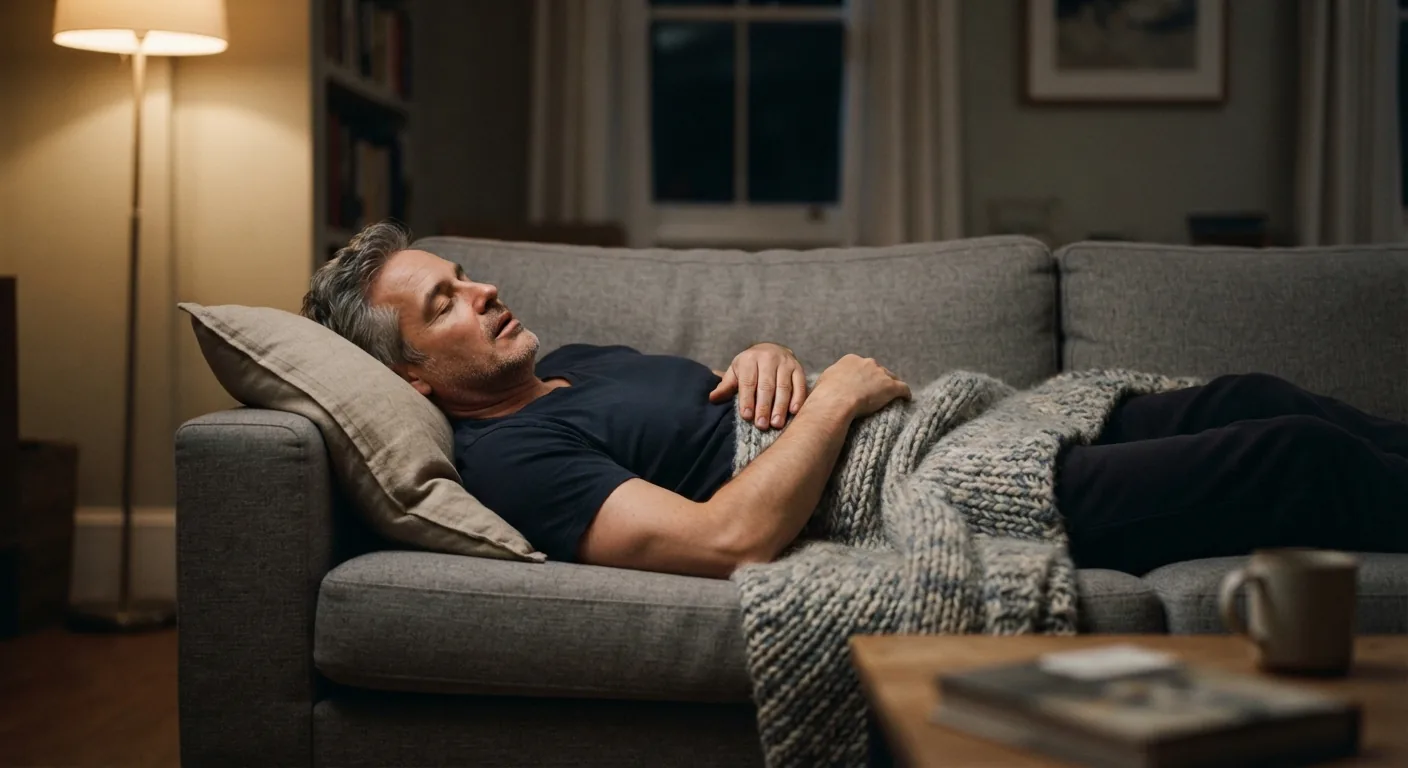
When you lie flat on your back, gravity pulls your tongue and soft palate (the soft back part of the roof of your mouth) toward your throat. This narrows the upper airway.
As you breathe, the air has to squeeze through a tighter gap, which causes these tissues to vibrate. That vibration is the sound you (or your partner) hear as snoring. If the airway narrows so much that your breathing keeps stopping or getting very shallow, that is obstructive sleep apnea, which needs a doctor.
You can find a more detailed breakdown of how this happens in our wedge pillow guide.
Is your snoring actually positional?
Before you buy a specialized pillow or sew a tennis ball into your pajamas, find out whether position is really the main cause. Not all snoring is positional.
The easiest way to find out is to ask your partner. Do they notice the noise stops or softens when you roll onto your side? If they don’t notice a difference, position probably isn’t your main cause.
If you sleep alone, use a snore-recording app. Note the times you were loudest and try to recall your position, or use a wearable tracker that monitors movement. You can also take a free snore quiz to see if position is likely your main trigger.
The best sleep position for snoring: side, back, stomach or raised

Most studies compare back and side sleeping. Here is what the evidence says about each position.
- Side sleeping: The best position for most snorers, because the tongue is less likely to fall back. The studies compare back with side sleeping, not left with right, so either side is fine.
- Back sleeping: The worst position for most snorers. Gravity pulls the tongue and soft palate back toward the throat.
- Stomach sleeping: It keeps you off your back, but I found no good study of stomach sleeping for snoring, so I can’t recommend it as a fix.
- Raised upper body: In a home study of 25 snorers, run by the sleep-tracking company SleepScore Labs, raising the upper body 12 degrees on an adjustable bed base for 4 weeks cut snoring time by 7% compared with sleeping flat (Danoff-Burg 2022). It is a real effect, but a small one.
A free test before you buy anything
For a few nights, put a firm pillow behind your back so rolling over is harder, and ask your partner (or a recording app) whether the snoring changes. If it gets clearly quieter, position is a big part of your snoring.
How to stay off your back: what works?

Knowing you should sleep on your side is one thing; actually staying there for eight hours is another. This is called “positional therapy.”
An expert statement from the Australasian Sleep Association says positional therapy should be considered for people who snore mainly on their back (Sarkis 2023). The best-known home version is the tennis ball technique: a ball sewn into the back of a T-shirt, so lying on your back is uncomfortable. It is hard to stick with. In a study of people with positional sleep apnea, 67 answered a follow-up about 2.5 years later: only 6% still used the ball, 13.4% had learned to stay off their back without it, and the rest did neither. Most of those (34 of 54) said it was too uncomfortable (Bignold 2009).
Position trainers are small devices worn on the chest that vibrate when you roll onto your back. In a one-month study of 55 people with mild positional sleep apnea, 75.9% used the trainer enough (at least 4 hours a night, 5 nights a week), against 42.3% for the tennis ball, and their sleep improved more (Eijsvogel 2015).
Pillows can work too. In 25 adults with positional sleep apnea, a head-positioning pillow cut snoring events from 218 to 115 an hour over three nights, though in overweight people the drop was not clear (Chen 2015).
| Method | How it works | What the research found | The catch |
|---|---|---|---|
| Tennis ball | A ball on your back makes lying on it uncomfortable | Only 6% still used it about 2.5 years later | Most who quit found it too uncomfortable |
| Position trainer | Vibrates when you roll onto your back | 75.9% used it enough in a month, against 42.3% for the tennis ball | You wear a device every night |
| Posiform pillow | A ridge makes rolling onto your back uncomfortable | Time on the back fell from 52% to 20% after a month; a two-night home trial found no clear change | Not if side sleeping hurts your shoulder or hip |
| Adjustable bed | Raises your upper body 12 degrees | 7% less snoring time than sleeping flat | Costly, and the effect is small |
Source: Bignold 2009, 67 people with positional sleep apnea
The Posiform anti-snore pillow
If you want a passive way to stay on your side without wearing a belt or sewing balls into your clothes, a positional pillow like the Posiform is the simplest option. On the maker’s site (checked on 17 October 2026) it costs $119.99, normally $129.99, and you save $30 if you buy two. It comes with a 120-night money-back guarantee and a 3-year warranty on the memory foam.
The design is straightforward: it has a raised ridge down the middle. This ridge makes it uncomfortable to lie flat on your back, which nudges you to stay on your side. It also features forehead support, cut-outs for your ear and shoulder, and a slight forward tilt for the head. The core is memory foam with a bamboo cover.
In a sleep-lab study in Sleep and Breathing, 28 adults with positional sleep apnea used the pillow for a month, and the time they spent on their back fell from 52% of the night to 20% (Newell 2018). There is also a reality check: in a 2025 home trial of 19 people, two nights with each device, a vibrating belt clearly cut back-sleeping time, but the Posiform did not. Comfort and sleep quality were rated about the same, and the authors say the group was small (Aguilar Pelaez 2025).
Who it suits: People who snore mostly on their back and don’t want to wear a device. You can read more in our Posiform pillow review.
Who should skip it: If you snore just as loudly on your side, this pillow won’t help. And if side sleeping hurts your shoulder or hip, the Posiform is not for you. A wedge pillow or a raised bed may be the gentler choice.
Note: The maker currently lists a lead time of about 3 weeks due to demand.
Managing side-sleeping pain
If you’re not used to it, side sleeping puts more of your weight on one shoulder and hip.
A mattress that is too firm doesn’t let them sink in, so they take the pressure. If side sleeping hurts, check whether your mattress is too firm for a side sleeper.
The partner’s role in positional therapy
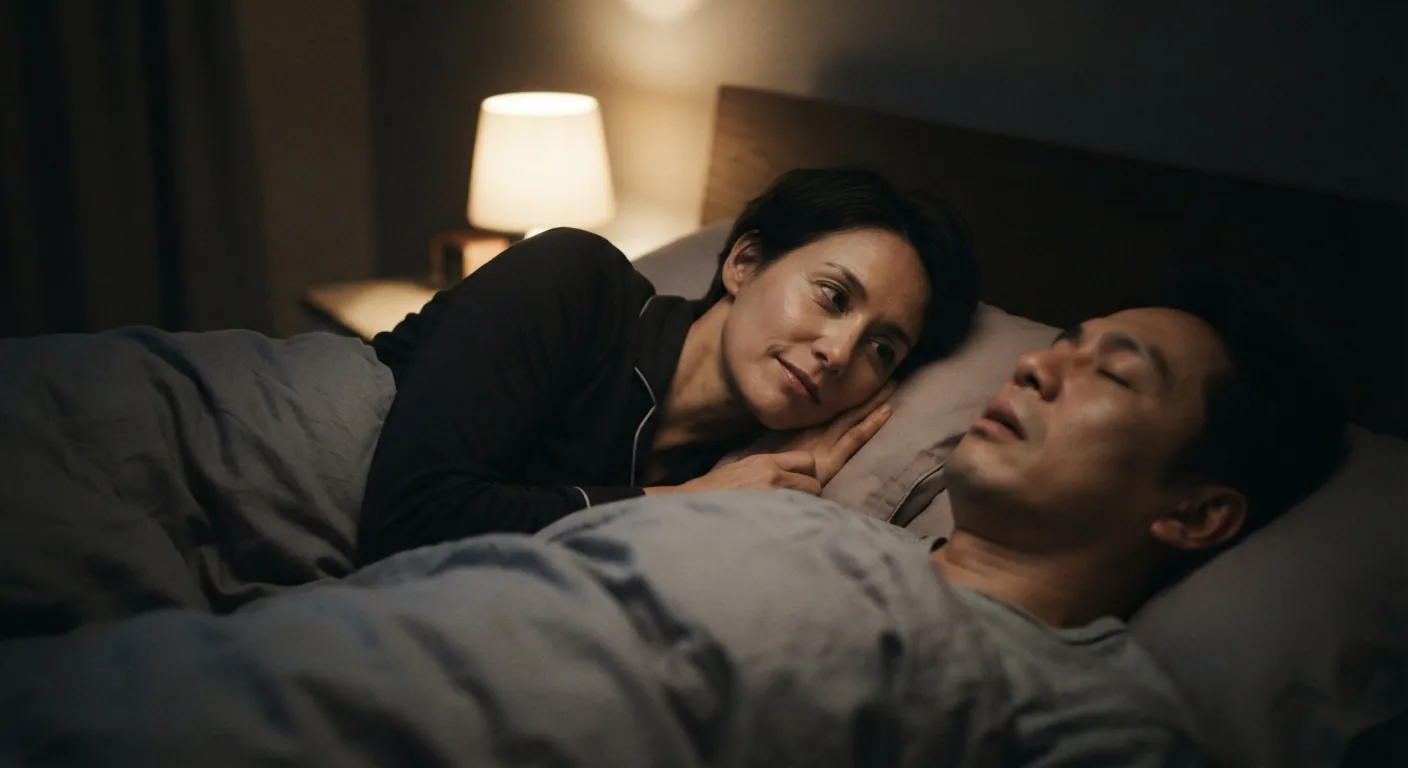
Snoring is rarely a solo problem. Your partner is usually the one who hears when the noise starts and which way you were lying.
In a study of 30 snorers without sleep apnea who used a position trainer for 6 weeks, their partners’ rating of the snoring (0 to 10) fell from a median of 8 to 7, and the partners’ own questionnaire about how the snoring affects them improved too (Benoist 2018). There was no comparison group, so treat it as a modest result.
If you’re struggling to maintain your position, your partner can help by gently nudging you back to your side. For more strategies, see how to sleep with someone who snores.
Before you buy: a quick checklist
- Record your snoring: Confirm the noise actually stops when you are on your side.
- Check your joints: Ensure you can tolerate side sleeping without shoulder or hip pain.
- Rule out apnea: Ensure you aren’t gasping for air (which requires a doctor, not a pillow).
- Assess your budget: Try the free pillow-behind-your-back test first, then decide whether a tool like the Posiform is worth it.
When position is not enough

If you have switched to side sleeping and you are still loud, position isn’t your main cause. In a sleep-lab study of 72 habitual snorers, most of those without sleep apnea snored less often and less loudly on their side, but people with sleep apnea often did not (Nakano 2003). So if you’re still loud on your side, it’s worth asking a doctor about a sleep test.
Then look at the other causes: the tongue, the jaw and the nose.
Try the 10-second tongue check
Stick your tongue out, hold it gently between your teeth and try to snore. If the sound is much weaker, your tongue is part of the problem.
The tongue: If the tongue check made a big difference, the Good Morning Snore Solution holds the tongue forward with gentle suction, so it works in any position. It costs $79.94 ($139.94 for two), comes with a 30-day money-back guarantee and is FDA-cleared to reduce snoring in adults. It needs nose breathing and does not treat sleep apnea.
The jaw: The Australasian Sleep Association’s statement recommends a jaw mouthpiece (mandibular advancement device) as the first device to try for snoring in people with their own teeth, after a check by a dentist and a sleep doctor. You can learn more in our guide on whether snoring mouthpieces work.
The nose: A stuffy nose, or nostrils that close when you breathe in, is a separate cause, and changing position doesn’t deal with it. For nostrils that close, a nasal dilator may be the better starting point.
Combining can help too. In 20 people whose sleep apnea was worse on their back, a chest-worn position trainer plus a jaw mouthpiece lowered breathing pauses more than either one alone (Dieltjens 2015). This was done under medical supervision for sleep apnea, so it is not a DIY recommendation.
When to see a doctor
Changing your position can reduce snoring, but it is not a home treatment for obstructive sleep apnea. You should see a doctor for a sleep test if you experience:
- Waking up gasping or choking, or a partner seeing you stop breathing.
- Morning headaches.
- Excessive daytime sleepiness despite a full night’s sleep.
- High blood pressure.
FAQ
Why do I snore when I sleep on my back?
On your back, gravity pulls the tongue and soft palate toward your throat. The airway narrows, and the soft tissue vibrates as air squeezes past.
Is it better to sleep on your left or right side for snoring?
The studies compare back with side sleeping, not left with right. For snoring, either side is better than your back.
Does sleeping on your stomach stop snoring?
It keeps you off your back, but there is no good study of stomach sleeping for snoring, so it isn’t a proven fix.
Does raising the head of the bed help snoring?
A little. In a home study of 25 snorers, raising the upper body 12 degrees on an adjustable bed base cut snoring time by 7% compared with sleeping flat.
Can a pillow stop snoring?
Only if you snore mostly on your back. A positional pillow like the Posiform helps by keeping you on your side; it does nothing for snoring that comes from your nose or tongue.
My verdict
Side sleeping is the best position for most snorers: in the sleep-lab study, about two in three snorers without sleep apnea snored more on their back. If you keep rolling onto your back, the Posiform pillow is a simple option with a sleep-lab study behind it, and its 120-night guarantee gives you time to find out. If you’re still loud on your side, check the other causes, and see a doctor if you have any of the warning signs above.
Do you snore mostly on your back?
Our review covers the Posiform pillow's sleep-lab study, its price and 120-night guarantee, and who should skip it.
Read our Posiform pillow review →Sources
- Benoist 2014, European Archives of Oto-Rhino-Laryngology (PMID 23722310)
- Nakano 2003, Sleep (PMID 12683476)
- Danoff-Burg 2022, JMIR Formative Research (PMID 35384849)
- Bignold 2009, Journal of Clinical Sleep Medicine (PMID 19961026)
- Eijsvogel 2015, Journal of Clinical Sleep Medicine (PMID 25515276)
- Benoist 2018, European Archives of Oto-Rhino-Laryngology (PMID 29948269)
- Chen 2015, Scientific Reports (PMID 26657174)
- Newell, Mairesse and Neu, Sleep and Breathing 2018 (PMID 29516264)
- Aguilar Pelaez et al., Cureus 2025 (PMID 40322369)
- Dieltjens 2015, Sleep and Breathing (PMID 25335642)
- Australasian Sleep Association, Sarkis et al., Respirology 2023 (PMID 36617387)
This article is general information, not medical advice. See our medical disclaimer.