

Segmented sleep, sleeping in two blocks with an hour or two awake in between, is often presented as the natural way humans slept before electric light. Whatever the history, trying it today has a practical problem: the middle-of-the-night waking usually happens with modern light, screens and stress, and those affect the hormones that run your sleep. This guide explains what is known about melatonin, cortisol and growth hormone at night, and what to do if you wake in the middle of the night.
In this article
The short answer
- Light at night lowers melatonin, and bright light can shift your body clock later.
- Most deep sleep, and most growth hormone release, happens in the first part of the night.
- Broken sleep has been linked with poorer blood sugar control in lab studies.
- No study has directly measured what a deliberate segmented-sleep schedule does to hormones.
- For most people, one continuous block of 7 hours or more is the safest target.
Where the idea of segmented sleep comes from
The historian A. Roger Ekirch found many references in old European writing to a “first sleep” and a “second sleep”, separated by a quiet hour or two awake. A small 1992 study by Thomas Wehr found that people kept in darkness for 14 hours a night tended to fall into a similar two-part pattern. But a 2015 study of present-day hunter-gatherers without electricity found that they mostly slept in one block. Read more in our guide to segmented sleep vs biphasic napping.
Melatonin: why light in the gap matters
Melatonin is the hormone that tells your body it is night. It starts to rise in the evening, usually a couple of hours before your normal bedtime, stays high through the night, and falls toward morning.
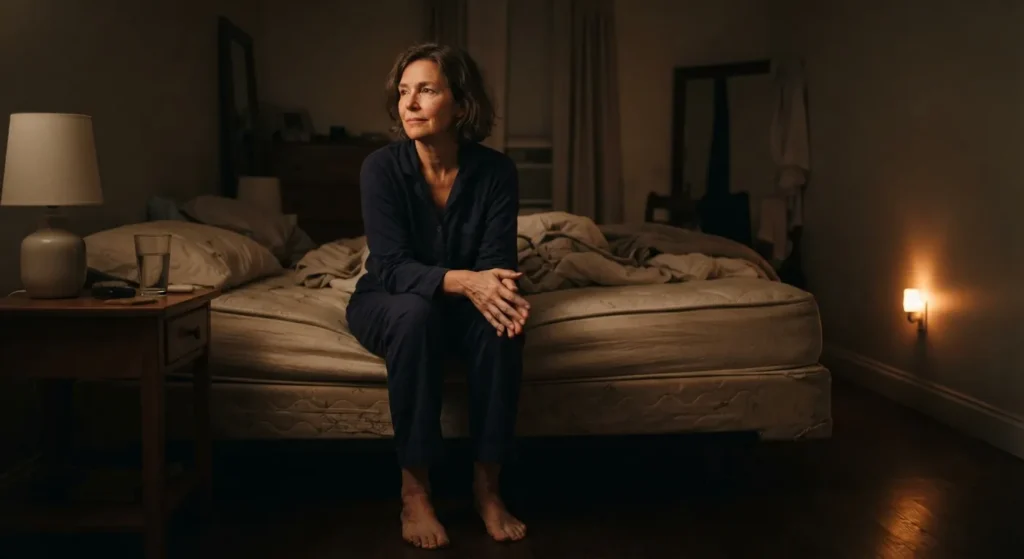
Light lowers melatonin. In a 2019 study (Phillips and colleagues, PNAS), people varied a lot in how sensitive they were, but on average, evening light of about 25 lux, roughly dim indoor lighting, cut melatonin by half. Bright light at night can also shift the body clock later, which makes it harder to sleep at your usual time.
Ekirch’s sleepers woke in near darkness. A modern “wake period” with lamps and phones is different, and that is the main reason sleep specialists are cautious about trying segmented sleep today.
Deep sleep and growth hormone happen early
Most deep (slow-wave) sleep comes in the first few sleep cycles of the night, and in adults much of the day’s growth hormone is released around that first deep sleep. Growth hormone helps with tissue repair and metabolism.
A segmented schedule would usually keep that first deep sleep, which is good. The open question is the second half. Repeatedly broken sleep reduces deep sleep overall, but there is no direct research on what a planned one-hour wake period does to growth hormone.
Cortisol and the early morning
Cortisol is lowest around midnight, starts to rise in the second half of the night, and peaks soon after waking. Stress or bright light during a middle-of-the-night waking could add to that rise and make it harder to fall back asleep. That is a reasonable concern based on how the system works, but it has not been tested directly for segmented sleep.
Blood sugar and appetite
In a small 2010 study (Stamatakis and Punjabi, Chest), two nights of sleep broken up by sounds made healthy adults about 25% less sensitive to insulin. Short sleep is also linked with changes in the appetite hormones ghrelin and leptin, and with more hunger. If a waking period also includes a snack, that adds calories at a time your body handles sugar less well.
Myth vs fact
Myth: Segmented sleep is proven to damage your hormones. Fact: It has not been studied directly. What we know is that night-time light lowers melatonin and broken sleep affects blood sugar, which are good reasons to keep any night waking dark, short and calm.
Naps are different
A short early-afternoon nap does not interrupt your night’s sleep or its melatonin. For good sleepers, a full night plus a 10 to 20 minute nap is generally fine. People with insomnia are usually advised to avoid naps.
If you wake in the middle of the night
- Keep the light very low. If you need light, use a dim, warm or red night light, and avoid screens.
- Do not check the time.
- If you are awake for about 20 minutes, get up and do something calm in dim light until you feel sleepy.
- Skip the snack unless you are genuinely hungry.
- Keep the same wake-up time the next morning.
When to see a doctor
Regular waking in the night can have a cause that needs treatment, such as sleep apnea, needing the toilet, pain, anxiety or depression. See a doctor if it happens most nights for more than a few weeks, or if you snore loudly or feel very sleepy during the day.
FAQ: Segmented Sleep and Hormones
Is segmented sleep more natural than sleeping through the night?
The evidence is mixed. Historical records describe it, but studies of modern people without electric light show mostly one block of sleep.
Can I segment my sleep without affecting my hormones?
Keeping the wake period dark, short and calm would limit the effects on melatonin and cortisol, but no study has tested this. For most people, aiming for one continuous night is simpler.
I naturally wake at 3 AM. Should I get up and be productive?
Usually not. Bright light, screens and work make it harder to fall back asleep. If you cannot sleep after about 20 minutes, do something quiet in dim light instead. See why you keep waking up at 4 AM.
Conclusion
Segmented sleep has an interesting history, but in a world of electric light it is hard to do without lowering melatonin and adding stress in the middle of the night. Until there is direct research, the safer goal for most people is a continuous night of 7 hours or more, and if you do wake, keep it dark, short and calm.
Sources
- Phillips AJK, et al. High sensitivity and interindividual variability in the response of the human circadian system to evening light. PNAS, 2019.
- Stamatakis KA, Punjabi NM. Effects of sleep fragmentation on glucose metabolism in normal subjects. Chest, 2010.
- Wehr TA. In short photoperiods, human sleep is biphasic. J Sleep Res, 1992.
- Yetish G, et al. Natural sleep and its seasonal variations in three pre-industrial societies. Curr Biol, 2015.
This article is general information, not medical advice. See our medical disclaimer.

[…] Segmented style: two blocks at night with an hour or so awake in between. This is the “first sleep” and “second sleep” that historians describe. We cover it in segmented sleep vs biphasic napping, and what waking in the night may do to melatonin and other hormones in segmented sleep and your hormones. […]