

The light in your home in the evening affects how easily you fall asleep. Bright, cool-white light delays the rise of melatonin, the hormone that tells your body it is night. Dim, warm light has much less effect. The good news: this is one of the cheapest sleep changes you can make. You may only need a few new bulbs and a dimmer.
In this article
The short answer
- Brightness matters as much as color: dim the lights in the last two to three hours before bed.
- In the evening, choose warm bulbs, around 2700K or lower, for living rooms and bedrooms.
- For bedside reading, a small, warm, dim lamp aimed at the page is best.
- At night, use a very dim red or amber night light for the bathroom.
- Get bright light in the morning to keep your body clock on time.
How light affects your body clock
Special cells in your eyes, which contain a light-sensitive pigment called melanopsin, tell your body clock whether it is day or night. They respond most strongly to blue light, at around 480 nanometers. When they detect enough light in the evening, the brain holds back melatonin.
Ordinary room light is enough to matter. In a 2011 study (Gooley and colleagues, Journal of Clinical Endocrinology and Metabolism), adults spent the hours before bed in either typical room light (under 200 lux) or dim light. In room light, melatonin started to rise just 23 minutes before bedtime, compared with almost 2 hours before bedtime in dim light. A 2019 study (Phillips and colleagues, PNAS) found that people differ a lot in their sensitivity, and some are affected by quite dim light.
Color temperature: what the numbers on the box mean
Bulbs are labeled with a color temperature in kelvins (K). The lower the number, the warmer and more orange the light, and the less blue it contains.
| Label | Color temperature | Looks like | Best use |
|---|---|---|---|
| Daylight / cool white | 4000K to 6500K | Crisp, bluish white | Kitchens, offices, daytime work |
| Warm white | About 3000K | Neutral, slightly warm | Living areas, early evening |
| Soft white | About 2700K | Warm, like an old incandescent bulb | Bedrooms and evenings |
| Extra warm / candle | 1800K to 2200K | Amber, like candlelight | Bedside lamps, late evening |
Warm light is not harmless at any brightness, though. A bright warm bulb can still delay melatonin. That is why dimming matters as much as choosing the right color.
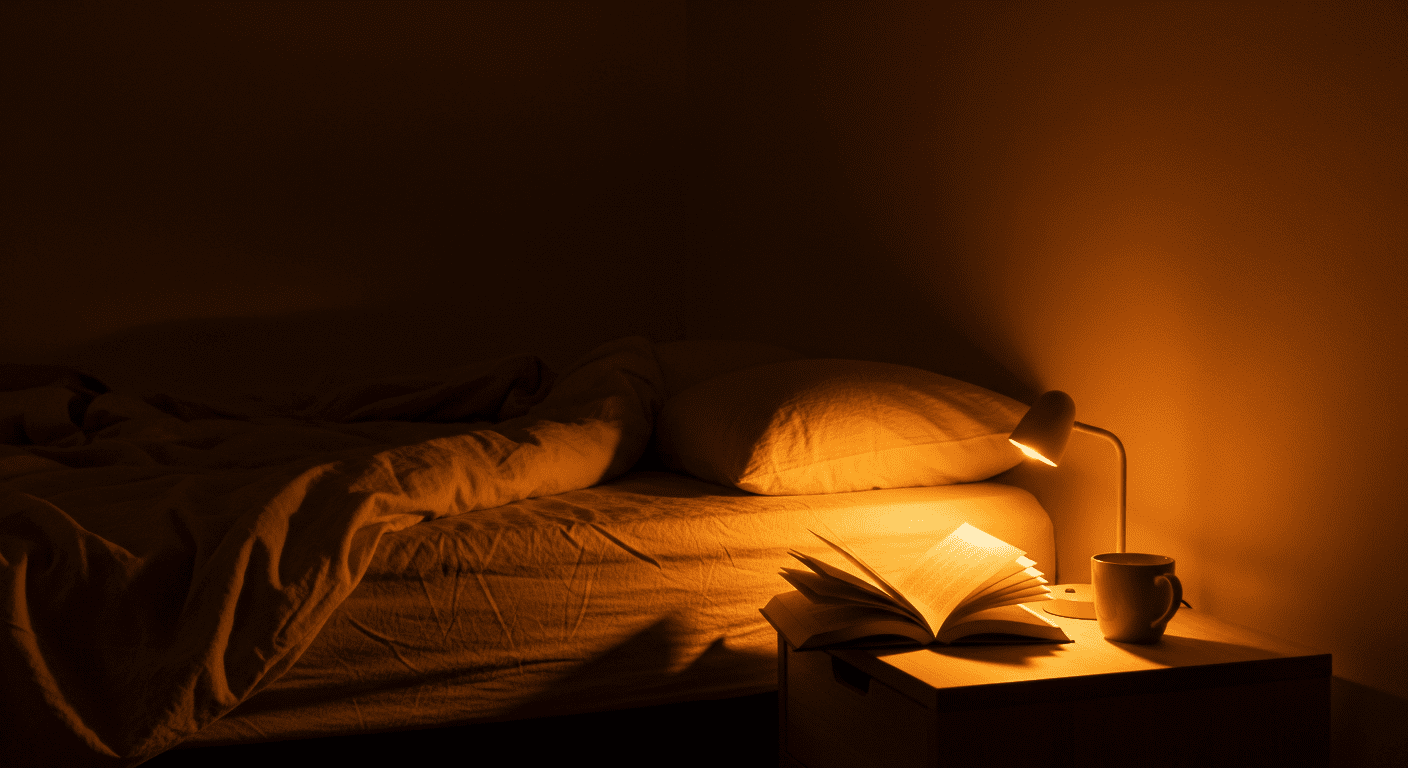
Layer your evening lighting

- Two to three hours before bed: switch from bright overhead lights to lamps with warm bulbs (2700K or lower), and dim them.
- For reading in bed: use a small lamp with a warm bulb, aimed at the page rather than at your eyes.
- At night: use a very dim red or amber night light in the hallway and bathroom, so a trip to the toilet does not mean switching on bright light.
Try this tonight
Two hours before bed, turn off the overhead light and use one or two warm lamps instead. Put a dim night light in the bathroom. It costs little, and you will know within a week whether winding down feels easier.
Flicker and color quality
Some cheap LED bulbs flicker faster than you can see. In some people this can cause eye strain or headaches, so “flicker-free” bulbs from reputable brands are worth choosing, especially for reading lamps. Bulbs with a higher color rendering index (CRI 90 or above) show colors more naturally, which many people find more pleasant. Neither has been shown to change sleep directly.
Smart bulbs that change color through the day
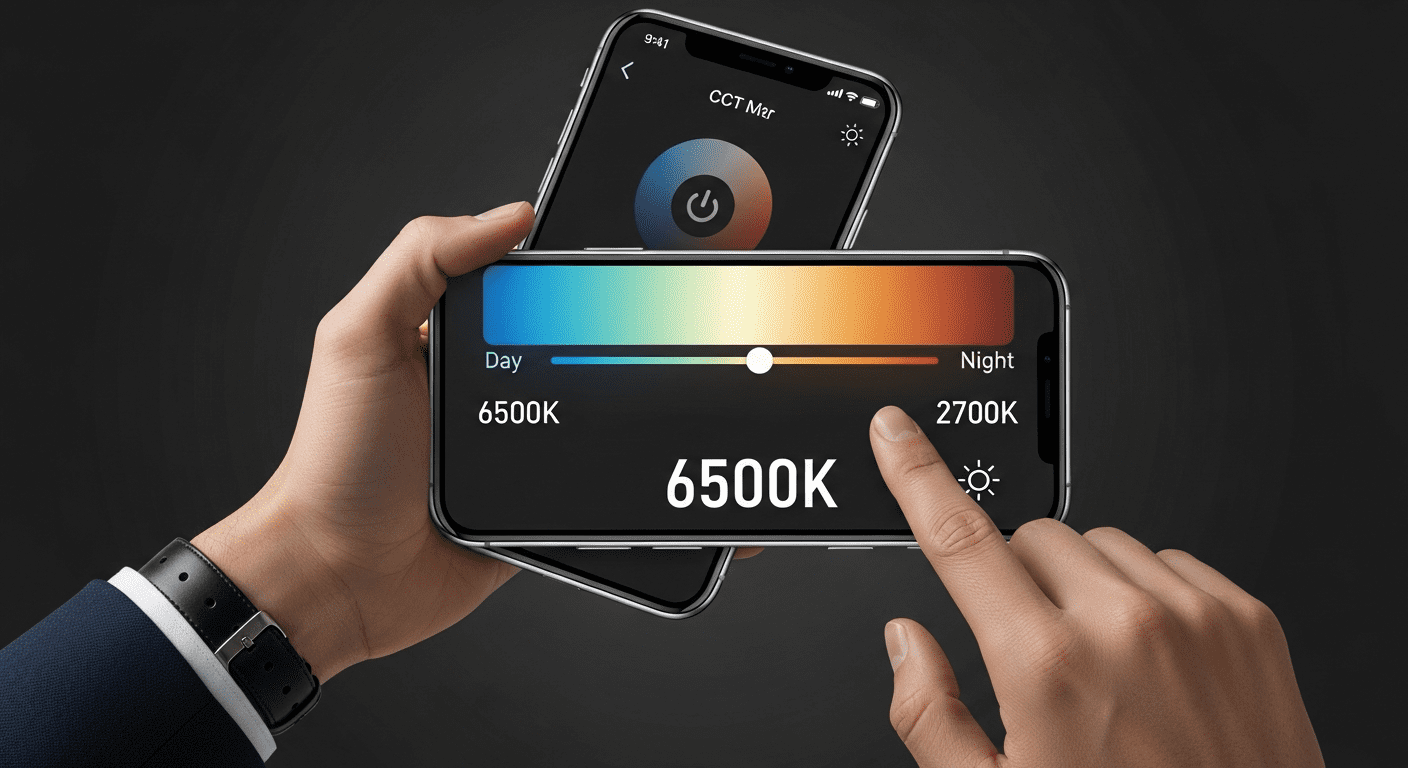
“Tunable white” smart bulbs can be set to give bright, cooler light in the morning and dim, warm light in the evening, automatically. They are convenient, but not necessary: ordinary warm bulbs, a dimmer and the habit of switching off the overhead light do most of the job.
Don’t forget morning light
Your body clock needs a clear difference between day and night. Bright light in the morning, ideally daylight outdoors, helps keep it on time, which also makes it easier to feel sleepy at night.
FAQ: Addressing Your Lighting Doubts
Are blue-light-blocking glasses enough?
Orange-tinted glasses that block most blue light can reduce the effect of evening light, but research on whether they improve sleep is mixed. Dimming your lights and screens is simpler and helps everyone in the room.
Is red light better than amber at night?
Dim red light has the least effect on melatonin, which makes it a good choice for night lights. Any light has some effect if it is bright enough, so keep night lights dim.
Does a lampshade help?
Yes. A shade lowers the brightness and spreads the light. Start with a warm bulb, then use the shade to make it softer.
Do screens matter as much as bulbs?
Screens are close to your eyes, so they matter too, but a large part of evening light comes from room lighting. Turn down screen brightness, use night mode, and stop using screens in the last hour if you can.
The Verdict
Bright, cool-white light in the evening delays melatonin; dim, warm light lets it rise on time. Switch your evening lights to warm bulbs, dim them two to three hours before bed, use a dim night light at night, and get bright light in the morning. It is simple, cheap, and backed by research.
Sources
- Gooley JJ, et al. Exposure to room light before bedtime suppresses melatonin onset and shortens melatonin duration in humans. J Clin Endocrinol Metab, 2011.
- Phillips AJK, et al. High sensitivity and interindividual variability in the response of the human circadian system to evening light. PNAS, 2019.
- Chang AM, et al. Evening use of light-emitting eReaders negatively affects sleep, circadian timing, and next-morning alertness. PNAS, 2015.
This article is general information, not medical advice. See our medical disclaimer.
[…] Dim the lights for the last hour or two before bed, and use warm-coloured bulbs. See our guide to evening light bulbs and sleep. […]