
I spent sixty dollars on a dedicated white noise machine three years ago because I lived above a deli with a temperamental exhaust fan. I thought I was buying silence, or at least a shield against the midnight clatter of crates. Instead, I spent the first four nights feeling like I was sleeping inside a pressurized steam pipe. It was too sharp, too high, and it made my teeth ache.
In this article
- The $60 mistake and the “brightness” problem
- White noise vs brown noise: decoding the colors of sound
- When I switched to the bass
- The pink noise middle ground
- Hardware vs. apps: The loop fatigue problem
- The decibel danger and safe volumes
- How to build your sound environment
- Common questions about noise colors
- Finding the quiet
At a Glance
Short answer: White noise is better at covering sudden, sharp sounds like a barking dog or a slammed door. Brown noise is deeper and softer, and many people find it easier to fall asleep or focus with. Pink noise sits in between.
This guide is for people who can’t shut their brains off at 2 AM or find the world too loud to focus. It explains how white noise vs brown noise really differ, and how to pick one for your own ears.
The problem was that I didn’t know what “white noise” actually meant. I assumed it was just a generic term for “background hum.” It turns out, noise has a color palette, and choosing the wrong one can be the difference between a deep sleep and a mounting tension headache.
The $60 mistake and the “brightness” problem
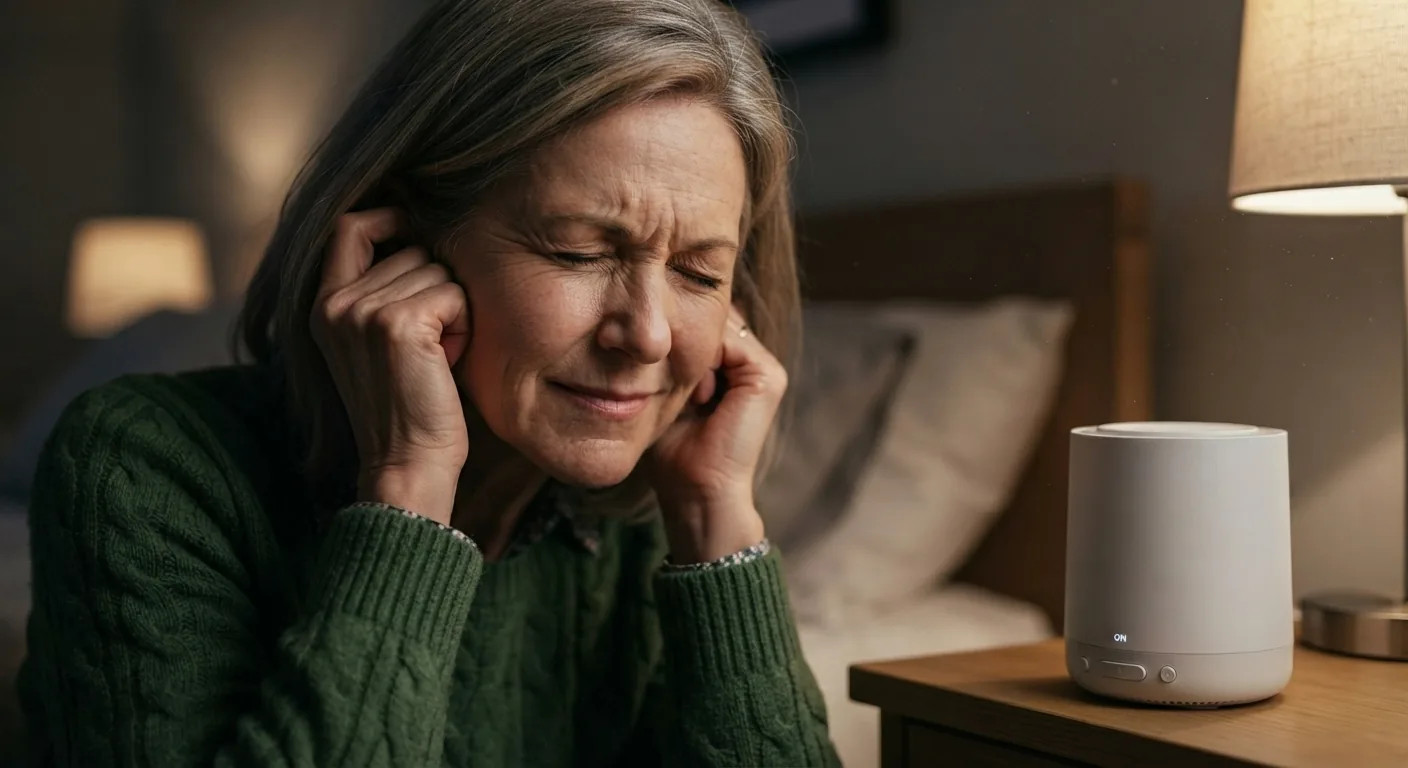
My first machine used a digital loop of what the box called “Pure White Noise.” In technical terms, white noise spreads its energy evenly across every frequency the human ear can hear, from about 20Hz up to 20,000Hz. Most of those frequencies are high ones, and our ears are most sensitive in the upper-middle range, so white noise sounds “bright” or “hissy.”
For some people, that’s exactly what works. If you’re trying to mask a sudden, sharp sound, like a dog barking or a door slamming, white noise is usually the strongest tool because it covers the whole range. It works like a wall of sound that most noises can’t poke through.
But for me, that “wall” felt like a physical weight. I found that the higher frequencies were actually stimulating my brain rather than calming it. I wasn’t falling asleep; I was just listening to the hiss.
Myth vs fact
Myth: All “noise machines” produce the same sound.
Fact: There is a massive difference between a mechanical fan (which creates a physical, low-frequency rumble) and a digital speaker (which often emphasizes high-frequency static).
White noise vs brown noise: decoding the colors of sound

Once I realized white noise was too aggressive, I started looking into the physics of it. Noise colors aren’t about actual colors, obviously; they describe the “power spectral density.” That’s a fancy way of saying how the energy is distributed across different frequencies.
If white noise is a flat line of energy across all frequencies, other colors “slope” the energy. Pink noise drops the energy as the frequency gets higher. Brown noise drops it even more steeply.
| Noise Color | Frequency Profile | What it sounds like | Best use case |
|---|---|---|---|
| White | Equal intensity across all frequencies (20Hz – 20kHz) | Radio static, a steaming kettle | Masking sudden, sharp noises; tinnitus masking |
| Pink | Power decreases as frequency increases (1/f) | Steady rainfall, rustling leaves | Sleep (some early research), steady background for focus |
| Brown | Power decreases sharply as frequency increases (1/f²) | Low roar, distant thunder, deep bass | Relaxing, masking low rumbles, focus (popular, little research) |
When you see a sound machine for sleeping advertised, it often lumps these together. But if you are sensitive to high pitches, which is common for people with hyperacusis or some sensory processing issues, the “white” setting can feel like a drill to the forehead.
When I switched to the bass
I moved to brown noise after a random YouTube video suggested it for people with ADHD. I’ve always had a brain that feels like a browser with forty tabs open, and I found that white noise just added another tab. Brown noise, however, felt like it was closing them.
Brown noise (sometimes called red noise) is named after the scientist Robert Brown, not the color. It puts most of its energy into the lower frequencies. It’s a deep, bassy rumble. Instead of the “hiss” of white noise, you get a “roar.” It sounds like being inside a large airplane cabin or listening to a distant storm.
For my ADHD, this worked because it provided a “weighted blanket” for my ears. It filled the silence without demanding my attention. I stopped focusing on the noise itself and started focusing on my work. The trade-off is that brown noise isn’t as good at masking high-pitched sounds. If your neighbor is screaming, a brown noise machine might not hide it as well as a white one would.
One honest note: the research on brown noise and ADHD is still thin. Most studies so far used white noise, so treat this as what worked for me, not a proven treatment.
Try this tonight
If you aren’t sure which color you need, try this sequence:
1. Start with a free app and play ‘White Noise’ for 5 minutes. If it feels ‘sharp,’ move on.
2. Try ‘Pink Noise’. If it feels like a steady rain but still a bit thin, move on.
3. Try ‘Brown Noise’. If it feels like a deep hum that settles your chest, that’s your match.
The pink noise middle ground
I spent a month experimenting with pink noise, which is essentially the compromise. It’s more balanced than white noise because it reduces the higher frequencies, but it’s not as heavy as brown noise. Many people find that they can sleep with pink noise more naturally because it sounds like nature, like wind or rain. A few small lab studies found that short bursts of pink noise, timed to deep sleep, can strengthen it. Those used special equipment, not a machine left on all night, but it’s a promising start.
I found that pink noise was my “daytime” sound. It was enough to drown out the office chatter without making me feel like I was submerged in a vat of oil, which is how brown noise can feel if the volume is too high. It’s a cleaner sound, but it lacks the “grounding” effect I needed for actual sleep.
Hardware vs. apps: The loop fatigue problem
This is where I got the most wrong. For a year, I used a free app on my phone. It was convenient, but I started noticing something irritating: the loop. Many apps play a short recording of noise on repeat, sometimes only a few seconds long. Eventually, your brain becomes a pattern-recognition machine. I started hearing the “seam” where the recording restarted.
That tiny click or shift in tone is enough to wake a light sleeper, and those small wake-ups add up. I later learned how much fragmented sleep costs your memory and energy. I call it loop fatigue. To fix this, I looked into two different hardware options: mechanical and digital.
A mechanical machine, like the original Dohm, uses a real fan spinning inside an acoustic chamber. It doesn’t loop because it’s a physical object moving air. It produces a very natural, “wooshing” sound that leans toward the pink/brown spectrum. However, it’s louder and you can’t adjust the frequency. You just get the fan.
Digital machines are basically speakers. The good ones use “non-looping” algorithms that generate the noise in real-time, meaning there is no seam. If you’re investing in a sound machine for sleeping, check if it’s “true” noise or a recorded loop. Your brain will thank you at 3 AM.
The decibel danger and safe volumes
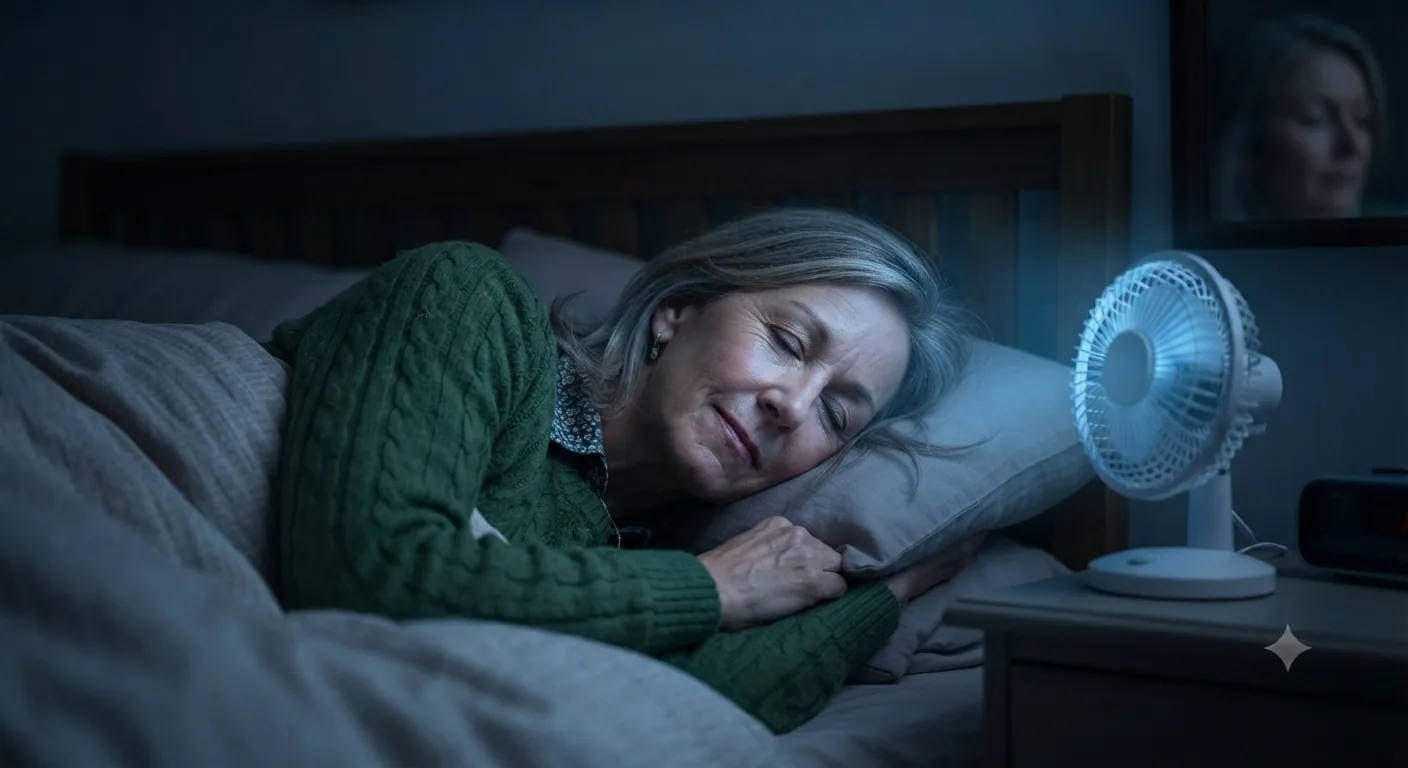
In my desperation to drown out the deli exhaust fan, I made a dangerous mistake: I turned my machine up to a level that felt “impenetrable.” I thought more noise equals better masking. It doesn’t.
The World Health Organization’s night noise guidance says background noise in a bedroom should ideally stay below about 30 dB, with single noise events kept under 45 dB. A sound machine adds to that, so the aim is the lowest level that still works. Running one at 80 dB or more all night gets close to the level (85 dB over eight hours) that workplace safety rules treat as a risk to hearing.
The goal is “masking,” not “drowning.” You want the noise to be just loud enough that a distracting sound (like a car horn) doesn’t stand out so much. If your room sits at 35 dB and a horn reaches 60 dB inside, that jump can wake you. With a steady 50 dB background, the same horn stands out far less. For most people that means keeping the machine at about 50 dB or lower, and never pushing it into “loud” territory for night-long use.
When to see a doctor
If you find that you need extremely loud noise to function, or if “white” noise causes you physical pain or intense irritation, you might have hyperacusis or misophonia. A noise machine can help, but an audiologist can help you find the actual threshold of your sensitivity so you don’t accidentally cause hearing loss.
How to build your sound environment
After three years of trial and error, I’ve stopped guessing. If you’re trying to figure out your own setup, don’t just buy the first thing that has four stars on Amazon. Follow this process instead.
- Identify the “enemy” sound. Is it high-pitched (whistling, talking) or low-pitched (traffic, thumping)? High sounds need white or pink; low sounds need brown.
- Test the colors for free. Use a high-quality app or website to listen to white, pink, and brown noise for ten minutes each. Note which one makes you feel anxious and which one feels like a “hug.”
- Choose your delivery method. If you hate loops, go mechanical (fan) or high-end digital. If you’re on a budget, an app is fine, but use “randomized” noise generators if available.
- Set a decibel ceiling. Use a free dB meter app on your phone. Place the phone where your head will be on the pillow. Turn the machine up only until it masks the problem sound, and keep it at about 50 dB or lower.
- Placement is key. Don’t put the machine right next to your ear. Put it between you and the source of the noise (e.g., by the window or the bedroom door) to create a “sound barrier.”
What I would do differently
I would have stopped using my phone app sooner. The “loop fatigue” was subtle, but it kept me in a state of low-level alertness that left my sleep light. I also would have bought a cheap decibel meter immediately instead of guessing the volume. I spent months blasting brown noise at a volume that was probably borderline harmful just because I thought “louder is better.”
Common questions about noise colors
When I started talking to friends about this, I realized most people think “white noise” is the only option. It’s not.
Is brown noise better for you than white noise?
It depends on your brain. If you find white noise too “sharp” or if you have ADHD, brown noise is usually better because the lower frequencies are less stimulating. However, for masking high-frequency sounds like a baby crying, white noise is technically more effective.
What is brown noise best for?
Brown noise is best for deep relaxation, masking low-end rumbles (like traffic), and providing a focus anchor for neurodivergent brains. It’s less likely to cause “ear fatigue” over long periods than white noise.
Does the type of speaker change the noise color?
Yes, significantly. Small phone speakers cannot reproduce the low-end frequencies of brown noise, so it often ends up sounding like a muffled version of white noise. For brown noise to really work, you need a speaker with a bigger driver that can handle bass.
Can I use white noise to treat tinnitus?
Many people do. It won’t cure tinnitus, but it can mask the ringing so it is easier to ignore. It’s worth seeing an audiologist first, because for some people pink noise is more comfortable for long-term use.
Finding the quiet
I still have that first white noise machine. I use it now as a paperweight. I eventually settled on a mechanical fan for the bedroom and a dedicated brown noise generator for my desk.
The biggest lesson I learned is that “silence” is rarely actually silent. We’re always listening to something, even if it’s just the blood rushing in our ears or the hum of the fridge. The goal isn’t to erase the world, but to choose a background sound that doesn’t fight with your brain. Once I stopped trying to “blast” the noise and started matching the frequency to my needs, I finally stopped waking up at 4 AM wondering why I was so exhausted.