
In a 2023 survey of 2,005 American adults, 35% said they sleep in another room, some nights or every night, to get away from a bed partner’s sleep habits. That’s a sleep divorce. Sleep experts say it isn’t a sign of a relationship in trouble, but moving out is the last step, not the first. Two duvets, a bigger bed, or a fix for the snoring often does the job. Here’s what to try, in order.
I didn’t test anything for this guide. Instead, I read the studies behind it, including a Mayo Clinic study of snorers’ wives, plus two national sleep surveys. So you get what the research shows.
In this article
- What is a sleep divorce?
- How common is sleep divorce?
- Why couples sleep apart
- Take the Couples Sleep Check
- The Scandinavian sleep method: one bed, two duvets
- Fixes to try before you sleep apart
- Which fix helps with what
- Sleep divorce pros and cons
- How to make a sleep divorce work
- When snoring needs a doctor
- Frequently asked questions
- My verdict
The short answer
- Sleep divorce: sleeping in separate beds or separate rooms so you both sleep better. It’s common, and it says nothing bad about the relationship.
- Scandinavian sleep method: one bed, two duvets. It ends blanket fights and temperature fights, but it won’t help with loud snoring.
- Try this order: work on the snoring, then two duvets, then more room or two mattresses, then light and sound blockers. Separate rooms come last, as a trial.
- Loud snoring with pauses or gasping? The snorer should see a doctor first. It can be a sign of sleep apnea.
What is a sleep divorce?
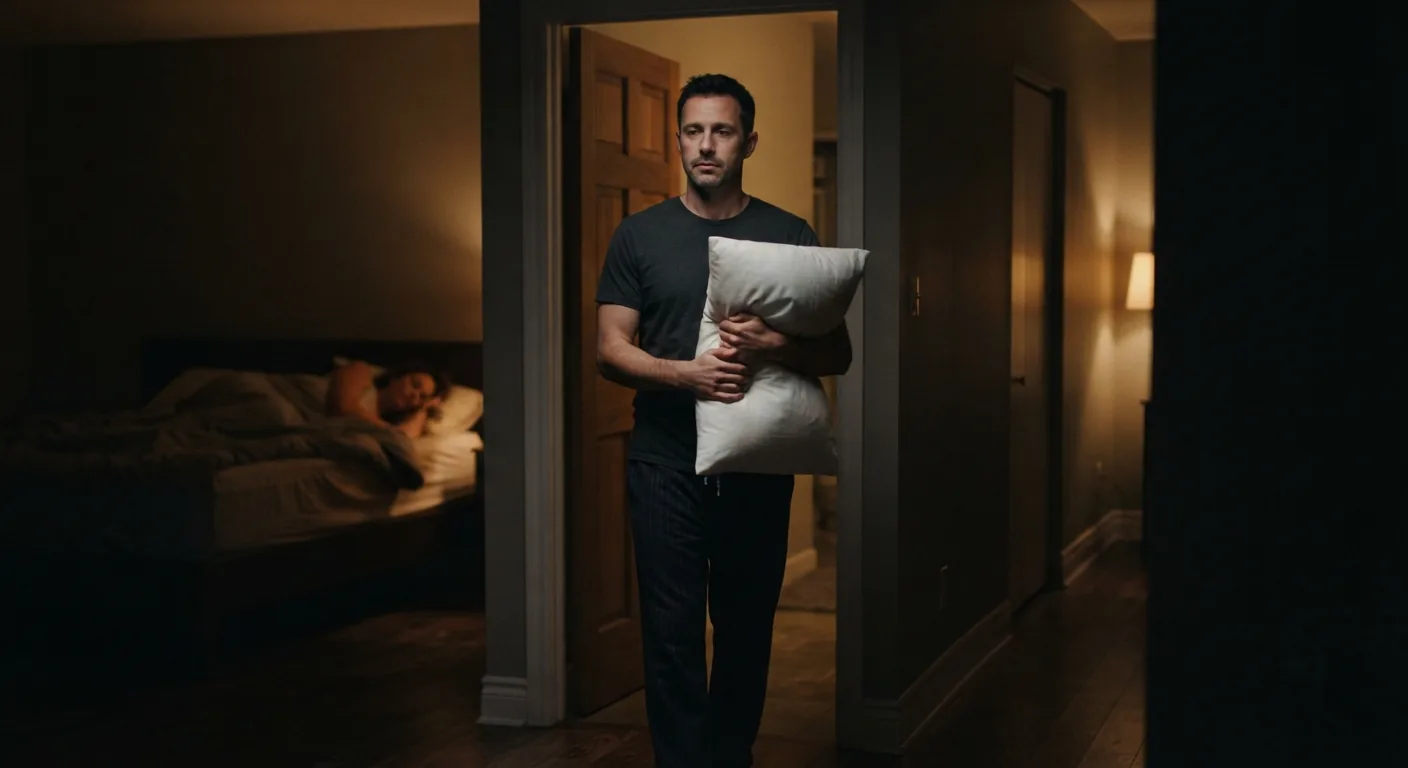
A sleep divorce means sleeping in separate beds or bedrooms, the definition used by Dr. Seema Khosla, a spokesperson for the American Academy of Sleep Medicine (AASM). It has nothing to do with lawyers. Some couples sleep apart every night. Others do a partial sleep divorce: separate rooms on work nights, the same bed at weekends.
“A sleep divorce is not a sign of a relationship in trouble,” Khosla says. The point is that both of you get enough sleep.
How common is sleep divorce?
More common than most people think. The AASM asked 2,005 US adults in March 2023 what they do to fit around a bed partner’s sleep:
Source: American Academy of Sleep Medicine, survey of 2,005 US adults, March 2023
Men said it more often than women: 45% of men sleep in another room some nights or every night, against 25% of women. A second AASM survey, of 2,006 adults in May 2024, found that 56% change their sleep routine for a bed partner, 21% sleep in another space, and 13% sleep in a separate bed in the same bedroom. Adults aged 25 to 34 were the most likely to sleep in another space (26%).
Why couples sleep apart

Khosla names snoring, tossing and turning, and different sleep schedules as the usual reasons. Add a fourth that every couple knows: one of you is hot, the other is cold, and the blanket ends up on one side.
Snoring is the one with the clearest numbers. In a Mayo Clinic study, 10 wives were tested in the sleep lab on the same night as their husbands, who snored and had suspected sleep apnea. When the husbands started a CPAP machine halfway through the night, the wives’ sleep efficiency rose from 74% to 87%, and their arousals fell from 21 to 12 an hour. The researchers worked out that this is about 62 extra minutes of sleep a night for the partner.
Sharing a bed has an upside too. In a sleep-lab study from Kiel, Germany, young couples who slept together had about 10% more REM sleep (the dreaming stage), and their REM sleep was less broken than when they slept alone. Their sleep stages also lined up with each other’s. They did move their legs more. So sleeping apart isn’t free: if a simpler fix works, you keep the good part of sharing.
Take the Couples Sleep Check
Answer 7 quick questions about snoring, temperature, the blanket, movement and bedtimes. You’ll get the fixes that fit your answers, smallest first.
Do you write about sleep or relationships? You can add the Couples Sleep Check to your own site for free.
The Scandinavian sleep method: one bed, two duvets

The Scandinavian sleep method is the way many couples in Denmark, Norway and Sweden already sleep: in one bed, under two separate duvets. Wendy Troxel, a behavioral scientist at the RAND Corporation and author of Sharing the Covers, suggests this setup:
- Put one fitted sheet on the mattress.
- Skip the shared top sheet, or use two twin-size top sheets.
- Add two twin-size duvets, one each.
- Add as many pillows as you like.
It ends the tug of war: one of you can kick the duvet off without leaving the other one cold. Each of you can also pick your own duvet weight, so the hot sleeper takes a light one and the cold sleeper a warm one. If you run hot, the sheet fabric matters too. Our guide to cotton, bamboo and Tencel sheets explains which feels coolest.
What it won’t fix: “If your partner is snoring like a truck, the Scandinavian method is not going to do much good,” Troxel told TODAY. It doesn’t help with different bedtimes either.
Fixes to try before you sleep apart
Pick the fix that matches your problem, and start with the smallest.
1. Snoring: work on the cause
Most snoring has a cause you can work on: a blocked nose, an open mouth, the tongue falling back, or sleeping on the back. Our 1-minute snore quiz shows which one is likely and what to try. Meanwhile, the light sleeper can use earplugs; our earplugs guide compares the main types. There’s more in our guide on how to sleep with someone who snores.
2. Hot and cold, or blanket fights: two duvets
This is the Scandinavian sleep method above. It’s the cheapest fix on this list: you keep your bed and buy one more duvet.
3. Tossing and turning: more room, or two mattresses
Bed width per person is smaller than it looks. A full bed is 54 inches wide, so each of you gets 27 inches, about the width of a crib mattress. A queen gives each of you 30 inches, and a king 38. Our bed sizes guide has every size and the room each one needs.
If you already have a king, a split king is the next step: two twin XL mattresses side by side on one frame. Each of you lies on your own mattress and can choose its firmness. Our guide to split king sheets explains what you need to make the bed.
4. Different bedtimes: block light and sound
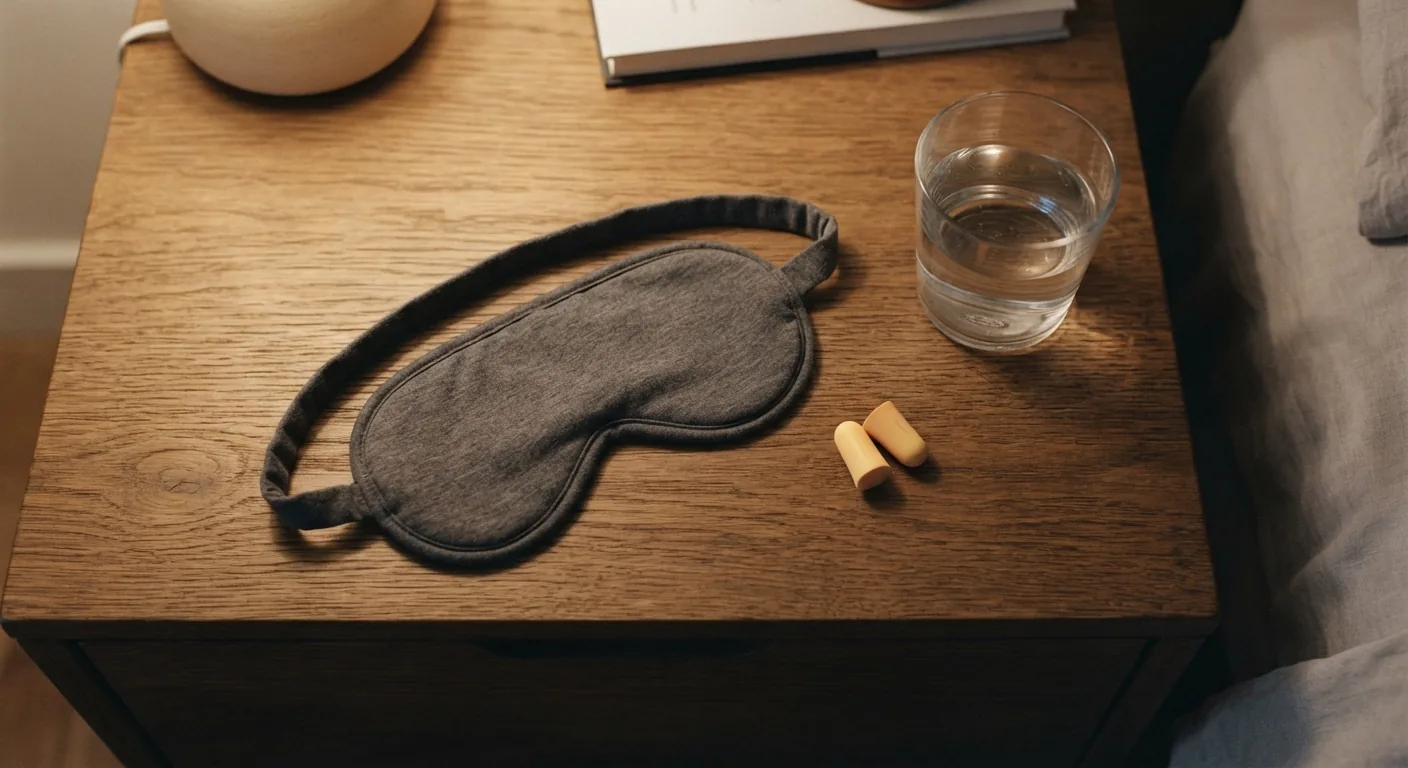
In the 2023 survey, 18% of Americans wore an eye mask, 16% used a silent alarm and 15% wore earplugs for a bed partner. The early sleeper wears the mask; the early riser uses a vibrating alarm on a watch, keeps the lights off and dresses in another room. Our contoured eye mask review covers a mask that doesn’t press on the eyes.
5. Still tired after two weeks: try sleeping apart
Harvard Health suggests trying separate beds in the same room before separate rooms. Another option is a partial sleep divorce, apart on work nights only. Treat it as a trial, and check how both of you feel after a couple of weeks.
Which fix helps with what
| Fix | Helps with | Doesn’t help with |
|---|---|---|
| Two duvets (Scandinavian method) | Blanket fights, different temperatures | Snoring, different bedtimes |
| Earplugs | Snoring noise, an early alarm | Movement, temperature |
| Eye mask and silent alarm | Different bedtimes and wake-up times | Snoring, movement |
| A bigger bed or a split king | Tossing and turning, crowding | Snoring |
| Separate beds in one room | Movement, blankets, temperature | Loud snoring, light |
| Separate rooms | Almost everything at night | Time together: plan it on purpose |
Sleep divorce pros and cons
The pros: both of you sleep longer and wake less, as the Mayo Clinic snoring study shows. You stop resenting each other at 3 a.m. Each of you can keep the room the way you like it: temperature, light, noise and bedtime.
The cons: you lose the closeness of the shared bed, and maybe some of its REM benefit. Some people feel lonely or rejected. “Your relationship might suffer, especially if one person doesn’t want to sleep apart,” says Dr. Stephanie Collier, a psychiatrist at Harvard-affiliated McLean Hospital. And if snoring is the reason, a separate room can hide a health problem that still needs treatment.
How to make a sleep divorce work

These tips come from Harvard Health’s advice on sleeping apart:
- Talk first, kindly. Explain how the nights affect you, and don’t make it about blame. If it gets stuck, a couples counsellor can help.
- Make both places good for sleep. A good mattress, and a cool, dark room, for both of you, not just the one who stays.
- Plan closeness. Cuddle, talk or have sex before one of you leaves the bed, or make time during the day.
- Check in often. “It’s not good enough if it’s helpful only for one person,” Collier says. Both of you should sleep better.
- Keep treating the snoring. If snoring sent one of you out, the snorer should still talk to a doctor about sleep apnea, as Khosla advises.
When snoring needs a doctor
Loud snoring with pauses in breathing, choking or gasping can be a sign of obstructive sleep apnea. Other warning signs are strong daytime sleepiness and high blood pressure. Sleeping in another room doesn’t treat it. In the Mayo Clinic study, treating the snorer’s apnea is what gave the partner back an hour of sleep. If you notice these signs, the snorer should ask a doctor about a sleep test.
Frequently asked questions
Is a sleep divorce good or bad for a relationship?
It depends on how you do it. If both of you agree and both sleep better, it can help, because neither of you is short of sleep. It goes badly when one partner feels pushed out, so talk first and plan time together.
What is the Scandinavian sleep method?
Sharing one bed with two separate duvets instead of one. Each partner picks a duvet weight, so there are no blanket fights and no arguments over warmth.
How common is sleep divorce?
Very common. In the AASM’s 2023 survey, 35% of US adults slept in another room some nights or every night because of a bed partner. In its 2024 survey, 21% slept in another space.
Does a sleep divorce work?
For sleep, usually yes: you stop waking each other. But try the smaller fixes first. Two duvets, earplugs or a bigger bed can solve the problem and keep you in the same bed.
Is it normal to sleep in separate beds?
Yes. In the AASM’s 2024 survey, 13% of US adults slept in a separate bed in the same bedroom for a bed partner. Harvard Health suggests it as a middle step before separate rooms.
My verdict
A sleep divorce is a reasonable choice, not a failure. But it’s the last fix, not the first. Find out what keeps you awake. Snoring needs its cause treated, a blanket fight needs two duvets, and tossing and turning needs more room. If one of you is still tired after two weeks, try separate rooms as a trial and plan your time together.
Is snoring the reason you sleep apart?
The 1-minute snore quiz shows the likely cause of the snoring and what to try first.
Take the snore quiz →Sources
- American Academy of Sleep Medicine, Sleep Prioritization Survey: Sleep Divorce (2,005 US adults, March 2023) and Adjusting Your Sleep Routine (2,006 US adults, May 2024); AASM press release on sleep divorce, 2024
- Beninati W, Harris CD, Herold DL, Shepard JW Jr. The effect of snoring and obstructive sleep apnea on the sleep quality of bed partners. Mayo Clin Proc. 1999;74(10):955-958 (PMID 10918859)
- Drews HJ, et al. Bed-sharing in couples is associated with increased and stabilized REM sleep and sleep-stage synchronization. Front Psychiatry. 2020;11:583 (PMID 32670111)
- Kee C. Together, but apart: What’s the Scandinavian sleep method and does it work? TODAY, August 2026 (Wendy Troxel, RAND Corporation)
- Godman H. Tips to navigate a “sleep divorce”. Harvard Health Publishing, January 2024
This article is general information, not medical advice. See our medical disclaimer.