
A clinical study on an earlier version of this device showed that snoring events dropped from about 160 to 32 per hour in a group of 30 adults. That is a massive reduction, but it comes with a trade-off: over half the participants dealt with excess saliva and a quarter felt tooth pain. I didn’t test the Somnofit-S myself. Instead, for this Somnofit review I read the study behind it, plus the maker’s details and buyer reviews. So you get what the research shows, not a sales pitch.
In this article
- What is the Somnofit-S and how it actually works
- The strap system: Matching the device to your bite
- The first two weeks with a jaw mouthpiece
- The science: What the study actually found
- The risks: your jaw joint, and when to stop
- Boil-and-bite or a dentist-made mouthpiece?
- Comparing your options
- Money, returns, and the “14-night rule”
- Somnofit-S questions
- My verdict
- Sources
The short answer
- The pick: the Somnofit-S Anti-Snore Mouth Guard+ from SnoreLessNow.
- Who it suits: Adults whose snoring comes from the jaw and tongue falling back, who have healthy teeth and want a long, 120-night trial.
- Who should skip it: Anyone with dentures, loose teeth, gum disease, or existing TMJ/jaw joint pain.
- The cost: $149.99 for one, with a 120-night money-back guarantee.

What is the Somnofit-S and how it actually works
The Somnofit-S is what the industry calls a mandibular advancement device (MAD). Put simply, it is a mouthpiece that holds your lower jaw slightly forward while you sleep.
When you sleep, the muscles in your throat relax. For many, the tongue and soft tissues slide back, narrowing the airway. This vibration of tissue is what we call snoring. By holding the jaw forward, the Somnofit-S pulls the base of the tongue away from the back of the throat, keeping the airway open.
It is made by a Swiss company, Oscimed SA, using “Swiss medical polymers” that are free of BPA, phthalates, and latex. It is an FDA-cleared Class II medical device intended to reduce snoring in adults. However, there is a critical distinction you need to understand: it is not meant to diagnose or treat sleep apnea. While snoring mouthpieces work for some, they are not a replacement for a CPAP machine or medical intervention for obstructive sleep apnea (OSA).
Myth vs fact
Myth: All snoring is caused by the same thing and can be fixed with one device.
Fact: Snoring can be caused by nasal congestion, weight, or the collapse of the jaw and tongue. If your snoring doesn’t come from the jaw and tongue, a jaw mouthpiece is unlikely to help. You can check your specific snore type with this free snore quiz.
The strap system: Matching the device to your bite
You mold the Somnofit-S to your own teeth, and then set how far forward it holds your jaw with five interchangeable straps, numbered 1 to 5. The higher the number, the further forward your jaw is pushed.
You don’t just guess which strap to use. The maker suggests choosing your starting strap based on your natural bite:
- Overbite: Start with strap 1 or 2.
- Common bite: Start with strap 3 or 4.
- Underbite: Start with strap 5.
Once you’ve picked a strap, the rule is patience. You have to wear each strap for at least 3 to 5 nights before making a change. If you are still snoring, you move up a number to push the jaw further. If you feel excessive pressure or pain in the joint, you move down. Finding your strap takes a week or two, not one night.
The first two weeks with a jaw mouthpiece

Don’t expect a quiet first night. The maker says to expect several days to get used to it, and suggests wearing it for an hour or two before bed at first, after brushing your teeth.
From the study and the maker’s advice, this is what the first two weeks can bring:
- Extra saliva: in the Garcia-Campos study, 16 of 30 people (53%) had it. It settled by itself within about a month.
- Sore teeth or jaw in the morning: 8 of 30 people (26%) in the study had tooth pain, and it passed on its own. Sharp or lasting pain is a reason to stop (see the warning signs below).
- Getting the mold right: this is a boil-and-bite device that you mold to your teeth at home. The product page gives no boil times, so follow the leaflet in the box exactly. If it feels loose or presses unevenly, contact the maker before you give up: the guarantee still covers a molded device.
Try the 10-second tongue check
Do the 10-second tongue check before you spend $150. Stick your tongue out, hold it gently between your teeth and try to snore. If the sound is much weaker, the back of your tongue is part of the problem, and a device that brings the jaw or tongue forward is worth trying. See which fix matches your snore.
The science: What the study actually found
The one published study is by Garcia-Campos and colleagues, in Sleep Science (2016). It tested the “Somnofit”, an earlier version from the same Swiss maker that also holds the jaw forward, with six settings instead of straps.
The study followed 30 adults (16 men, 14 women) with an average age of 50. All of them had snoring and mild-to-moderate obstructive sleep apnea. After about three months of nightly use, each person had one sleep-lab night: the first four hours without the mouthpiece, the rest of the night with it. There was no separate comparison group.
| Metric | First 4 hours, without | Rest of night, with the Somnofit |
|---|---|---|
| Snoring events (per hour) | ~160 | 32 |
| Breathing pauses (AHI) | 22.5 | 4.6 |
| Daytime sleepiness (Epworth score) | 14.4 | 4.6 |
But look at the “success” rate for total silence. Bed partners reported that snoring stopped completely for only 9 out of 30 people (30%). For another 11 people, it became “mild.” For 9 people, it stayed moderate, and for one person, it didn’t change at all.
So in this study it cut snoring a lot for most people, but it silenced only about a third. It is also one small study, in people with sleep apnea under medical care. It doesn’t prove what the Somnofit-S does for a simple snorer at home.
The risks: your jaw joint, and when to stop
Holding the jaw forward all night puts extra work on the jaw joint (the temporomandibular joint, or TMJ) and the teeth that grip the mouthpiece. In the study, 1 of 30 people had joint pain and 1 had muscle pain.
The study left out anyone who felt pain when the jaw was pushed forward, so we know nothing about how it suits a sore jaw. If your jaw already clicks or hurts, skip jaw mouthpieces and read how TMJ and snoring are linked first.
Stop using it and see a dentist if:
- Your bite feels different: your teeth still don’t meet the way they used to well after you take it out in the morning.
- Pain that lasts: tooth or jaw-joint pain that lasts more than a few days.
- Sharp joint pain: any sharp pain in the jaw joint at night or on waking.
When to see a doctor
Snoring can be a sign of sleep apnea. See a doctor before you buy any snoring device if you have:
- Waking up gasping or choking.
- Strong daytime sleepiness, even after a full night in bed.
- High blood pressure that is hard to control.
- Someone has seen you stop breathing in your sleep.
Boil-and-bite or a dentist-made mouthpiece?
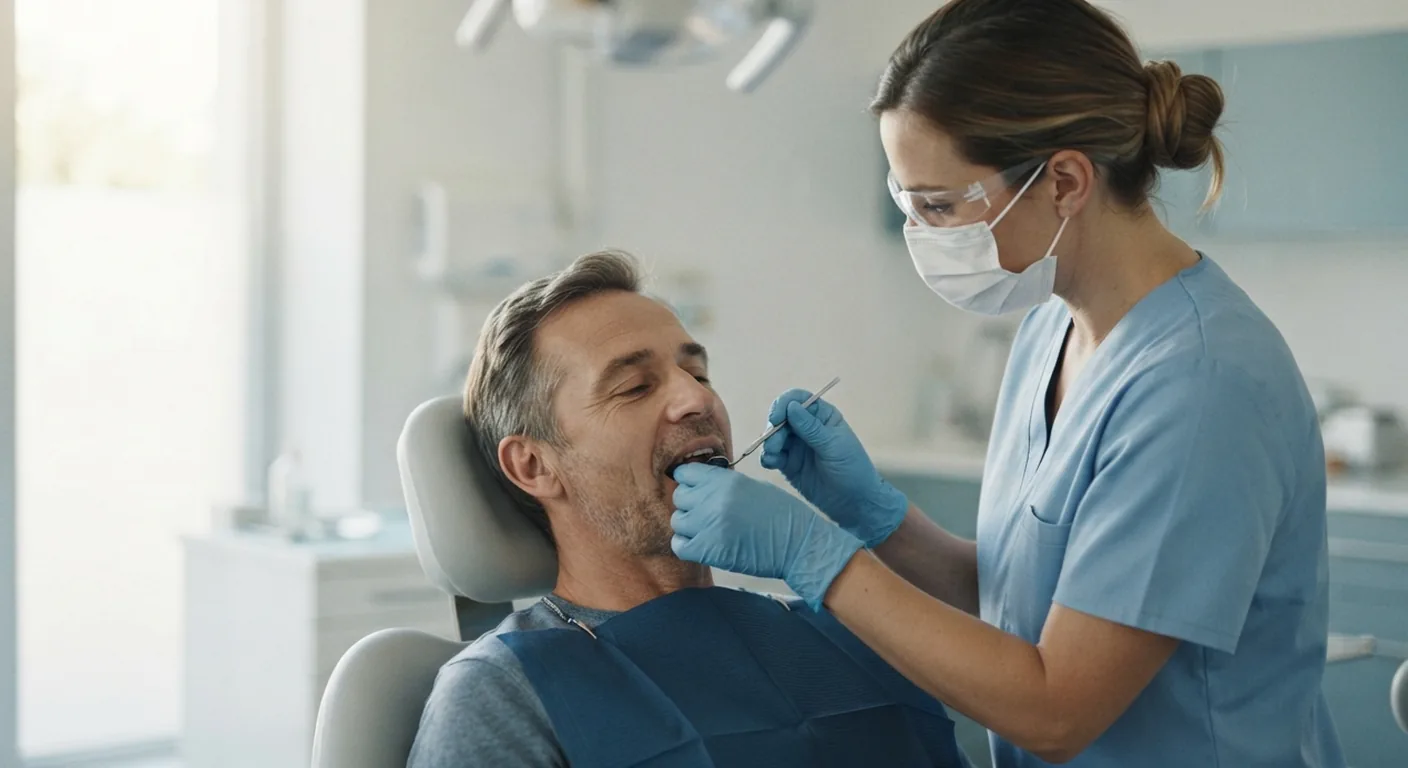
The Somnofit-S is a boil-and-bite mouthpiece, and that matters. In a 2008 trial, Vanderveken and colleagues gave 35 adults with mild sleep apnea a boil-and-bite mouthpiece and a dentist-made one, four months each. The dentist-made one worked for 60% of them, the boil-and-bite one for 31%. A third gave up on the boil-and-bite device, mainly because it didn’t stay in place through the night, and 82% preferred the dentist-made one. That trial did not test the Somnofit.
The maker doesn’t say how long a Somnofit-S lasts or whether it can be molded again, so ask before you buy if that matters to you.
So the trade-off is this: $149.99 and a long trial at home, or a dentist-made mouthpiece that costs more but, in that trial, worked for twice as many people. If you also have signs of sleep apnea, a dentist or sleep doctor is the right place to start anyway.
Comparing your options
Here is how the Somnofit-S compares with the two devices our snore quiz suggests, from each maker’s official site (checked October 2026).
| Feature | Somnofit-S | VitalSleep | Good Morning Snore Solution |
|---|---|---|---|
| Price | $149.99 | $119.95 | $79.94 |
| Mechanism | Jaw forward (MAD) | Jaw forward (MAD) | Tongue forward |
| Adjustment | 5 Interchangeable straps | 1mm screw steps | Two sizes, no molding |
| Guarantee | 120 nights | 60 nights | 30 days |
| Best For | A long trial, simple strap changes | Fine 1 mm adjustment (US only) | Jaw pain, TMJ, dentures |
| Review | (This page) | VitalSleep review | GMSS review |
The Somnofit-S is the better pick if you want a long safety net (the 120-night guarantee) and prefer simple strap swaps over fiddling with tiny screws. However, if you have any jaw pain or clicking, you should skip the jaw-pushing devices entirely and look at the Good Morning Snore Solution review, as tongue devices are far gentler on the joints.
Before you buy: a quick checklist
- Check your teeth: Do you have dentures, braces, or loose crowns? If yes, stop here.
- Check your joints: Do you have TMJ pain or a clicking jaw? If yes, stop here.
- Check your budget: Are you okay with $149.99 for a DIY device?
- Commit to the time: Are you willing to spend 2-3 weeks adjusting straps and dealing with extra saliva?
Money, returns, and the “14-night rule”

The 120-night money-back guarantee is twice as long as VitalSleep’s 60 nights and four times the Good Morning Snore Solution’s 30 days, and SnoreLessNow takes it back even after you’ve molded and worn it. There is one catch: you must wear it for at least 14 nights after delivery before you can ask for a refund.
That rule makes sense: the extra saliva and sore mornings come first, and you need a couple of weeks and a strap change or two to know whether it helps.
After night 14, you can send a return request through their contact form any time up to night 120. Note that original shipping is not refunded, and it takes up to 10 business days for the refund to process after approval.
Somnofit-S questions
These are the questions people search for most about the Somnofit.
Does the Somnofit-S really work for loud snoring?
It can, if your snoring comes from the jaw and tongue falling back. In the one study of the earlier Somnofit, snoring events fell from about 160 to 32 an hour on average, but bed partners said it stopped completely for only 30% of people. Expect quieter, not silent.
Does it work for sleep apnea?
It is FDA-cleared to reduce snoring, but the maker explicitly states it is not meant to diagnose or treat sleep apnea. The study of the earlier Somnofit did see fewer breathing pauses, but sleep apnea needs a doctor’s diagnosis and treatment plan, not a device you buy online.
How do I clean the Somnofit-S?
The product page gives no cleaning steps, so follow the leaflet in the box.
Can I return it after molding it?
Yes. The guarantee covers a molded and worn device, as long as you’ve worn it for at least 14 nights first and ask before night 120. Original shipping isn’t refunded.
How does the Somnofit-S compare to SnoreRx?
Both hold the lower jaw forward. We haven’t reviewed SnoreRx, so compare its price, adjustment and return terms on its own site against the Somnofit-S facts above.
How long does it take to work?
The maker says to expect several days to get used to it, and to wear each strap for 3 to 5 nights before changing. So give it two to three weeks. The study measured results after three months.
Is the Somnofit-S HSA or FSA eligible?
The product page doesn’t say. Ask SnoreLessNow or your plan before you buy.
My verdict
The Somnofit-S is a sensible pick if the tongue check points to your tongue and jaw, your teeth and jaw are healthy, and you want the longest trial to find out. It isn’t for anyone with jaw pain or dentures (for them, the Good Morning Snore Solution in the table above is the gentler option), and it isn’t a treatment for sleep apnea.
Ready to see if the Somnofit-S fits you?
Check today's price, the strap sizes and the 120-night guarantee on SnoreLessNow's site.
See the Somnofit-S on SnoreLessNow →Some links in this article are affiliate links. If you buy through them, we may earn a commission at no extra cost to you. Learn more.
Sources
- García-Campos E, et al. Decrease of respiratory events in patients with obstructive sleep apnea-hypopnea syndrome using a mandibular advancement device assessed with split night polysomnography. Sleep Science 2016;9(3):221-224. PubMed 28123665.
- Vanderveken OM, et al. Comparison of a custom-made and a thermoplastic oral appliance for the treatment of mild sleep apnea. Am J Respir Crit Care Med 2008;178(2):197-202. PubMed 17673699.
- SnoreLessNow official product documentation (Checked 2026-10-15).
- VitalSleep official product specifications (Checked 2026-10-15).
- Good Morning Snore Solution official product specifications (Checked 2026-10-15).
This article is general information, not medical advice. See our medical disclaimer.