
Linus hangs on to his blanket all through A Charlie Brown Christmas (1965), and nobody ever asks whether it keeps him warm. You’re asking, though, because it’s November and your feet are cold. 🥶 Here’s the surprise behind the warmest blanket question: warmth isn’t really about the fibre, and it isn’t about weight. It’s about how much still air the blanket holds in place, and how warm your feet are.
The pages that rank for this question list wool, down and sherpa, then send you shopping. Not one explains what actually traps the heat, or what sleep studies found when they put the fabrics to the test. This guide does both, then shows you how to layer a bed that stays warm without cooking you at 3 a.m.
This guide is based on the makers’ product details, textile research and sleep studies such as Ko and Lee’s 2018 bed socks study. So you get what the research and the labels say, not a sales pitch.
The short answer
The warmest bedding is a thick, lofty wool or down comforter over brushed cotton flannel sheets, with a blanket you can add or remove. Loft (trapped still air) matters more than weight or fibre. Warm your feet too. For a wool comforter for cold rooms, see our Sleep & Beyond review.
In this article
- What makes a blanket warm?
- Which blanket material is the warmest?
- Is wool or fleece warmer?
- Are heavier blankets warmer?
- Warm feet first: the trick most blanket guides miss 🧦
- How to layer the warmest bed
- Is it safe to sleep with an electric blanket?
- Too warm at 3 a.m.?
- Our pick for cold sleepers
- FAQ
- The bottom line
- Sources
What makes a blanket warm?
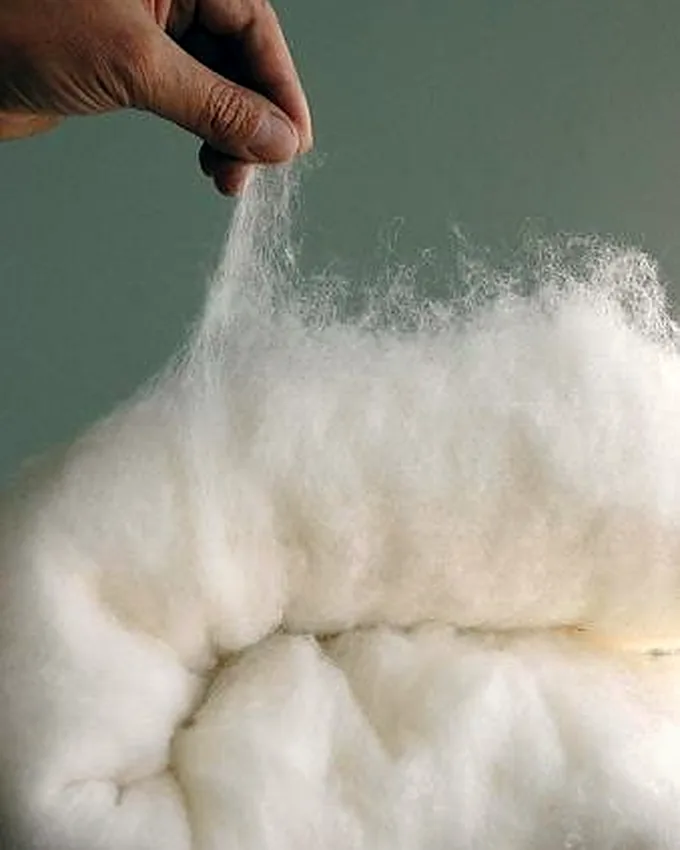
Still air. A blanket doesn’t make heat; your body does. The blanket’s job is to stop that heat from drifting away, and the thing that does that best is air that can’t move.
Textile researchers at Tallinn University of Technology put it simply: “the base principle of thermal insulation … is to trap air”. Fibres that crimp and curl create tiny closed pockets of still air, and thickness and density matter too. A blanket that’s fluffy, thick and springy holds more still air than a thin, flat one, even if they weigh the same.
One more detail from the same researchers: the air-trapping structure has to hold its shape when it gets damp. That’s the real reason the fibre matters, and it’s where wool earns its reputation. Which leads to the obvious question: so which material wins?
Which blanket material is the warmest?
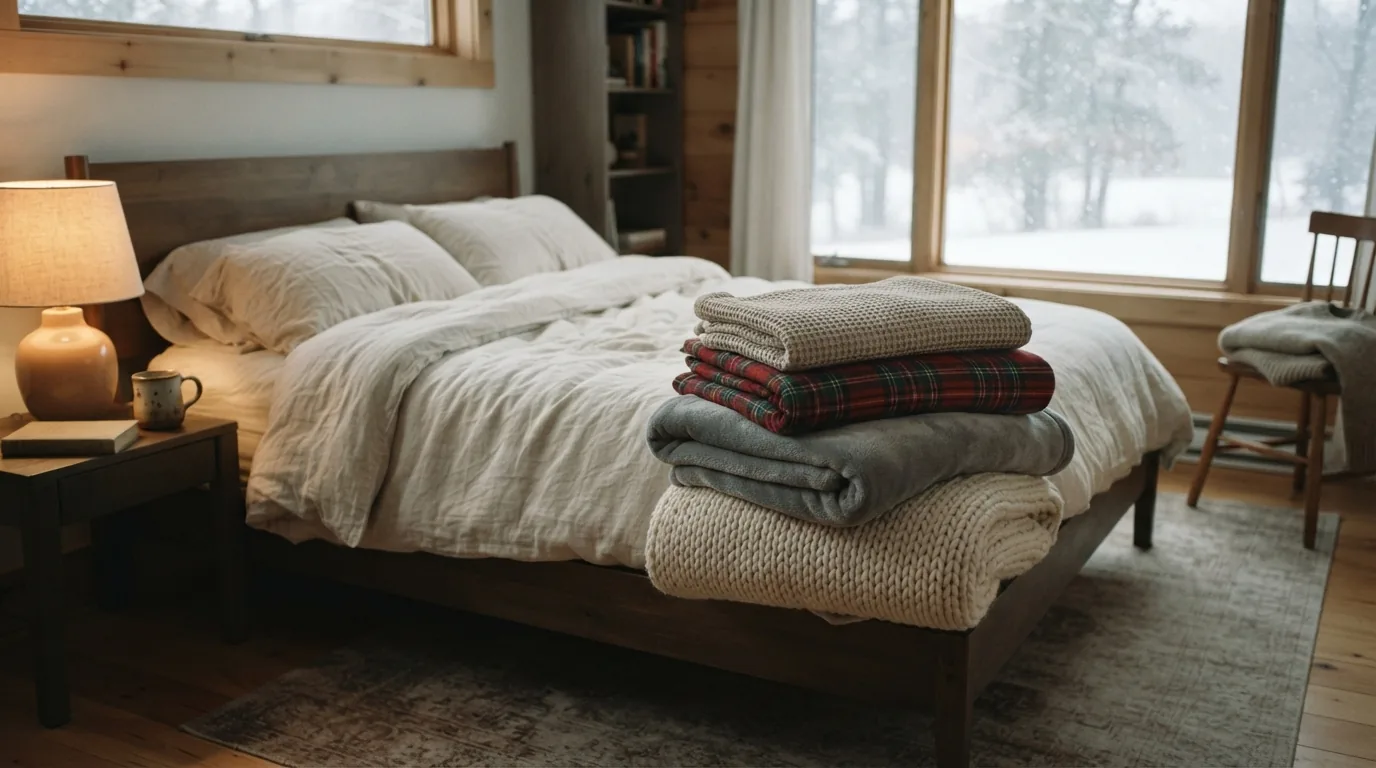
For sleeping, the top tier is wool and down, followed by brushed cotton flannel and fleece. But the honest answer is “the one with the most loft that still breathes”. Here’s how the common materials compare.
| Material | How it keeps you warm | The catch |
|---|---|---|
| Wool | Crimped fibres hold still air, and the structure keeps its shape when damp | Pricier; some wool comforters can’t be machine washed |
| Down | Huge loft for its weight; more deep sleep in a cool room in one study | Loses loft if squashed or damp; check the fill weight, not only fill power |
| Fleece (polyester) | Soft and fuzzy, cheap and warm at first touch | Synthetic; can feel clammy if you sweat |
| Cotton flannel | Brushed fibres add a soft, warm layer of fuzz; still breathes | Warmth depends on weight (look for the GSM) |
| Sherpa and faux fur | Very cozy pile on top of the bed | Usually polyester; best as the top layer you fold back |
| Cotton knit or waffle | Open weave, light and airy | Too airy to be warm alone; good as an extra layer |
Wool
Wool’s curly fibres trap air, and wool doesn’t collapse when it takes up a little moisture from a sweaty night. That’s why wool comforters work across a wide range of rooms. For beds, wool is sold as blankets and as comforters (a quilted wool fill); the comforter is usually the thicker one.
Down
Down is the loft champion. In a 2024 review of nine bedding and sleepwear studies, goose-down duvets increased deep sleep in cool conditions (Li, Halaki and Chow). A fair note: the authors had funding from the Australian wool industry, and they still reported the down result.
Fleece, flannel and sherpa
Fleece and sherpa are usually polyester: cheap, soft and warm the second you touch them. Flannel is brushed cotton, so it breathes like cotton but feels warm from the first minute. All three make great layers; flannel makes the best sheets of the bunch for a cold room.
Is wool or fleece warmer?
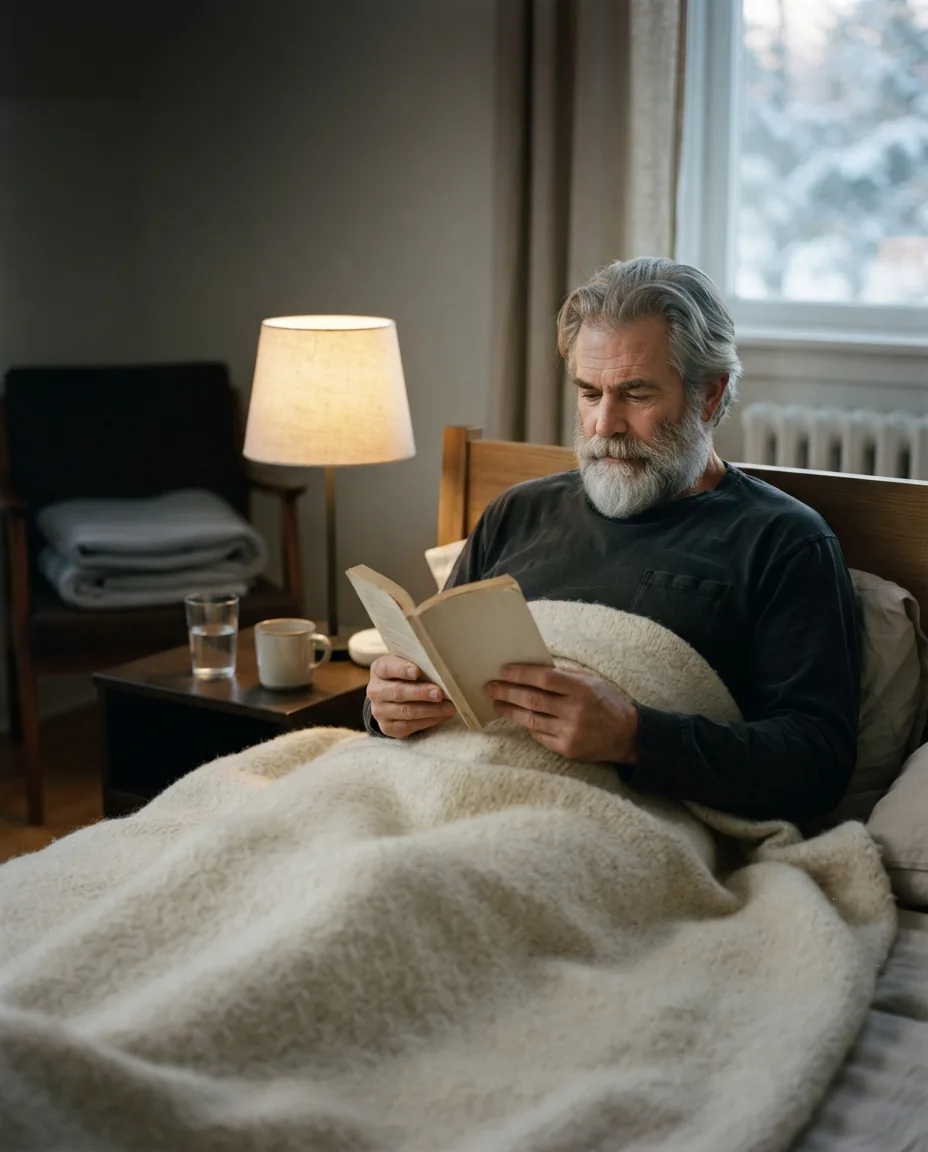
For a whole night, wool usually wins, because its air-holding structure stays put when it gets a little damp. TalTech’s researchers say that’s what makes wool superior to most cheap synthetics and even cotton. Fleece often feels warmer in the first minute, though, because it’s fuzzy and doesn’t feel cool to the touch.
Plot twist: in a sleep lab, the bedding fibre made no difference. A 2016 study had 17 young adults sleep under wool or polyester bedding in rooms at 17°C and 22°C (63°F and 72°F), and found no effect of the bedding on their sleep (Shin and colleagues). Wool pajamas did help them fall asleep faster than cotton ones.
So what’s the takeaway? The fibre matters less than the amount of fill and what you wear. That brings us to weight.
Are heavier blankets warmer?
Only when the extra weight is extra loft. A heavy blanket made of dense, flat fabric can be less warm than a lighter, fluffier one. What you want to compare is the fill within one kind of comforter:
- Wool comforters: look at the fill weight in GSM (grams per square meter) or ounces per square yard. Sleep & Beyond, for example, sells the same wool in 200, 430 and 530 GSM (our Sleep & Beyond review compares them), from a light three-season fill to a heavier four-season one.
- Down comforters: fill power tells you how much space one ounce of down fills (higher means more loft per ounce). The fill weight tells you how much down is inside. You need both.
- Flannel sheets: heavier flannel is warmer. A heavyweight set is around 170 GSM (5 oz); our Christmas bedding guide explains flannel GSM in detail.
- Weighted blankets: they’re made for pressure, not warmth. Many are filled with beads, so their weight doesn’t mean loft.
Warm feet first: the trick most blanket guides miss 🧦
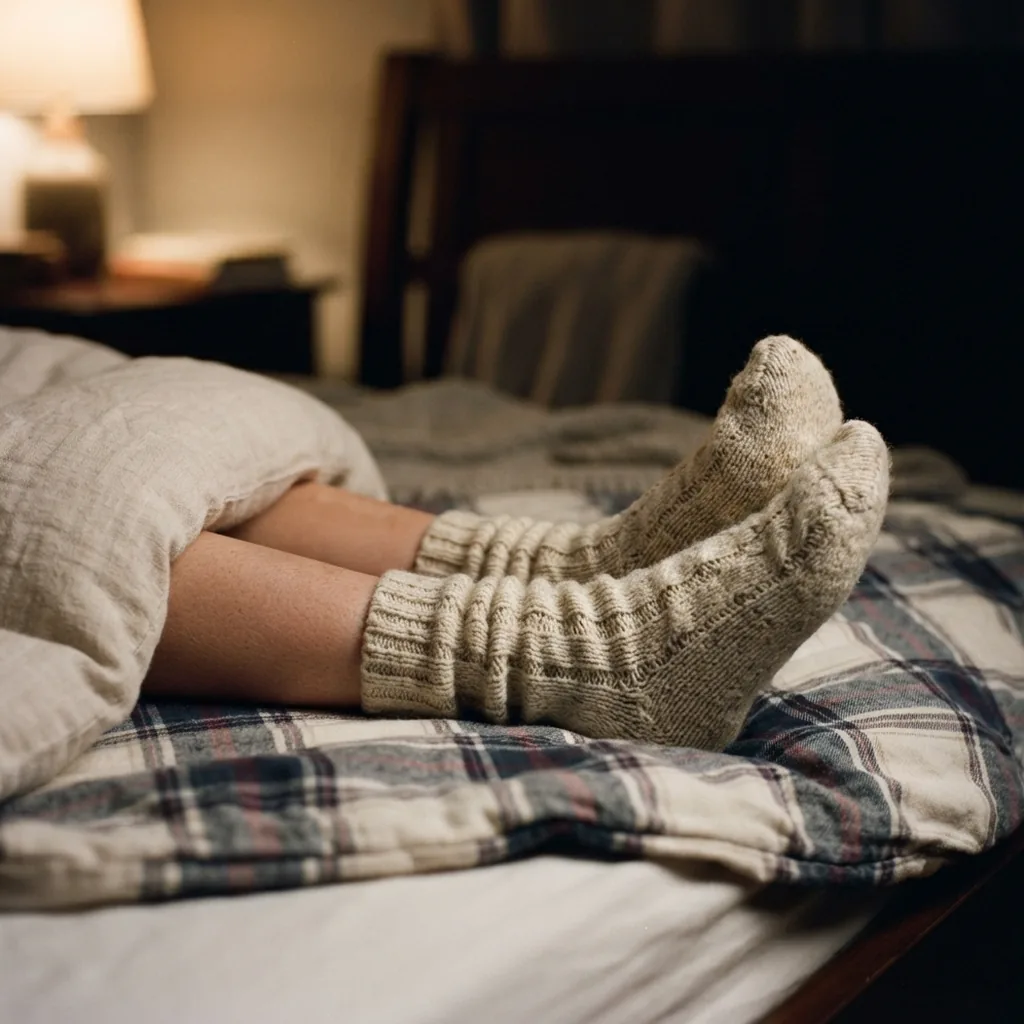
Your blanket can be perfect and you’ll still lie awake if your feet are icy. To fall asleep, your body sheds heat through your hands and feet. A famous 1999 paper in Nature found that how much the blood vessels in the skin of the hands and feet widen is the best predictor of how fast you fall asleep (Kräuchi and colleagues). Cold feet keep those vessels tight.
A small 2018 study tested the simplest fix. Six young men slept in a 23°C (73°F) room with and without bed socks. With socks, they fell asleep 7.5 minutes sooner and slept 32 minutes longer, with fewer awakenings (Ko and Lee). Six people is tiny, so treat it as a hint, not a law. But socks cost about as much as a coffee.
So before you buy a second comforter, try warm socks, or tuck a folded blanket over your feet. Then build the rest of the bed.

How to layer the warmest bed
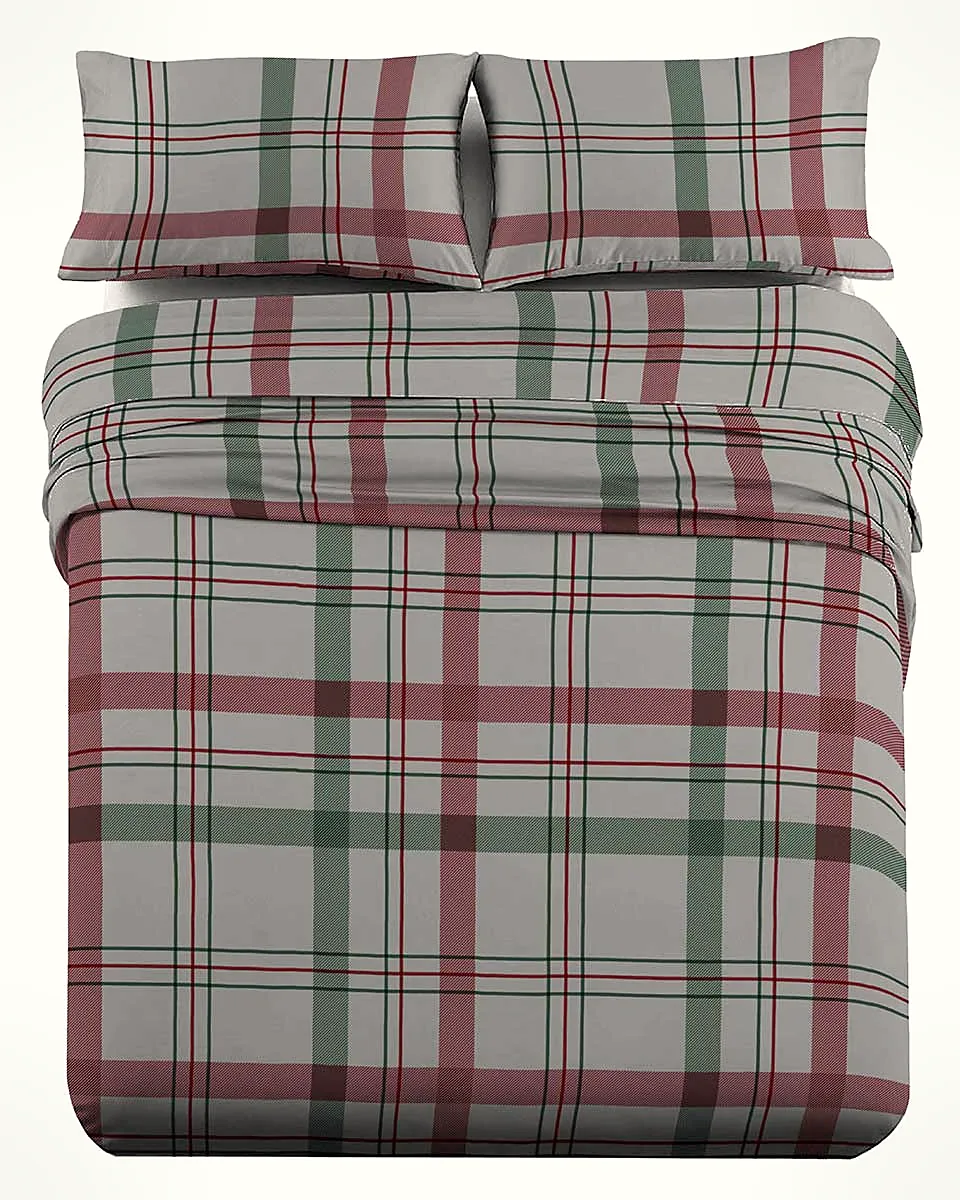
Layers are easier to live with than one giant blanket, because you can take one off at night without freezing. From the mattress up:
- A layer under you A wool mattress pad or topper adds a soft, dry layer between you and a cold mattress. Our wool mattress topper guide explains the thicknesses.
- Flannel sheets Brushed cotton feels warm the moment you get in. Our Egyptian Linens review covers one maker’s heavyweight sets ($64.99 to $79.99 on 5 Nov 2026).
- A thin blanket Cotton, wool or fleece, on top of the top sheet. This is the layer you kick off at 3 a.m. if you get warm.
- A lofty comforter Wool or down, with a fill weight that suits your room. Fluff it up each morning so it keeps its loft.
- A throw at your feet A folded blanket over the foot of the bed keeps cold feet covered without heating your whole body.
Then dress for bed: socks and, if you like, wool or flannel pajamas. Shin’s study above found wool sleepwear helped people fall asleep sooner in a cool room. If heated winter air leaves you with a dry throat or a snoring partner, our humidifier guide covers what helps, and the 1-minute snore quiz finds where the snoring comes from.
Is it safe to sleep with an electric blanket?
Use it to warm the bed, then switch it off. UL, the US product-safety testing body, says to turn an electric blanket on about 30 minutes before bed and turn it off before you go to sleep. A blanket that’s on all night also adds heat you can’t easily escape, which is bad news for sleep (more on that below).
Electric blanket safety (UL): never fold it or pile bedding on it while it’s on, roll it for storage, and replace it if it’s damaged. Don’t buy one secondhand; look for a recognised safety mark such as UL. It’s not for babies, young children or anyone who can’t control it safely, and people with diabetes are more at risk of burns.
Too warm at 3 a.m.?
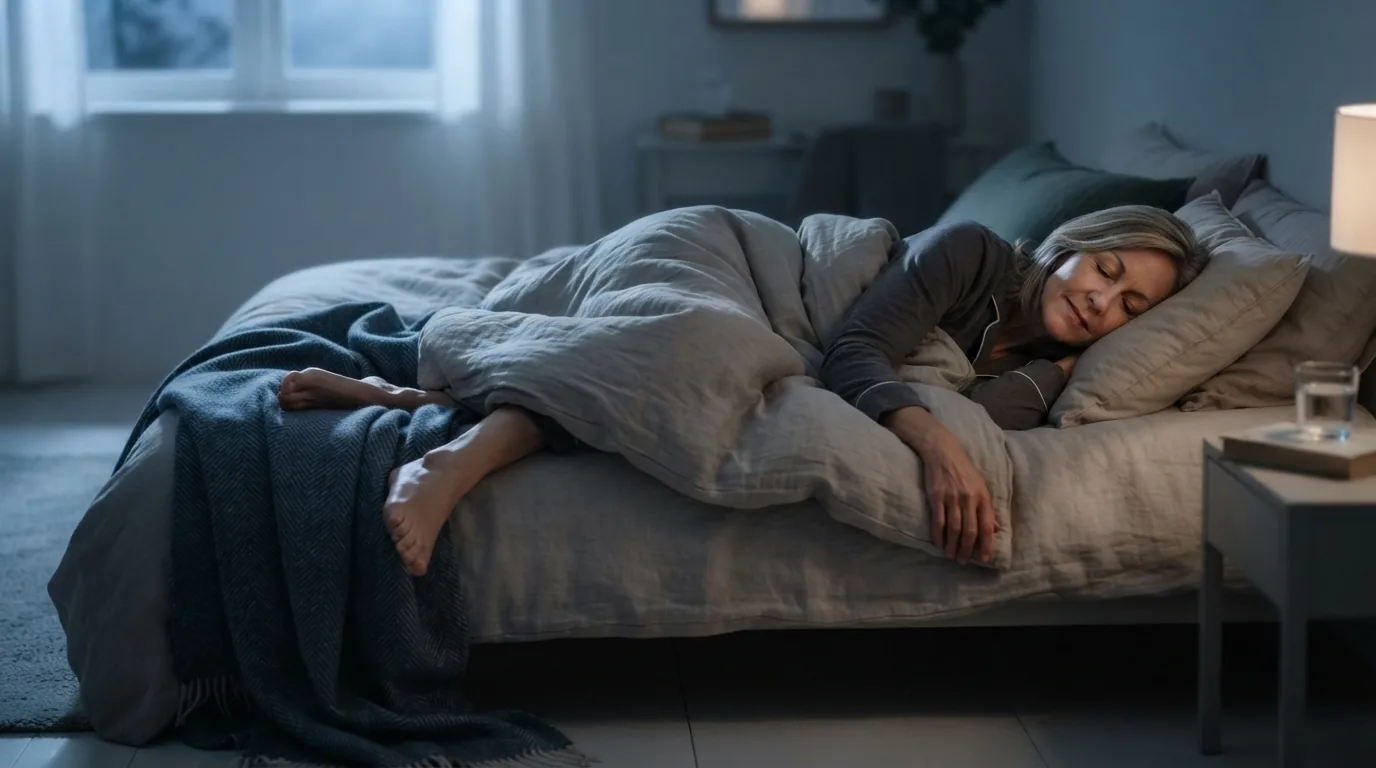
It happens all the time in winter: you pile on layers at 10 p.m. and wake up sweaty at 3 a.m. With bedding on, heat is a bigger problem for sleep than cold. A review of the research found that under covers, heat makes you wake more often and cuts deep sleep and REM sleep (Okamoto-Mizuno and Mizuno, 2012).
So aim for “warm enough”, not “as warm as possible”. Keep the room cool (our ideal sleeping temperature guide covers the usual 60 to 67°F advice and why some people need it warmer), and keep the warmth in layers you can remove. If you share a bed with someone who runs hot, two comforters of different weights end the tug of war. Our comforter guide for hot sleepers covers the cooler end, and our sheet fabrics guide compares the coolest sheets.
Our pick for cold sleepers
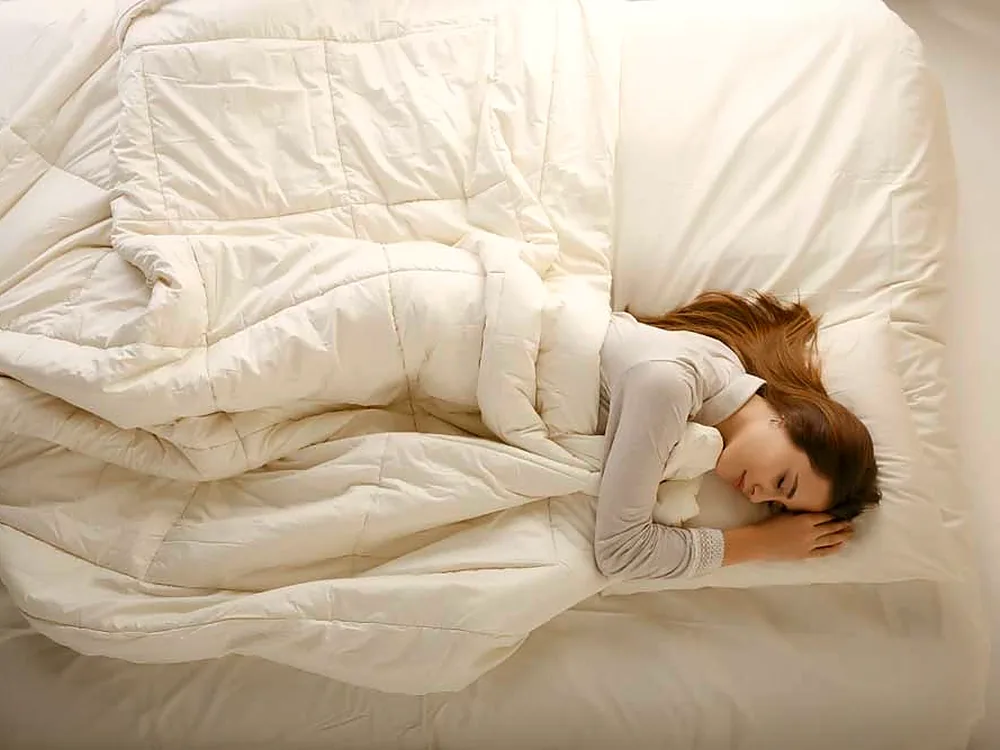
If you sleep cold in a cool room, a heavy wool comforter is the piece that does the most work. Sleep & Beyond’s myMerino comforter has the heaviest fill in its range: 530 GSM of organic Merino wool in an organic cotton sateen cover, sold from $159 (crib) to $439 (super king) on 5 Nov 2026, with a 5-year warranty.
Two catches. It isn’t machine washable, so use a duvet cover. And returns are for unused items only, so there’s no sleep trial. If you want to wash it at home, the brand’s myComforter (430 GSM washable wool, $129 to $379) is the practical pick. Our Sleep & Beyond review compares all four of the brand’s comforters and who each one suits.
Who should skip it: hot sleepers and anyone in a warm, heated bedroom. A light fill, or flannel sheets with a thinner comforter, makes more sense there. And if a few dollars matters more than anything, flannel sheets plus a fleece blanket and warm socks get you most of the way.
FAQ
What is the warmest type of blanket?
A thick, lofty wool or down comforter is the warmest common bedding. Warmth comes from trapped still air, so loft matters more than weight.
Is wool or fleece warmer?
Over a whole night, wool usually is, because it keeps its air-trapping structure when it gets a little damp. Fleece feels warm faster but is synthetic and can feel clammy if you sweat.
Are heavier blankets warmer?
Not always. A heavier fill of the same material is warmer, but a dense, flat blanket can be heavier and colder than a light, fluffy one. Weighted blankets are made for pressure, not warmth.
Is it safe to sleep with an electric blanket on?
UL advises warming the bed for about 30 minutes, then turning the blanket off before you sleep. Never fold it while it’s on, and don’t use one with babies or young children.
How can I stay warm in bed without overheating?
Use layers you can remove, flannel sheets, and warm socks, and keep the room cool. A small study found bed socks helped people fall asleep 7.5 minutes sooner.
The bottom line
The warmest blanket is the one that holds the most still air: a lofty wool or down comforter, over flannel sheets, with a thin blanket you can kick off and warm socks on your feet. Skip the heaviest-blanket-wins idea, keep the room cool, and you’ll be warm all night without waking up in a sweat. Linus would approve. 💙
Cold sleeper in a cool room?
Sleep & Beyond sells wool comforters in light, medium and heavy fills. Our review compares all four and who each suits.
Read our Sleep & Beyond review →Sources
- Kräuchi K, Cajochen C, Werth E, Wirz-Justice A. Warm feet promote the rapid onset of sleep. Nature, 1999.
- Ko Y, Lee JY. Effects of feet warming using bed socks on sleep quality and thermoregulatory responses in a cool environment. J Physiol Anthropol, 2018.
- Shin M, Halaki M, Swan P, Ireland AH, Chow CM. The effects of fabric for sleepwear and bedding on sleep at ambient temperatures of 17°C and 22°C. Nat Sci Sleep, 2016.
- Li X, Halaki M, Chow CM. How do sleepwear and bedding fibre types affect sleep quality: a systematic review. J Sleep Res, 2024.
- Okamoto-Mizuno K, Mizuno K. Effects of thermal environment on sleep and circadian rhythm. J Physiol Anthropol, 2012.
- Tallinn University of Technology: What to wear to keep warm close to the skin (textile researchers T. Plamus and A. Udal).
- UL: Electric blankets are cozy. Are they safe? (checked 5 Nov 2026).
- Sleep & Beyond product pages: myMerino Comforter, myComforter and myComforter Light. Egyptian Linens product page: heavyweight flannel sheet set (all checked 5 Nov 2026).