
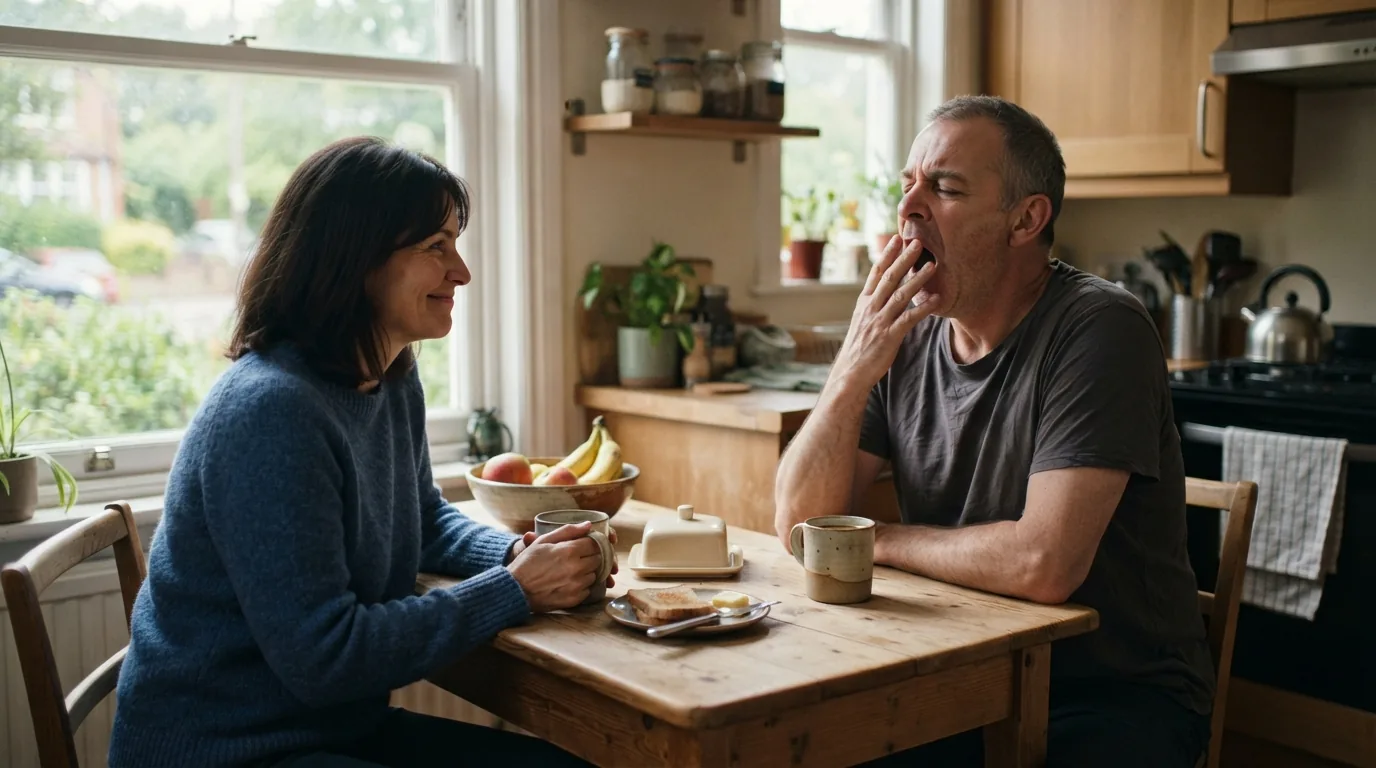
Your partner nudges you at breakfast. “You stopped breathing again last night. Like, for a while.” 😬 You laugh it off, then quietly google it at lunch. Good news: you don’t need a night in a hospital to find out anymore. An at-home sleep apnea test lets you check in your own bed, in your own pajamas.
Here’s the catch nobody prints on the box. Sleep apnea changes from night to night. In a 2022 study that tracked 67,278 people at home for about 170 nights each, judging by a single night got the answer wrong for roughly 20% to 50% of the people who really had sleep apnea. So a home test is a great start, as long as you know how to read a “normal” result.
I didn’t test these myself. Instead, I read the studies behind them, including that 2022 study of more than 11 million nights of sleep, plus the test makers’ details and policies. So you get what the research shows, not a sales pitch.
The short answer
An at-home sleep apnea test is a small kit you wear for one to three nights. It tracks your breathing and oxygen, and a doctor reads the results. It’s good at finding moderate or severe sleep apnea. It can miss mild cases, so a normal result with real symptoms means a lab study next. For a fast cash option, we like Lofta’s home sleep test.
In this article
- What is an at-home sleep apnea test?
- Do you need a sleep apnea test? A 2-minute self-check
- Who should skip a home test and go to a sleep lab?
- How does an at-home sleep apnea test work?
- How accurate are at-home sleep apnea tests?
- What do your sleep apnea test results mean?
- How much does an at-home sleep apnea test cost?
- Which home sleep test should you choose?
- What happens if the test says you have sleep apnea?
- FAQ
- The bottom line on at-home sleep apnea tests
What is an at-home sleep apnea test?
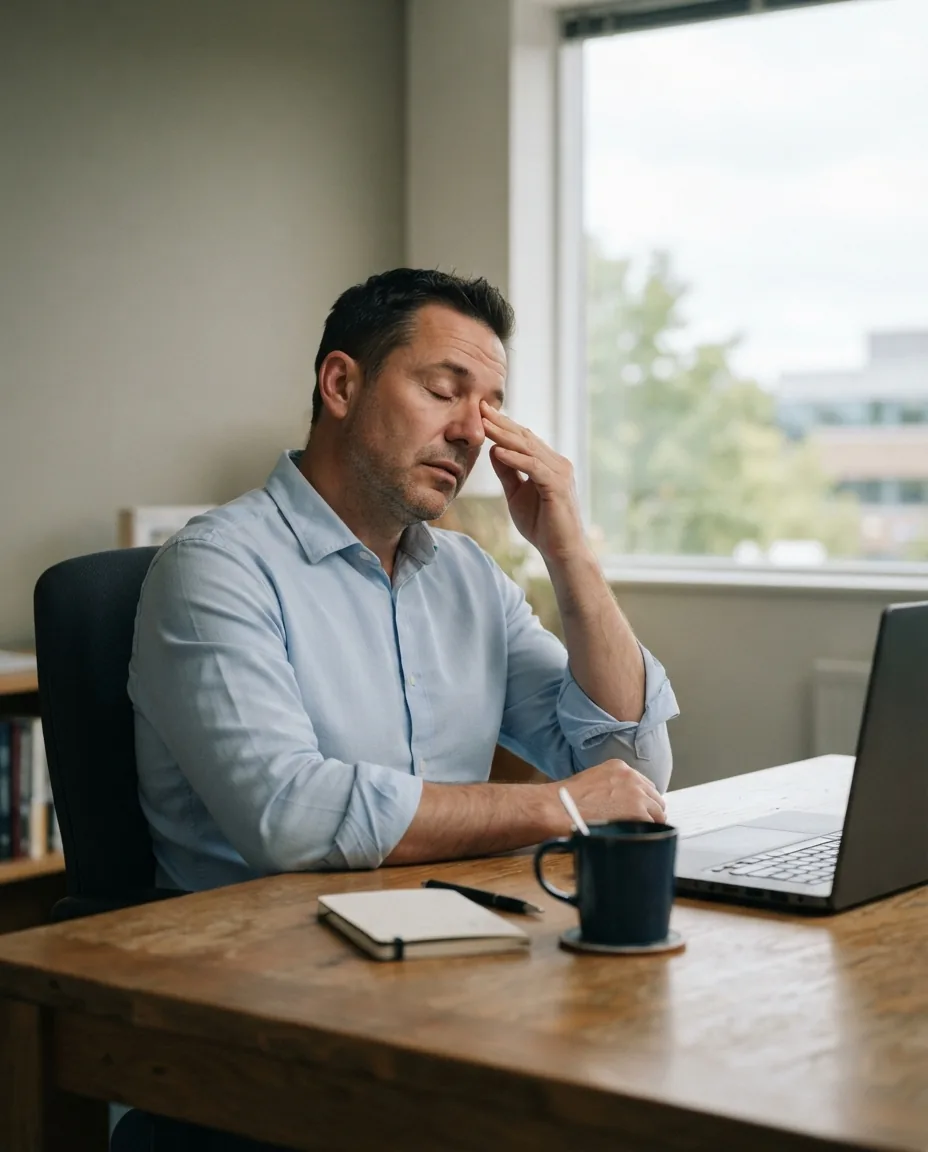
An at-home sleep apnea test (doctors call it a home sleep apnea test, or HSAT) is a simple overnight recording of your breathing. It looks for obstructive sleep apnea (OSA), where your throat closes off again and again while you sleep, so your breathing stops or gets very shallow.
A sleep lab glues on a whole tangle of wires, including ones on your head to read brain waves. A home kit is much lighter. Depending on the device, it records some of these:
- Airflow through your nose, with a thin tube under your nostrils
- Breathing effort, with a stretchy belt or a small sensor on your chest
- Blood oxygen and heart rate, from a clip on your finger
- Snoring and body position, on some kits
Doctors sort them into types. A Type 3 test records airflow, breathing effort, oxygen and heart rate. A Type 4 test records fewer signals, often just oxygen and heart rate. Some newer kits, like the WatchPAT, read tiny changes in the blood flow in your finger instead of using a nose tube.
Good to know: most home tests don’t read brain waves, so they can’t tell exactly when you’re asleep. They count breathing events per hour of recording, not per hour of sleep. The American Academy of Sleep Medicine (AASM) says this can make the result lower than the true number.
So the kit is simple. The bigger question comes first: do you even need one?
Do you need a sleep apnea test? A 2-minute self-check
Doctors often start with the STOP-Bang questionnaire. It’s eight yes-or-no questions, one point each. The first four were built into the STOP questionnaire by Frances Chung’s team in Toronto, and you can answer them right now:
- Snoring Do you snore loudly, loud enough to hear through a closed door, or to get you elbowed?
- Tired Do you often feel tired, worn out or sleepy during the day?
- Observed Has anyone seen you stop breathing, choke or gasp in your sleep?
- Pressure Do you have high blood pressure, or take medicine for it?
The “Bang” half adds your body mass index (BMI), your age, your neck size and being male. Your doctor scores those with you. In a 2021 review of studies in the general population, a score of 3 or more flagged 88% of people with moderate to severe sleep apnea. A score of 5 or more counts as high risk.
If several of these sound like you, it’s worth asking your doctor about a test. But a questionnaire only tells you who to test. The AASM is firm that it can’t diagnose sleep apnea on its own. Only a test can.
When to see a doctor soon
- You nod off while driving, or nearly do
- You wake up gasping or choking
- You have high blood pressure that’s hard to control, or heart problems
- You wake with headaches, or feel sleepy all day however long you sleep
A home test can be part of the plan, but don’t let ordering one online delay a doctor’s visit.
Who should skip a home test and go to a sleep lab?

Home tests are made for one kind of person: an adult who is otherwise fairly healthy and has signs of moderate to severe sleep apnea. The AASM’s 2017 guideline says to use a full lab study (polysomnography) instead if you have any of these:
- Significant heart or lung disease
- Muscle weakness from a nerve or muscle condition
- Breathing too shallowly while awake, or a doctor suspects it happens in your sleep
- Long-term opioid medicine
- A past stroke
- Severe insomnia
Why? These conditions can cause breathing problems that a simple kit can’t sort out, like central sleep apnea, where the brain forgets to send the “breathe” signal. Everyone else can usually start at home. So what does that night actually look like?
How does an at-home sleep apnea test work?
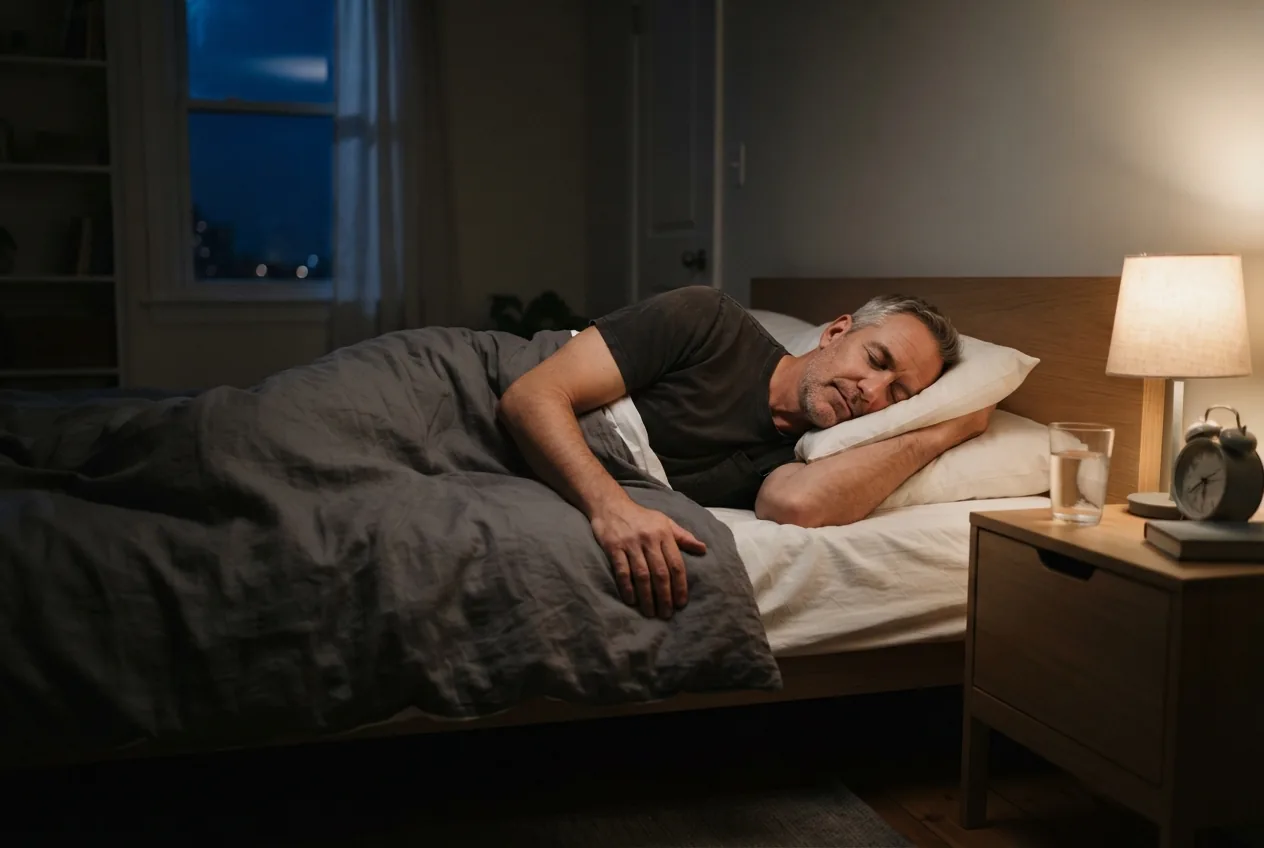
Every home test needs a doctor somewhere in the loop: your own, or one working for the test company. Online tests usually start with a health form or a short video call, then a sleep doctor reads your data. Here’s the usual order:
- Get the test approved Your doctor orders it, or you buy one online and a company doctor approves it.
- Get the kit It’s mailed to you, or you pick it up from a clinic and learn how to put it on.
- Sleep with it on One night for most kits, two or three for some. An app or a button starts the recording.
- Send the data back Some kits upload through your phone; others go back in the mail.
- Get the report A sleep doctor reads it and tells you what it means and what to do next.
Tip: get a good test night
- Sleep the way you always do. Northwell’s sleep chief, Dr. Harly Greenberg, says to sleep in your usual position, not a “test” one.
- Follow your kit’s prep rules. Northwestern Medicine, for example, asks for no caffeine after noon, no alcohol, and no nail polish or acrylic nail on the finger with the clip.
- Mind a blocked nose. A Harvard sleep specialist says a stuffy nose can make you breathe through your mouth, and a nose sensor may miss it. If you have a bad cold, ask whether to wait. Our guide to sleeping with a stuffy nose has the fixes that work.
Easy enough. But after all that, how much can you trust the answer?
How accurate are at-home sleep apnea tests?
Pretty good, with one big blind spot. A 2013 review of 14 studies with 909 patients found the WatchPAT’s results tracked a full lab study closely (a correlation of 0.89, where 1.0 would be a perfect match). Harvard sleep specialist Dr. Sogol Javaheri puts it plainly: with a good home test, “You have an 80% chance that the test will be right.”
The blind spot is mild sleep apnea. The AASM says home tests are less sensitive than a lab, and a false negative can do real harm: you think you’re fine, so you stop looking. Two things cause most misses:
- The math. The kit divides your breathing events by hours of recording, including the time you lay awake. That shrinks the number.
- The night itself. Sleep apnea is worse on some nights than others: after a drink, on your back, with a cold. One quiet night can hide it.
20-50%
of people with sleep apnea were misdiagnosed when judged by one night alone, in a study of 67,278 people and over 11 million nights
Source: Lechat et al., 2022
That study used a sensor under the mattress, not a clinic test, but the lesson carries over. More nights gave steadier answers, and the error rate leveled off after about two weeks. Some home tests, like Sleeping.com’s, now record two or three nights instead of one.
What do your sleep apnea test results mean?
Your report’s headline number is the AHI, the apnea-hypopnea index. It’s how many times an hour your breathing stopped (an apnea) or got very shallow (a hypopnea). Some reports call it the REI or RDI. Here’s how sleep doctors usually read it:
| Events per hour | What it usually means |
|---|---|
| Under 5 | ✅ No sleep apnea on this test |
| 5 to 14 | ➖ Mild sleep apnea |
| 15 to 29 | ⚠️ Moderate sleep apnea |
| 30 or more | ❌ Severe sleep apnea |
The cut-off for a diagnosis depends on how you feel, too. Under the criteria the AASM uses, 5 or more events an hour counts as sleep apnea if you have symptoms like daytime sleepiness, and 15 or more counts even if you feel fine. Your report may also show your lowest oxygen level and how much of the night you spent on your back.
Negative test, but you still snore and feel awful?

Don’t stop there. This is the part most guides skip. The AASM’s guideline says that if a single home test is negative, unclear or failed, the next step is a lab study. A “normal” result plus loud snoring, gasping or heavy daytime sleepiness is a mismatch your doctor should hear about.
And if your test really was normal and your partner is still losing sleep? Then it’s probably plain snoring, which you can usually fix. Our free 1-minute snore quiz shows where yours comes from (nose, mouth, tongue or jaw) and the fix that matches.
How much does an at-home sleep apnea test cost?
Less than you’d think, and a lot less than a lab. Harvard Health notes that lab studies can cost thousands of dollars, while a home test costs a few hundred and is usually covered by insurance when your doctor orders it. You have two roads: through your doctor and insurance, or cash online.
| Your doctor | Lofta | Sleeping.com | Sleep lab | |
|---|---|---|---|---|
| You pay | Your plan’s share | $132.30 sale ($189 list) | $99 sale ($199 list) | Your plan’s share |
| Nights | Usually 1 | 1 | 2-3 | 1 |
| Insurance | ✅ Usually | ❌ Cash | ❌ Cash | ✅ Usually |
| Doctor visit first | ✅ Yes | ➖ Form + video call | ❌ No referral | ✅ Yes |
| Best for | Insured, no rush | Fast cash answer | More than one night | Heart or lung disease |
On Medicare? Medicare Part B covers home sleep tests (Types II, III and IV) if you have signs and symptoms of sleep apnea and your doctor orders the test. After the Part B deductible, you pay 20% of the approved amount. Online cash tests like Lofta’s don’t bill Medicare.
Which home sleep test should you choose?
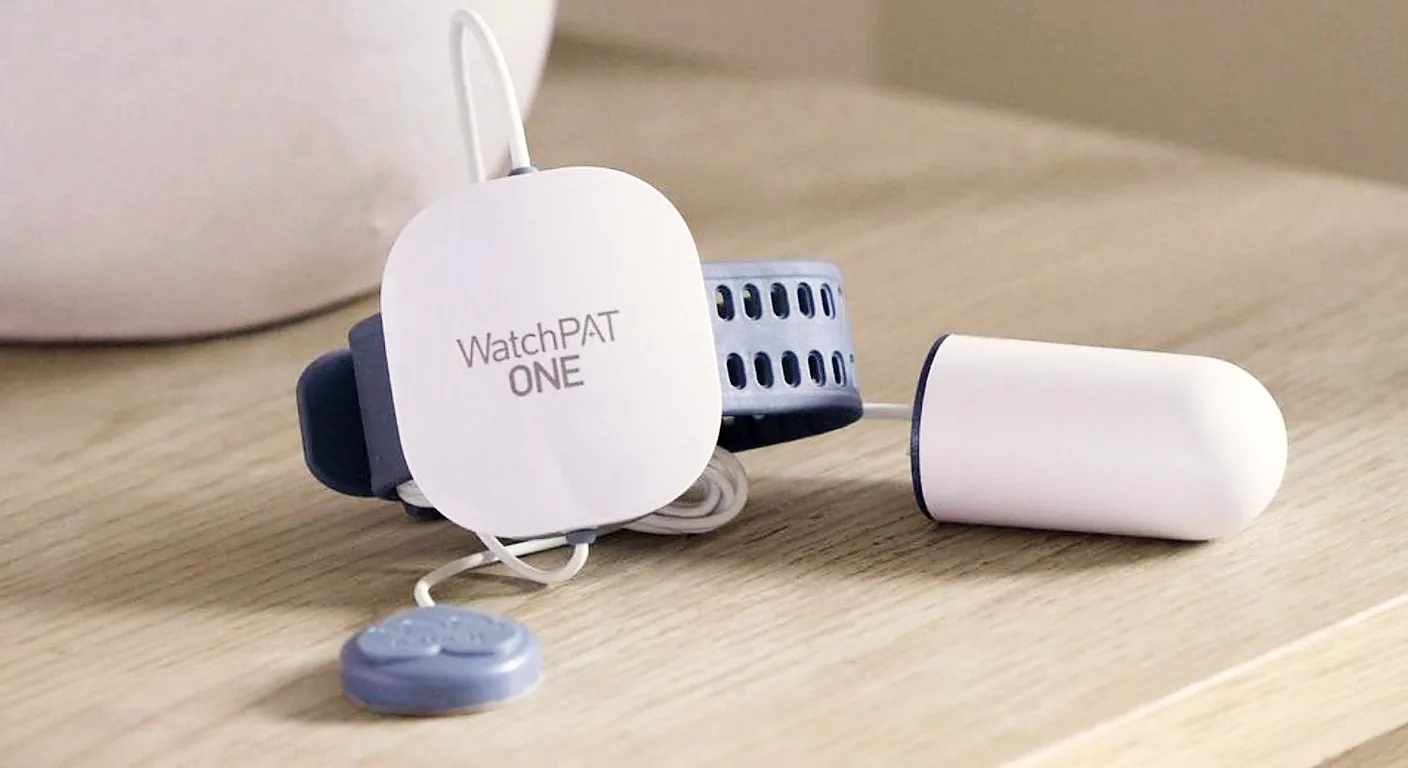
Honestly? It depends on two things: your insurance and your patience. Here’s how I’d decide, based on the evidence above.
Our pick for most people paying cash is Lofta’s home sleep test. It suits adults with loud snoring and signs of sleep apnea who’d rather not wait weeks for an appointment. It isn’t for anyone on the lab list above, or anyone whose insurance would pay for a test anyway. Our review covers the night step by step, how the WatchPAT did against a lab in 500 patients, and the refund rules.
Worried about the one-night problem? Choose a multi-night test, or plan to retest if your result is borderline and your symptoms say otherwise.
What happens if the test says you have sleep apnea?
First, breathe (ha). Sleep apnea is common and very treatable. A 2019 estimate put it at about 936 million adults worldwide, and most don’t know it: a 1997 study estimated that 82% of men and 93% of women with moderate to severe sleep apnea had never been diagnosed. Finding out puts you ahead. A sleep doctor will match the treatment to how severe it is and how you sleep. The usual options:
- CPAP, a bedside machine that keeps your airway open with gentle air pressure. It’s the standard treatment.
- A custom oral appliance made by a dentist, for some people with mild to moderate sleep apnea.
- Weight, alcohol and sleep position changes, which can help, especially when apnea is worse on your back (see our guide to the best sleep position for snoring).
Heads up: over-the-counter snoring gadgets are not sleep apnea treatment. A quieter night can hide apnea that’s still there. Our guide to whether snoring mouthpieces work explains where they fit, and where they don’t.
Curious how common all this is? Our snoring statistics page has 40 facts with sources. And if your snoring only started recently, these 8 causes of sudden snoring are worth a look before any test.
FAQ
How accurate are at-home sleep apnea tests?
They’re good at finding moderate to severe sleep apnea and weaker with mild cases. A Harvard sleep specialist puts the odds of a right answer at about 80%. A negative result with real symptoms should lead to a lab study.
Can you do a sleep apnea test at home without a doctor?
Not entirely. Online tests skip the office visit, but a company doctor still approves the test or reads your results. Lofta uses a short video call first; Sleeping.com needs no referral, and a board-certified sleep doctor reviews the data.
How many nights is an at-home sleep apnea test?
Most kits record one night; some record two or three. Because sleep apnea varies from night to night, more nights give a steadier answer.
Does insurance cover an at-home sleep apnea test?
Usually, when your doctor orders it. Medicare Part B covers home sleep tests if you have signs of sleep apnea, and you pay 20% after the deductible. Online cash tests like Lofta and Sleeping.com don’t bill insurance.
Can an at-home sleep test be wrong?
Yes. It can undercount because it measures recording time, not sleep time, and one night may not be typical. In a study of 67,278 people, one night misdiagnosed 20-50% of those with sleep apnea.
The bottom line on at-home sleep apnea tests
An at-home sleep apnea test is the easiest way to find out what’s behind the snoring and the tired days. Do the self-check, go to a lab if you’re on the AASM’s list, and treat a “normal” result with real symptoms as a question, not an answer. If you’re paying cash and want a doctor-read answer this week, start with Lofta.
Ready to find out what's behind the snoring?
See what Lofta's one-night test is like, what it costs, and who should skip it.
Read our Lofta review →Sources
- Lechat B, Naik G, Reynolds A, et al. Multinight prevalence, variability, and diagnostic misclassification of obstructive sleep apnea. Am J Respir Crit Care Med, 2022.
- Kapur VK, Auckley DH, Chowdhuri S, et al. Clinical practice guideline for diagnostic testing for adult obstructive sleep apnea. J Clin Sleep Med, 2017.
- Yalamanchali S, Farajian V, Hamilton C, et al. Diagnosis of obstructive sleep apnea by peripheral arterial tonometry: meta-analysis. JAMA Otolaryngol Head Neck Surg, 2013.
- Chung F, Yegneswaran B, Liao P, et al. STOP questionnaire: a tool to screen patients for obstructive sleep apnea. Anesthesiology, 2008.
- Chung F, Abdullah HR, Liao P. STOP-Bang questionnaire: a practical approach to screen for obstructive sleep apnea. Chest, 2016.
- Chen L, Pivetta B, Nagappa M, et al. Validation of the STOP-Bang questionnaire for screening of obstructive sleep apnea in the general population and commercial drivers. Sleep Breath, 2021.
- Young T, Evans L, Finn L, Palta M. Estimation of the clinically diagnosed proportion of sleep apnea syndrome in middle-aged men and women. Sleep, 1997.
- Benjafield AV, Ayas NT, Eastwood PR, et al. Estimation of the global prevalence and burden of obstructive sleep apnoea. Lancet Respir Med, 2019.
- Godman H. Trending now: home sleep tests. Harvard Health Publishing, May 2024.
- Northwell Health, At-home sleep study: what you need to know; Northwestern Medicine, Home sleep study.
- Medicare.gov, Sleep studies coverage, checked 4 November 2026.
- Lofta Home Sleep Apnea Test and Sleeping.com Home Sleep Test product pages, prices checked 4 November 2026.
This article is general information, not medical advice. See our medical disclaimer.
