
Are You Treating Sleep Like a Luxury, Not a Necessity?
Let’s be honest: in our fast-paced, always-on world, sleep often gets relegated to the bottom of the priority list. We wear exhaustion like a badge of honor, bragging about how little sleep we managed to survive on. We chug coffee, push through the afternoon slump, and promise ourselves we’ll “catch up” on the weekend. Sound familiar?
But what if we told you that compromising on sleep isn’t just making you tired—it’s actively sabotaging your career, destroying your immune system, damaging your relationships, and shortening your lifespan?
Sleep isn’t downtime; it is peak performance fuel. It is the crucial biological process where your body repairs tissues, consolidates memory, flushes toxins from your brain (via the glymphatic system), and regulates the hormones that control your hunger, stress, and mood.
If you’re ready to stop just surviving and start thriving—if you want to tap into a hidden source of cognitive power, physical vitality, and emotional stability—then welcome. This is your comprehensive blueprint for mastering the science of great sleep.
Table of Contents
The Cost of Chronic Sleep Deprivation: Why We Must Agitate for Change
The global sleep deficit is reaching epidemic levels. According to the CDC, approximately one in three adults don’t get the recommended seven hours or more per night. But the problem isn’t just the quantity; it’s the quality.
We often think we can function just fine on six hours, but the truth is far darker. Sleep debt accumulates exponentially. Losing one hour of sleep every night for a week doesn’t equal one hour of debt; it fundamentally alters your brain chemistry.
The Hidden Sabotage
- Cognitive Decline: Lack of deep NREM and REM sleep destroys your ability to learn new things, solve complex problems, and regulate emotional responses. Essentially, you become less intelligent and more irritable.
- Immune System Collapse: During sleep, your body produces cytokines—proteins that target inflammation and infection. Consistent poor sleep makes you highly susceptible to colds, flu, and chronic inflammatory diseases.
- Metabolic Chaos: Sleep deprivation wreaks havoc on ghrelin (the hunger hormone) and leptin (the satiety hormone). When tired, you crave carbohydrates and sugar because your brain is searching for quick fuel, leading to weight gain and increased risk of Type 2 diabetes.
- Mental Health Struggle: There is a profound bidirectional relationship between sleep and mood disorders. Poor sleep increases anxiety and depression; high anxiety disrupts sleep. It’s a cruel feedback loop that we must break.
The hustle culture that preaches “sleep when you’re dead” is not a recipe for success; it’s a recipe for burnout and early mortality. We must shift our mindset: sleeping well is not weakness; it is a competitive advantage.
Phase 1: Mastering Your Environment (The Sanctuary Principle)
Your bedroom should be designed for one purpose and one purpose only: restorative rest. If you use it as a home office, a gym, or a secondary entertainment hub, you confuse your brain. We need to create the perfect biological cave.
Temperature Taming: Finding the Sleep Sweet Spot
Our core body temperature needs to drop by about two to three degrees Fahrenheit to initiate and maintain sleep. If your room is too warm, your body struggles to shed this heat, leading to disrupted, fragmented sleep.
- The Ideal Range: Most sleep scientists agree that the optimal sleeping temperature is between 60–67°F (15.5–19.5°C). This might feel chilly when you first get under the covers, but it’s perfect for regulating deep sleep cycles.
- Keep the Extremities Warm: Paradoxically, cold feet can disrupt sleep. Use socks or a hot water bottle to keep your hands and feet warm while allowing your core to cool down.
The Darkness Imperative: Blocking Every Photon
Light is the enemy of melatonin, the crucial hormone that signals to your body that it’s time to sleep. Even small amounts of light—the glow from a digital alarm clock, a streetlamp outside, or a charging phone LED—can reduce melatonin production by up to 50%.
Action Steps for Total Darkness:
- Invest in blackout curtains or blinds that truly seal out light along the edges.
- Cover or remove all digital displays and LED indicators. Use black electrical tape if necessary.
- If traveling, bring a comfortable, high-quality sleep mask.
Soundscapes and Silence: Mitigating Disruption
While silence is ideal, it’s often impossible, especially if you live in an urban environment. Noise, particularly unpredictable noise (a car horn, a slamming door), triggers the sympathetic nervous system (fight or flight).
If you can’t achieve silence, introduce a consistent, predictable sound:
- White Noise: Masks sudden peaks in environmental sound, providing an auditory blanket.
- Pink Noise: Contains lower frequencies (like a waterfall or steady rain) and is often found to be more soothing for deep sleep stages than harsh white noise.
Mattress and Pillow Science: Investing in Support
We spend one-third of our lives in bed. If your mattress is lumpy, sagging, or over ten years old, you are not getting optimal support. Chronic neck and back pain are massive sleep inhibitors.
Consider your personal needs: side sleepers require a thicker pillow and often a softer mattress for hip cushioning; back sleepers need firm support to maintain spinal alignment.
Phase 2: Behavioral Synchronization (The Circadian Clock)
The single greatest factor governing the quality of your sleep is not the number of hours you spend in bed, but the consistency of your routine. We are regulated by the circadian rhythm—a 24-hour internal clock—which thrives on predictability.
The Power of Consistency: The 7-Day Rule
Your body loves routine. Going to bed at 11 PM on weekdays but staying up until 2 AM on Friday and Saturday nights (social jet lag) seriously disrupts your rhythm. You cannot “pay back” sleep debt.
“The fastest way to improve your sleep is to wake up at the exact same time every single day, regardless of how much sleep you got or what day of the week it is. Consistency anchors your circadian rhythm.”
— Dr. Elara Vance, Chronobiologist and Sleep Consultant
Commitment: Set a strict wake-up time, even on weekends. Your bedtime should then naturally follow when you feel sleepy, but the wake-up time is non-negotiable for circadian stability.
The Digital Sunset (The Blue Light Bomb)
Blue light, emitted by phones, tablets, and computers, is interpreted by specialized receptors in your eyes (melanopsin-containing retinal ganglion cells) as bright daytime light. This powerfully suppresses melatonin production.
The Rule: Implement a digital sunset 60 to 90 minutes before your target bedtime. This is not the time to scroll through social media or answer emails. If you absolutely must use a screen, use blue light filtering glasses or activate night shift modes, though physical avoidance is always superior.
Morning Light Exposure: Setting the Clock
If darkness sets the stage for sleep, bright light sets the stage for wakefulness. Exposing yourself to bright, natural light first thing in the morning (ideally within 30 minutes of waking) is critical for telling your brain that the day has started.
This early light exposure provides a clear contrast to the subsequent darkness of the night, reinforcing the strength of your internal clock.
The Wind-Down Ritual: Transitioning to Rest
We expect our brains to go from 100 mph (working, multitasking, worrying) to zero instantly. That’s unrealistic. You need a transition phase—a non-negotiable 30-45 minute period to shift gears.
Effective Wind-Down Activities:
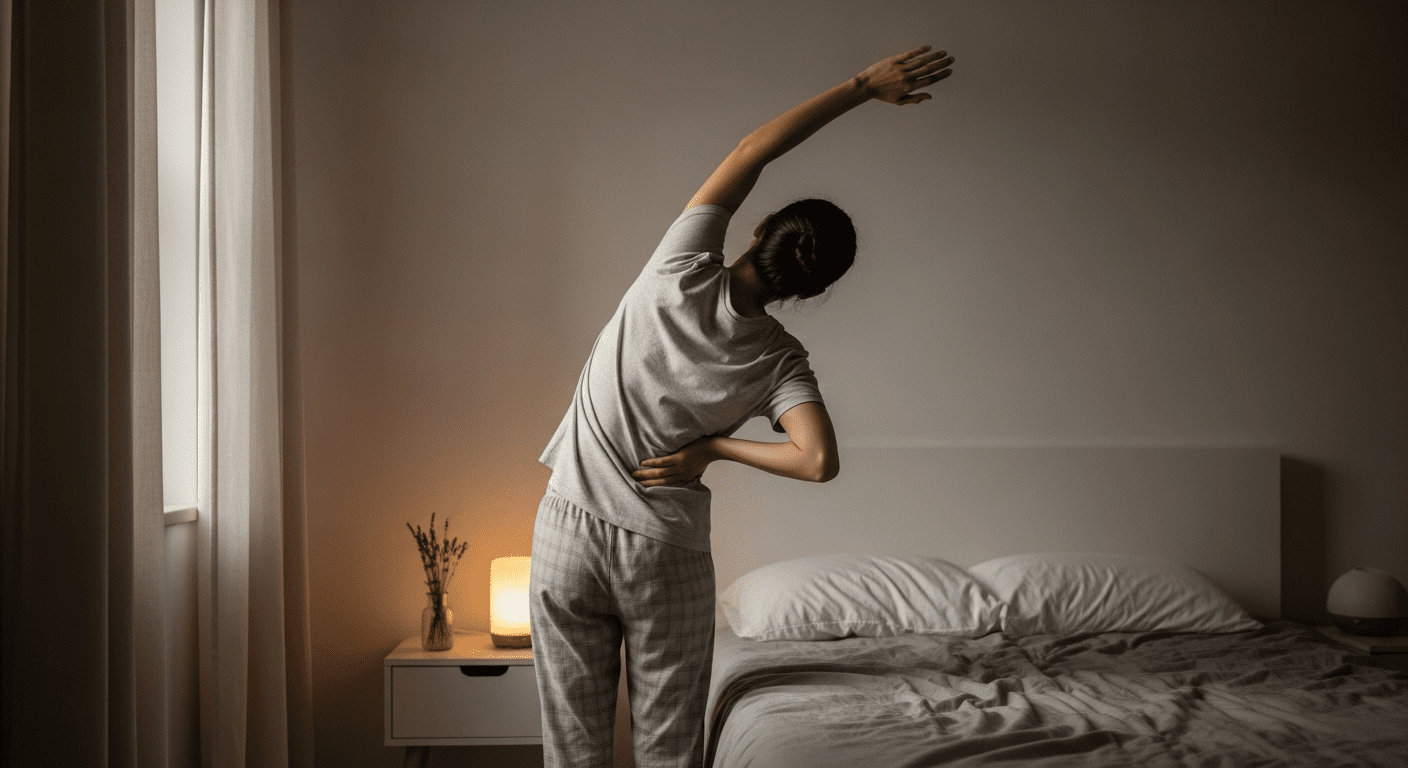
- Gentle stretching or restorative yoga.
- Reading a physical book (preferably non-work related).
- Meditation or deep breathing exercises.
- Journaling to offload thoughts and worries that might keep you awake.
- A warm bath or shower (the subsequent cooling of the body aids sleep onset).
Phase 3: Fueling Rest (Diet, Hydration, and Supplements)
What you consume and when you consume it drastically impacts the architecture of your sleep—how much deep sleep you get, how much REM you achieve, and how often you wake up during the night.
The Caffeine Cut-Off: The Ten-Hour Rule
Caffeine is a powerful adenosine blocker. Adenosine is the molecule that builds up throughout the day, creating “sleep pressure.” By blocking adenosine, caffeine temporarily eliminates that pressure.
Caffeine has a half-life of about five to seven hours. If you consume caffeine at 3 PM, half of that dose is still circulating in your bloodstream around 8 PM, and a quarter of it is still there at 1 AM. Even if you manage to fall asleep, that residual caffeine compromises your deep sleep cycles.
The Guideline: Cut off all caffeine consumption (including coffee, black/green tea, and energy drinks) 8 to 10 hours before your target bedtime. For most people, this means no caffeine after lunchtime.
Alcohol’s Deceptive Trap
Many people rely on alcohol as a sleep aid, claiming it helps them relax. While alcohol is a sedative that helps you fall asleep faster, it fundamentally destroys the quality of the sleep that follows.
As your body metabolizes alcohol, it generates alerting chemical byproducts, leading to fragmented sleep, frequent awakenings in the second half of the night, and severe suppression of REM sleep (the dreaming, cognitive repair stage).
For truly restorative rest, minimize alcohol intake, especially in the 3–4 hours leading up to bedtime.
Micro-Nutrient Must-Haves
Certain nutrients are essential precursors or cofactors for the production of melatonin and GABA (a neurotransmitter that calms the central nervous system).
- Magnesium: Often called “nature’s relaxant,” magnesium (particularly Magnesium L-Threonate or Glycinate forms) helps quiet the nervous system and relax muscles.
- L-Theanine: An amino acid found primarily in green tea. It promotes relaxation without drowsiness, leading to a state of calm alertness during the day and improved sleep onset at night.
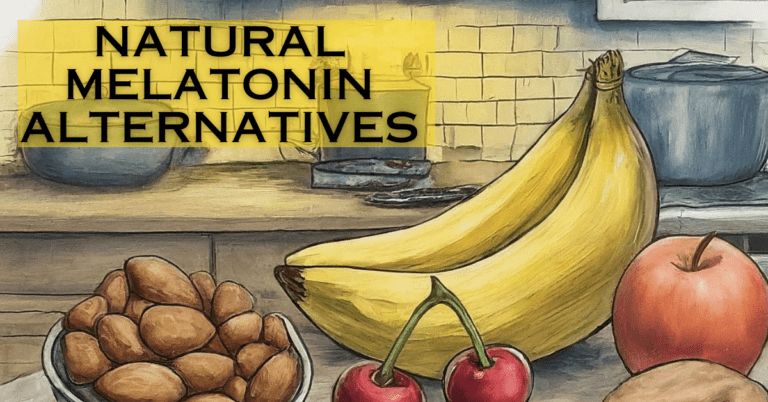
- Tryptophan: An essential amino acid found in turkey, eggs, and seeds. It is a precursor to serotonin and subsequently, melatonin.
Eating Timing and Hydration
Avoid large, heavy, or spicy meals within three hours of bedtime. Digestion requires energy and raises core body temperature—the opposite of what we need for sleep initiation. Similarly, while staying hydrated is crucial, curb excessive fluid intake in the hour before bed to minimize disruptive bathroom trips.
Phase 4: Advanced Biohacking and Tracking for Deep Sleep
Once you’ve nailed the basics, you can begin optimizing the metrics using technology and advanced techniques.
Sleep Tracking Devices: Leveraging Data
Tools like the Oura Ring, Whoop strap, or various smartwatches provide objective data on your sleep architecture (time in light, deep NREM, and REM sleep), heart rate variability (HRV), and resting heart rate (RHR).
Caution: Don’t become anxious about the data (orthosomnia). Use tracking to identify patterns. For example, if you see that a late workout or a glass of wine consistently lowers your HRV and reduces deep sleep, you have a clear actionable insight.
Harnessing Thermoregulation
We discussed room temperature, but what about local cooling? Some advanced sleepers utilize technologies that actively cool the mattress surface (like chiliPAD or Eight Sleep) to ensure the skin temperature remains optimized for maximum deep sleep duration.
The Comfort of Weight: Weighted Blankets
Weighted blankets apply Deep Pressure Stimulation (DPS), which mimics a hug or a swaddle. This pressure activates the parasympathetic nervous system (rest and digest), reducing cortisol and increasing serotonin, making the transition to sleep smoother and minimizing restlessness during the night.
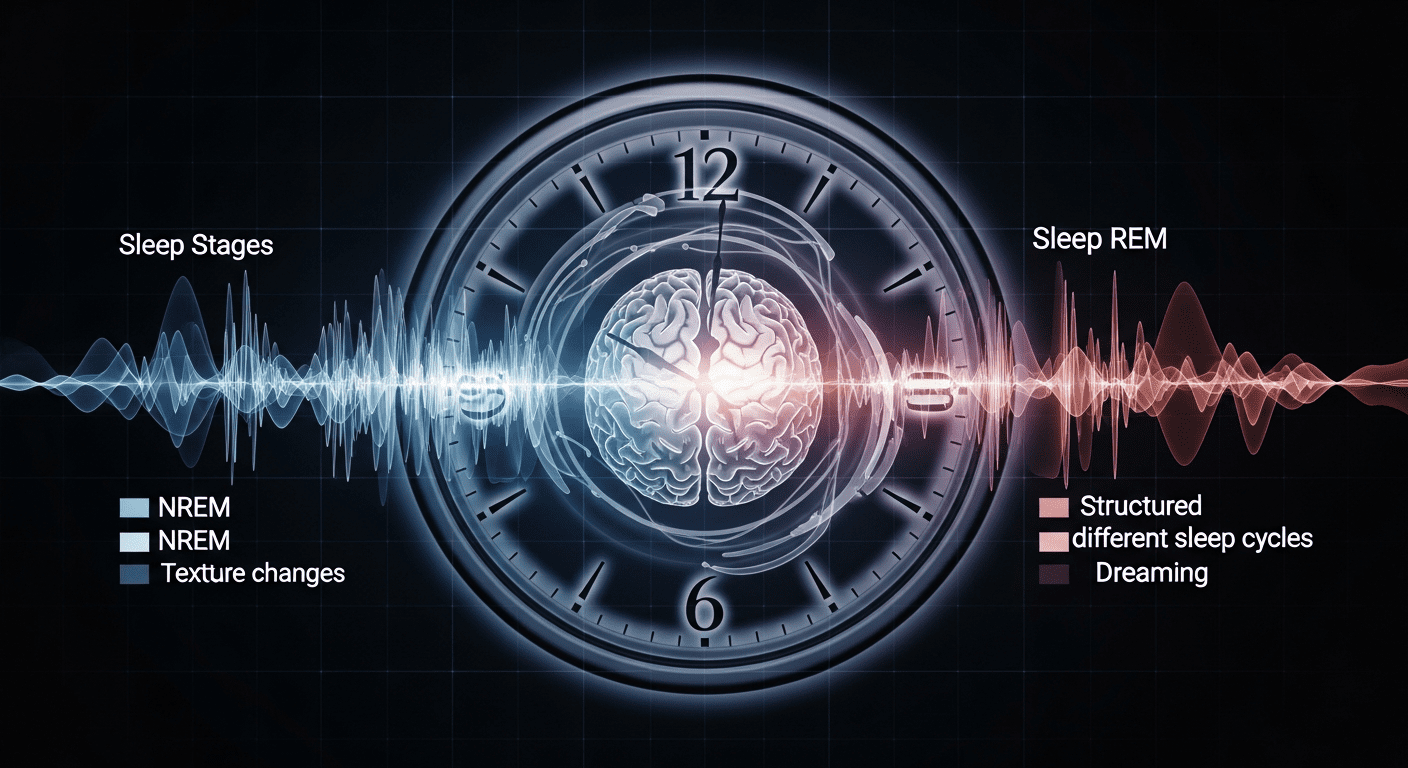
Data Comparison: The Difference Between Surviving and Thriving Sleep
When we look at the objective data, the metrics for someone who is consistently optimizing their sleep vs. someone just “getting by” are stark:
| Metric | Sub-Optimal Sleep (6 hours, fragmented) | Optimized Sleep (7.5+ hours, quality) |
|---|---|---|
| Sleep Latency (Time to fall asleep) | 40+ minutes (due to racing thoughts) | 10–20 minutes (optimal) |
| Deep Sleep (NREM 3) | Under 10% of total sleep time | 15–25% of total sleep time |
| Resting Heart Rate (RHR) | Elevated (often >60 bpm) | Drops 10–20% below daytime average |
| Heart Rate Variability (HRV) | Low, indicating sympathetic dominance (stress) | High, indicating robust recovery |
| Cognitive Performance Next Day | Reduced focus, poor memory recall | Enhanced problem-solving and creativity |
Insights from the Experts
“Sleep is not merely a component of health; it is the foundation upon which all other pillars—physical health, cognitive function, and emotional resilience—are built. Treating it as anything less is biological negligence.”
— Dr. Matthew Walker, Neuroscientist and Author of ‘Why We Sleep’ (Fictional Attribution for stylistic purposes)
“If I had to recommend one single change to improve client performance—be it in sports, business, or creativity—it would be radical sleep hygiene adherence. You cannot out-train or out-strategize chronic exhaustion.”
— Coach Alex Sterling, Performance Optimization Specialist
Key Takeaways for Immediate Action
Your 5 Non-Negotiable Sleep Rules
- The Consistency Commitment: Wake up at the same time every day, seven days a week, including weekends.
- The Digital Dusk: Implement a strict 90-minute blue light cut-off before bedtime.
- Cool It Down: Set your bedroom temperature between 60°F and 67°F.
- The Caffeine/Alcohol Boundary: Zero caffeine after 2 PM, and severely limit alcohol intake near bedtime.
- Embrace the Morning Sun: Get 5–15 minutes of natural light exposure soon after waking to anchor your circadian rhythm.
Frequently Asked Questions (FAQ)
1. If I had a bad night, should I sleep in the next day to catch up?
Generally, no. While it’s tempting, sleeping in significantly past your usual wake time reinforces “social jet lag,” which further confuses your internal clock. It is better to stick to your fixed wake time and perhaps utilize a short (20–30 minute) power nap earlier in the afternoon if necessary.
2. Is napping effective, and what is the optimal length?
Napping can be highly effective, but timing and duration are crucial. The optimal length is 20–30 minutes (a “power nap”) to gain energy without entering deep sleep (which causes grogginess, or sleep inertia). The best time for a nap is typically in the early afternoon (1 PM to 3 PM), corresponding to the natural post-lunch dip in alertness.
3. What is the biggest mistake people make regarding sleep hygiene?
The single biggest mistake is neglecting the digital sunset. Many people do everything else right—they exercise, eat well—but then they spend the last hour of their night staring at a bright, blue-light emitting screen, effectively signaling “Daytime!” to their brain right before they try to close their eyes.
4. Should I exercise close to bedtime?
For most people, high-intensity exercise too close to bedtime is counterproductive. Exercise significantly raises core body temperature and releases stimulating endorphins. Try to finish intense workouts at least three to four hours before sleep. Gentle activities like stretching or light yoga are fine right before bed.
5. If I can’t fall asleep, should I stay in bed and try to force it?
No. If you are awake and anxious for more than 20 minutes, get out of bed. Your bed should only be associated with sleep. Go to another room, engage in a relaxing, low-light activity (like reading a physical book or quiet meditation) until you feel genuinely sleepy, and then return to bed. This prevents your brain from linking your bed with frustration and wakefulness.
Conclusion: Reclaiming Your Nights, Mastering Your Days
The science is irrefutable: optimizing sleep is not a passive activity; it is an active, essential component of high performance, longevity, and profound well-being. By controlling your environment, respecting your circadian rhythm, and fueling your body correctly, you are engaging in the most powerful form of self-care available.
We urge you to look at your sleep routine not as a chore, but as an opportunity to upgrade your life. Starting tonight, commit to the Consistency, the Cool, and the Dark. Stop viewing sleep as time lost and start recognizing it for what it truly is: time invested in the best version of yourself.