
You bought the comforter with “cooling” on the label. You still wake up at 3 a.m. with one leg out and the pillow flipped to the cold side. 🥵 If you’re hunting for the best comforter for hot sleepers, here’s a surprise: in a sleep lab, the type of fill mattered far less than you’d think.
So this guide doesn’t start with a list of brands. It starts with what actually makes a comforter hot, how to read the warmth label, and only then wool vs down vs cotton.
I didn’t test these comforters myself. Instead, I read the sleep studies on bedding, including a 2016 lab study that compared wool and polyester bedding, plus the makers’ details and buyer reviews. So you get what the research shows, not a sales pitch.
The short answer
Pick by weight first, fill second. A light fill in a breathable cover keeps you cooler than a heavy “cooling” one. For wool, look for about 200 g/m², like the washable Sleep & Beyond myComforter Light. For down, choose a lightweight or summer weight. And keep the room cool.
In this article
What makes a comforter too hot?
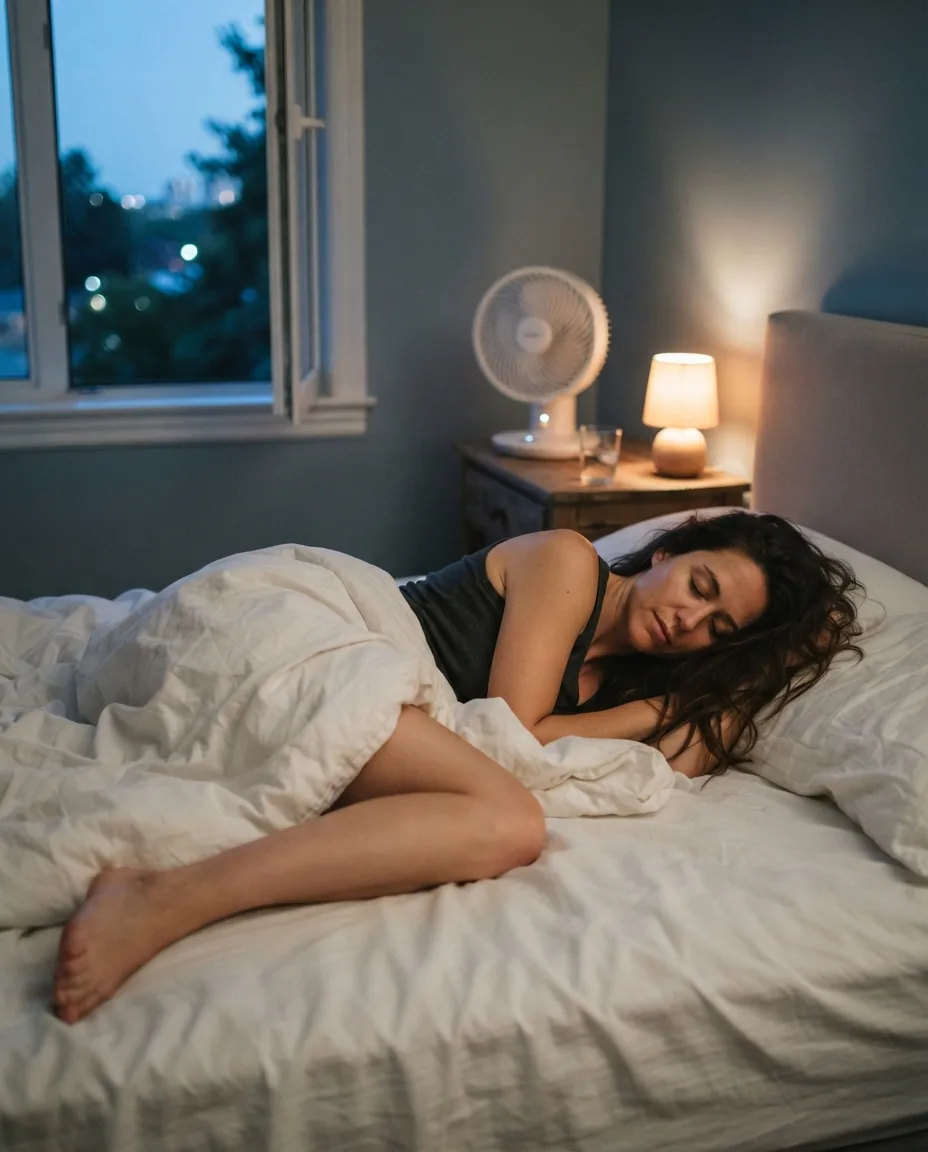
Three things, and the fill type is only part of one of them:
- How much fill is inside More fill traps more air, and trapped air is what keeps you warm. A heavy comforter of any fibre will be hot in a warm room.
- The cover fabric The shell is the part against you. A tight, glossy weave lets less air through than a crisp, matte one.
- The room A 2012 review of the research on heat and sleep found that once people sleep under bedding, heat is what disturbs sleep, with more waking and less deep and dream sleep. Humid heat was harder still.
That last one is why the room comes first. Our guide to the ideal sleeping temperature covers what the studies say about the thermostat. Once the room is sorted, the comforter does the rest.
Wool vs down vs cotton: what the studies found

Here’s the part the “best comforter” lists skip. When researchers at the University of Sydney put 17 young adults in a sleep lab for nine nights, under wool or polyester bedding at 17°C or 22°C (63°F or 72°F), they found no effect of the bedding on sleep. Wool pyjamas helped them fall asleep faster; the bedding fibre didn’t.
A 2024 review of nine studies on sleepwear and bedding fibres agreed the picture is mixed. Its clearest bedding result was for down: goose down duvets increased deep sleep in cool conditions. The authors said the fibres are hard to compare, and the wool industry funded part of this research.
Myth check: no study shows that one “cooling” fill wins for hot sleepers. Any fill can work if there’s little enough of it and the room isn’t hot.
So the fill comes down to feel, care and budget. Here’s how the common ones compare:
| Fill | Warmth label to look for | Good to know |
|---|---|---|
| Wool | Grams per square metre (about 200 is light) | Buyers often describe it as feeling dry; some wool is washable, organic Merino often isn’t |
| Down | “Lightweight” or “summer weight”, plus fill power | Light and lofty; goose down helped deep sleep in cool rooms (2024 review) |
| Cotton | “Lightweight” or the fill weight | Easy to wash; check the care label |
| Polyester (down alternative) | Fill weight, often in ounces or g/m² | Cheapest and washable; matched wool at room temperature in the 2016 study |
| “Cooling” fabrics (lyocell, nylon) | Ask for the fill weight | The cool feel comes from the cover; check the fill inside |
How to read a comforter’s warmth label
This is where most hot sleepers go wrong. The number on the box often isn’t the number that tells you how warm it is.
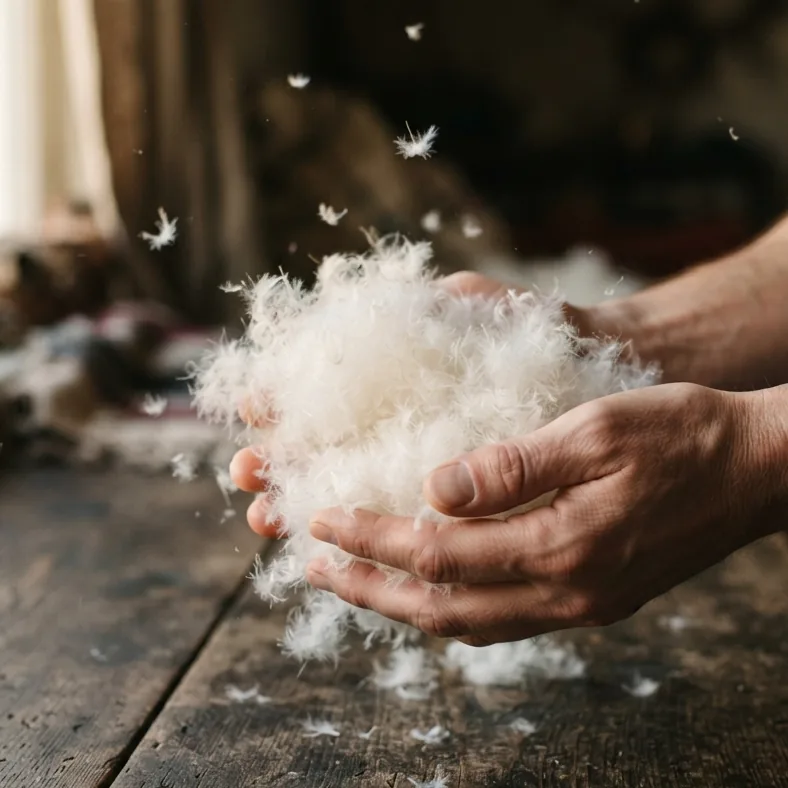
- Fill power (down) tells you how much space one ounce of down fills, in cubic inches. Higher fill power means more loft per ounce, not a warmer comforter by itself.
- Fill weight is how much fill is inside. A high fill power comforter with little down can be lighter than a low fill power one stuffed full.
- Grams per square metre (wool) is the simplest. Sleep & Beyond, for example, sells its comforters at 200, 430 and 530 g/m², and calls only the 200 g/m² ones three-season.
- “All-season” usually means warm enough for winter. For a hot sleeper, that’s often too much.
The cover matters too

Whatever is inside, the shell and your duvet cover sit between you and it. Our cotton vs bamboo vs TENCEL guide found that a low thread count percale sleeps cooler than a high-count sateen, and that TENCEL lyocell is the best all-rounder for sweaty sleepers.
That counts for a duvet cover too. If your comforter has a sateen shell, a crisp percale or TENCEL cover over it is an easy fix, and it’s washable. For sheets in odd sizes, see our Egyptian Linens review.
Our wool pick for hot sleepers
If you like the dry feel of wool, I’d start with the Sleep & Beyond myComforter Light. It has the lightest fill the brand makes (200 g/m²), it’s machine washable, and it was $229 for a full/queen when I checked on 28 October 2026. It’s also the shop’s most-reviewed comforter.
👍 Why it suits hot sleepers
- Light 200 g/m² wool fill
- Machine washable
- Wool only, no feathers or polyester
👎 Know before you buy
- No sleep trial: used bedding can’t be returned
- Free shipping only over $500
- Wool may smell faintly for the first days
Our full Sleep & Beyond review compares all four of its wool comforters, by weight, washing and price, with the return rules spelled out.
When one of you is hot and the other is cold
Don’t fight over one comforter. Use two, each in your own weight, on the same bed. It’s called the Scandinavian sleep method, and our sleep divorce guide covers how couples make it work before anyone moves to the spare room.
When night sweats need a doctor
Sweating at night is normal when the room or the bedding is too warm, says the NHS. Common other causes include menopause, anxiety, some medicines, low blood sugar and alcohol. See a doctor if:
- night sweats happen regularly and wake you up or worry you
- you also have a high temperature, feel hot, cold or shivery, or have a cough or diarrhoea
- you’re losing weight for no reason
FAQ
What type of comforter is best for hot sleepers?
A lightweight one, whatever the fill. In a 2016 lab study, wool and polyester bedding made no difference to sleep, so the amount of fill, the cover fabric and a cool room matter more than the fibre.
Is wool or down better for hot sleepers?
Neither clearly wins. Wool is often described as feeling drier, and some is washable; down is light and lofty, and goose down helped deep sleep in cool rooms. Choose a light weight of either.
Are cooling comforters worth it?
Only if the fill is light. A cool-feeling cover helps at first touch, but a heavy fill will still trap heat. Ask for the fill weight before you buy.
What does fill power mean?
Fill power is how much space one ounce of down fills, in cubic inches. It measures loft, not total warmth: how much down is inside matters too.
Can a comforter cause night sweats?
Too warm bedding can make you sweat at night, which is normal. Regular night sweats with a fever or unexplained weight loss need a doctor.
My verdict
The best comforter for hot sleepers is a light one in a breathable cover, in a cool room. Fill type comes second, and the studies don’t crown a winner. If you like wool, the Sleep & Beyond myComforter Light is the one I’d start with: light, washable and well reviewed. Just order the weight you’re sure of, since used bedding can’t go back.
Want the wool option?
Our review compares Sleep & Beyond's four wool comforters by weight, washing and price, with the return rules.
Read our Sleep & Beyond review →Sources
- Shin M, et al. The effects of fabric for sleepwear and bedding on sleep at ambient temperatures of 17°C and 22°C. Nat Sci Sleep, 2016.
- Li X, Halaki M, Chow CM. How do sleepwear and bedding fibre types affect sleep quality: a systematic review. J Sleep Res, 2024.
- Okamoto-Mizuno K, Mizuno K. Effects of thermal environment on sleep and circadian rhythm. J Physiol Anthropol, 2012.
- IDFL. Explanation of down and feather tests (fill power).
- NHS. Night sweats, reviewed 9 November 2023.
- Sleep & Beyond comforter details and prices, checked 28 October 2026 (see our Sleep & Beyond review).