

Ever wonder why you feel exhausted even after spending 8 hours in bed?
You know that feeling when you check your phone in the morning and realize you were in bed for a solid eight hours, but you feel like you got hit by a truck? Yeah, I used to think I was the only one dealing with this until I discovered something that changed everything I thought I knew about sleep.
Here’s the thing: it’s not just about how long you sleep. It’s about how well you sleep. And if you’re waking up multiple times during the night, even if you fall back asleep quickly, you’re dealing with something called sleep fragmentation. Trust me, this isn’t just an annoyance—it’s silently messing with your body in ways you wouldn’t believe.
Table of Contents
The Problem: You’re Not Sleeping As Well As You Think
Let me paint you a picture. You go to bed at 11 PM, wake up at 7 AM. That’s eight hours, right? Perfect. Except you woke up three times to use the bathroom, twice because your neighbor’s dog wouldn’t shut up, and once because you suddenly remembered that embarrassing thing you said in 2014.
Those interruptions? They’re not harmless.
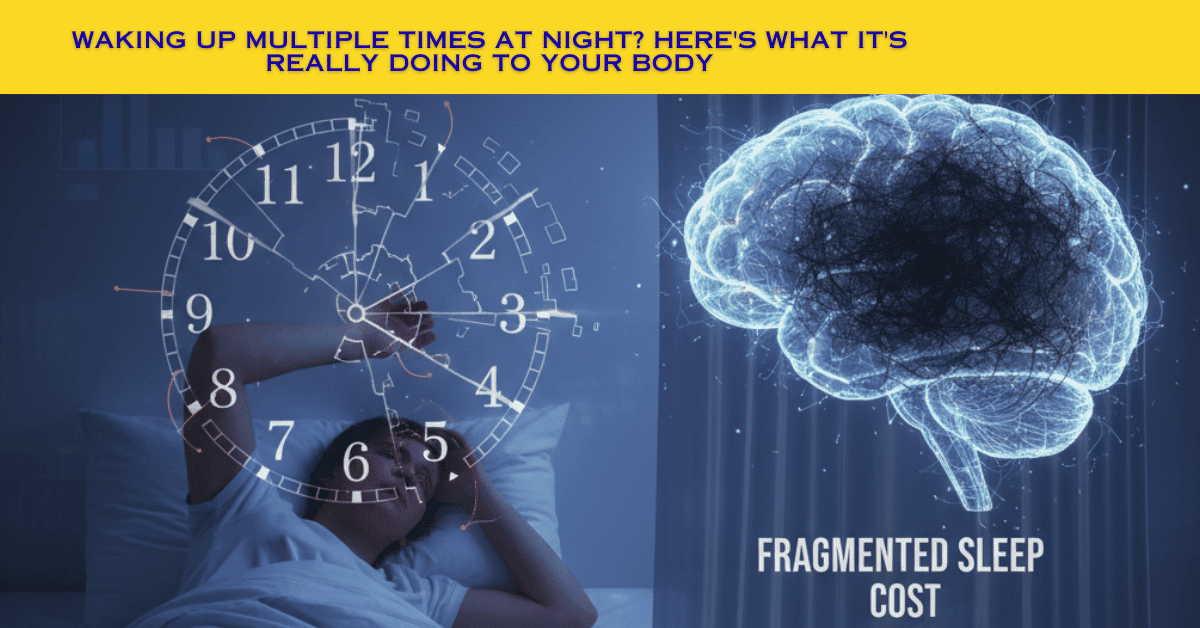
Sleep fragmentation happens when your sleep gets repeatedly interrupted, preventing you from completing full sleep cycles. Most people need to go through 4-6 complete sleep cycles per night, and each cycle lasts about 90 minutes. When you keep waking up, you’re basically hitting the reset button on these cycles.
The worst part? You might not even remember most of these wake-ups. Research shows that if you wake up for less than 3 minutes, you probably won’t recall it in the morning. But your body definitely remembers.
The Scale of the Problem
According to a 2019 study published in the journal Sleep Medicine Reviews, approximately 35% of adults experience fragmented sleep regularly. That’s more than one in three people. And these numbers have been climbing steadily over the past decade.
Here’s what really gets me: a study from Johns Hopkins found that people who experienced fragmented sleep had a 31% reduction in positive mood compared to those who got the same amount of interrupted sleep but with fewer wake-ups. Same hours, completely different results.
But mood is just the beginning. The real damage runs much deeper.
The Agitation: What Fragmented Sleep Actually Does to Your Body
Okay, now let’s talk about what’s really happening inside your body when your sleep keeps getting interrupted. And I’m warning you—this stuff is kind of scary.
Your Metabolism Goes Haywire
Remember when I mentioned that sleep fragmentation messes with your metabolism? I wasn’t exaggerating.
A groundbreaking study from the University of Chicago found that just four nights of fragmented sleep reduced insulin sensitivity by 25%. To put that in perspective, that’s the same metabolic impact as gaining 20-30 pounds. Four nights.
Here’s what happens:
When you keep waking up, your body releases cortisol (the stress hormone) at inappropriate times. Cortisol tells your body to release glucose into your bloodstream because it thinks you need energy to deal with some threat. But there’s no threat—you’re just trying to sleep. So now you’ve got excess glucose floating around with nowhere to go.
Over time, this leads to:
- Insulin resistance
- Increased fat storage (especially around your belly)
- Higher risk of type 2 diabetes
- Constant cravings for sugary and high-carb foods
A friend of mine couldn’t figure out why she kept gaining weight despite eating healthy and exercising regularly. Turns out, she was waking up 15-20 times per night due to undiagnosed sleep apnea. Once she got treatment, she lost 18 pounds in three months without changing anything else.
Your Memory Takes a Serious Hit
This one hits close to home for me. I used to joke about having a terrible memory, but it wasn’t until I fixed my sleep that I realized how much fragmented sleep was contributing to my brain fog.
During deep sleep (specifically Stage 3, also called slow-wave sleep), your brain does something incredible: it transfers information from short-term memory to long-term storage. It’s like your brain is organizing files and moving them from your desktop to permanent folders.
But here’s the catch: this process only happens during uninterrupted deep sleep.
When you keep waking up, you’re constantly being pulled out of deep sleep before this transfer can complete. A study from the University of California, Berkeley found that people with fragmented sleep showed a 40% deficit in their ability to form new memories compared to those with continuous sleep.
| Sleep Quality | Memory Formation Ability | Learning Capacity |
|---|---|---|
| Continuous sleep | 100% (baseline) | 100% (baseline) |
| Mild fragmentation (2-4 wake-ups) | 75% | 70% |
| Moderate fragmentation (5-8 wake-ups) | 60% | 55% |
| Severe fragmentation (9+ wake-ups) | 40% | 35% |
Source: Adapted from UC Berkeley Sleep and Neuroimaging Lab, 2020
The Immune System Connection
I didn’t even know this was a thing until I started researching for this article, but fragmented sleep absolutely wrecks your immune system.
A study published in PLOS ONE found that people with fragmented sleep had 50% lower antibody response to vaccines compared to people with continuous sleep. Your body literally can’t defend itself properly when your sleep keeps getting interrupted.
Think about it: how many times have you gotten sick right after a stressful period where you weren’t sleeping well? That’s not a coincidence.
The Cardiovascular Risks
This one really caught my attention: research from the American Heart Association shows that fragmented sleep increases the risk of atherosclerosis (hardening of the arteries) by 31%, independent of sleep duration.
Translation: even if you’re getting enough hours, if those hours are constantly interrupted, you’re putting extra strain on your heart.
A 2018 study tracking over 1,600 adults for five years found that those with frequent sleep fragmentation had:
- 27% higher risk of high blood pressure
- 43% higher risk of coronary artery disease
- 38% increased risk of stroke
These aren’t small numbers. We’re talking about significant health risks that most people have no idea are connected to their sleep quality.
The Solution: How to Actually Fix Fragmented Sleep
Alright, enough doom and gloom. Let’s talk about what you can actually do about this.
I’m not going to lie to you—fixing fragmented sleep isn’t always easy, and there’s no one-size-fits-all solution. But there are definitely things that work, and I’m going to share what actually made a difference for me and others I know.
Identify the Root Cause
Before you can fix the problem, you need to know what’s causing it. Here are the most common culprits:
Physical causes:
- Sleep apnea (this is HUGE—affects about 22 million Americans)
- Restless leg syndrome
- Chronic pain
- Frequent urination (could be related to prostate issues, diabetes, or just drinking too much before bed)
- Acid reflux
- Hormonal changes (especially during menopause)
Environmental causes:
- Noise (traffic, neighbors, pets, snoring partner)
- Light pollution (even small amounts mess with your circadian rhythm)
- Temperature (your bedroom should be between 60-67°F for optimal sleep)
- Uncomfortable mattress or pillows
Psychological causes:
- Stress and anxiety
- Racing thoughts
- Depression
- PTSD
Lifestyle causes:
- Caffeine too late in the day
- Alcohol (it might help you fall asleep, but it fragments your sleep later in the night)
- Late-night screen time
- Irregular sleep schedule
Create a Sleep-Friendly Environment
This sounds basic, but most people don’t actually optimize their bedroom for sleep. Here’s what actually works:
1. Make it dark. Like, really dark.
Get blackout curtains or a good sleep mask. A study from Northwestern University found that even moderate light exposure during sleep increased insulin resistance by 15% in just one night. Your body needs darkness to produce melatonin.
2. Control the noise
If you can’t eliminate noise, mask it. White noise machines work great. I personally use a fan—the constant sound drowns out irregular noises that would otherwise wake me up.
3. Cool it down
Your body temperature needs to drop about 2-3 degrees for you to fall and stay asleep. Keep your room between 60-67°F. I know it sounds cold, but trust me on this one.
Fix Your Sleep Schedule
I resisted this for years because I’m not a morning person and I hated the idea of going to bed early. But consistency matters more than you think.
Here’s what worked for me:
- Go to bed at the same time every night (even on weekends—sorry)
- Wake up at the same time every morning (this one’s actually more important than bedtime)
- Get sunlight exposure within 30 minutes of waking up (helps reset your circadian rhythm)
- Avoid naps longer than 20 minutes or naps after 3 PM
A study from the University of Pittsburgh found that people with irregular sleep schedules had 3x higher rates of fragmented sleep compared to those who maintained consistent sleep-wake times.
The Pre-Bed Routine That Actually Matters
Everyone talks about bedtime routines, but most advice is either too complicated or just doesn’t work. Here’s what actually makes a difference:
90 minutes before bed:
- Stop eating (digestion can interfere with sleep)
- Dim the lights throughout your home
- Switch devices to night mode (or better yet, put them away)
60 minutes before bed:
- Take a hot shower or bath (the temperature drop afterward signals your body to sleep)
- Do some light stretching or gentle yoga
- Write down anything you’re worried about (gets it out of your head)
30 minutes before bed:
- Read a physical book (not your phone!)
- Practice deep breathing or meditation
- Review your plan for tomorrow (so you’re not thinking about it in bed)
Address Medical Issues
If you’ve tried everything and you’re still waking up constantly, you might have an underlying medical condition. Don’t ignore this.
Sleep apnea is probably the most common undiagnosed cause of fragmented sleep. If you snore loudly, wake up gasping, or feel exhausted despite spending enough time in bed, get a sleep study done. Treatment (usually a CPAP machine) can be life-changing.
I had a colleague who was falling asleep at work meetings, crashing his car twice in parking lots, and his marriage was suffering because he was always irritable. Turned out he had severe sleep apnea and was waking up over 60 times per hour without realizing it. Once he started CPAP therapy, he said it was like getting his life back.
The Supplement Strategy
Look, I’m not a doctor, and you should definitely talk to yours before taking anything. But here’s what the research says actually works:
Magnesium: About 300-400mg before bed. Helps with sleep quality and can reduce nighttime awakenings. A 2012 study found it improved sleep efficiency by 16%.
Melatonin: But not the way most people use it. You want 0.3-1mg (NOT the 10mg pills you see at the store) taken 2-3 hours before bed. It’s not a sedative—it’s a signal to your body that it’s time to sleep.
Glycine: 3g before bed. Research shows it improves sleep quality and reduces daytime sleepiness.
What doesn’t work long-term: sleeping pills. They knock you out, but they don’t produce natural sleep architecture, so you don’t get the restorative benefits. Plus, they’re addictive.
Technology Can Actually Help
I know I said to avoid screens, and that’s still true before bed. But some technology can actually improve your sleep:
Sleep tracking devices: Knowing you wake up 8 times per night vs. 3 times per night helps you identify what’s working. I use a simple fitness tracker, but there are dedicated sleep monitors too.
Smart thermostats: Program your bedroom to cool down automatically before bed and warm up slightly before you wake up.
White noise apps: If you don’t want a physical machine, there are great apps that play consistent background noise.
The Lifestyle Changes That Made the Biggest Difference
For me, these were the game-changers:
- Cut caffeine after 2 PM: I know, I know. But caffeine has a half-life of 5-6 hours. That afternoon coffee is still in your system at bedtime.
- Exercise in the morning or early afternoon: Working out too close to bedtime can interfere with sleep. But regular exercise improves sleep quality by up to 65%.
- Limit alcohol: Sorry to be the bearer of bad news, but that nightcap is probably waking you up at 3 AM. Alcohol suppresses REM sleep and causes more frequent awakenings in the second half of the night.
- Manage stress during the day: This one’s hard, but it matters. Meditation, therapy, journaling—find what works for you. A 2019 study found that people who practiced mindfulness meditation had 50% fewer nighttime awakenings.
When to See a Doctor
You should definitely talk to a healthcare provider if:
- You wake up more than 3 times per night regularly
- You snore loudly or gasp for air during sleep
- You have morning headaches
- You fall asleep during the day unintentionally
- Your partner says you stop breathing during sleep
- You’ve tried everything and nothing’s working
- Your sleep issues are affecting your work or relationships
Don’t mess around with this. Chronic sleep fragmentation can have serious long-term consequences, and sometimes you need professional help to fix it.
The Real-World Impact: What Happens When You Fix It
I want to share something personal here. About two years ago, I was a mess. I was working long hours, drinking coffee all day, having wine at night to “relax,” and sleeping maybe 5-6 broken hours per night.
I gained weight. My memory was terrible. I was anxious and irritable all the time. My work performance was suffering. And I just accepted it as normal because “I’m busy and stressed.”
Then I injured my back and had to start physical therapy. My therapist asked about my sleep, and when I described it, she said, “That’s not normal. You need to fix this.”
It took about three months of consistent effort, but once I addressed my fragmented sleep, everything changed:
- I lost 15 pounds without changing my diet
- My memory improved dramatically
- My anxiety decreased significantly
- I had more energy during the day
- I got sick way less often
- My relationships improved (turns out I’m much nicer when I’m well-rested)
“We often think of sleep as a passive activity, but it’s actually when your body does some of its most important work. Fragmented sleep is like trying to clean your house but getting interrupted every five minutes—nothing ever gets fully cleaned.” – Dr. Matthew Walker, Author of “Why We Sleep”
The 30-Day Challenge
Here’s what I recommend: commit to 30 days of prioritizing sleep continuity. Not sleep duration—sleep quality.
Track your wake-ups for the first week without changing anything. Just become aware. Then implement the changes that seem most relevant to your situation.
Most people see significant improvements within 2-3 weeks. And the benefits compound over time.
Conclusion
Look, I get it. Sleep isn’t sexy. It’s not exciting. You can’t show off your sleep on Instagram (well, you can, but it’s weird).
But here’s the truth: fragmented sleep is silently sabotaging your health, your metabolism, your memory, and your quality of life. And most people have no idea it’s happening because they’re focused on getting “enough hours” without paying attention to quality.
You can spend eight hours in bed and wake up exhausted. Or you can spend seven hours in bed with continuous sleep and wake up refreshed. The difference isn’t the time—it’s the quality.
The good news? Most causes of fragmented sleep are fixable. It might take some trial and error to figure out what’s disrupting your sleep, but once you do, the improvements can be dramatic and life-changing.
Your body does incredible things during sleep—it repairs tissues, consolidates memories, regulates hormones, strengthens your immune system, and clears toxins from your brain. But it can only do these things when you give it uninterrupted time to work.
So tonight, before you go to bed, ask yourself: What’s one thing I can do to improve my sleep quality?
Start there. Your metabolism, your memory, and your future self will thank you.
Key Takeaways
✓ Sleep quality matters more than duration – You can spend 8 hours in bed and still be sleep-deprived if you’re waking up constantly
✓ Fragmented sleep causes insulin resistance – Just four nights of interrupted sleep can reduce insulin sensitivity by 25%
✓ Memory consolidation requires continuous sleep – Frequent wake-ups prevent your brain from transferring information to long-term storage
✓ 35% of adults experience regular sleep fragmentation – This is a widespread problem, not just an individual issue
✓ The immune system needs uninterrupted sleep – Fragmented sleep reduces vaccine effectiveness by up to 50%
✓ Cardiovascular risks increase significantly – Interrupted sleep raises heart disease risk by 43%, independent of sleep duration
✓ Most causes are fixable – Whether environmental, lifestyle-related, or medical, most sleep fragmentation can be addressed
✓ Consistency is key – Regular sleep-wake times reduce fragmentation by 3x compared to irregular schedules
✓ Give it time – Most people see improvements within 2-3 weeks of addressing sleep fragmentation
Frequently Asked Questions
How many times is it normal to wake up during the night?
Waking up once or twice per night is generally considered normal, especially if you can fall back asleep within a few minutes. However, if you’re waking up more than 3 times per night regularly, or if these wake-ups last longer than 5 minutes, you should investigate the cause.
Can you catch up on fragmented sleep during the weekend?
Unfortunately, no. While you can reduce some sleep debt by sleeping longer on weekends, you can’t fully compensate for poor sleep quality during the week. Your body needs consistent quality sleep, not just more hours occasionally.
Is sleep fragmentation the same as insomnia?
Not exactly. Insomnia typically refers to difficulty falling asleep or staying asleep, with the person being consciously aware of being awake. Sleep fragmentation can occur even when you don’t remember waking up—your brain just isn’t completing full sleep cycles.
How long does it take to see improvements after fixing sleep fragmentation?
Most people notice improvements in energy and mood within 7-10 days. Metabolic improvements (like better insulin sensitivity) typically take 2-3 weeks. Memory and cognitive improvements may take 4-6 weeks to become noticeable.
Can sleep fragmentation cause weight gain even with a healthy diet?
Yes, absolutely. Fragmented sleep disrupts hunger hormones (ghrelin and leptin), increases cortisol, reduces insulin sensitivity, and can cause metabolic changes equivalent to gaining 20-30 pounds. Many people struggle to lose weight specifically because of poor sleep quality.
Should I track my sleep with a device?
It can be helpful for identifying patterns, but don’t obsess over it. The main benefit is becoming aware of how often you’re waking up. If tracking your sleep causes anxiety (a real phenomenon called “orthosomnia”), then it’s better to focus on how you feel during the day instead.
When should I see a sleep specialist?
If you’ve addressed environmental and lifestyle factors for 4-6 weeks and you’re still experiencing frequent wake-ups, or if you have symptoms of sleep apnea (loud snoring, gasping, morning headaches), see a doctor. Sleep disorders are medical conditions that often require professional treatment.
Does age affect how often we wake up during the night?
Yes, older adults tend to experience more fragmented sleep due to changes in sleep architecture, medications, medical conditions, and reduced melatonin production. However, frequent wake-ups aren’t an inevitable part of aging and should still be addressed.