
Ever woken up from a nap feeling worse than before you closed your eyes?
You know that feeling. You’re exhausted after lunch, so you decide to take a quick nap. Thirty minutes later, you drag yourself awake, and instead of feeling refreshed, you’re groggy, confused, and more tired than when you started. Your brain feels like it’s swimming through molasses, and you can barely remember your own name for a solid ten minutes.
Yeah, I’ve been there too. And here’s the thing: that miserable post-nap fog isn’t just bad luck. It’s called sleep inertia, and it’s your brain’s way of punishing you for napping wrong.
Table of Contents
The Problem: Why Your Naps Are Making You Feel Terrible
Let’s talk about what’s actually happening when you take a nap that leaves you feeling like garbage.
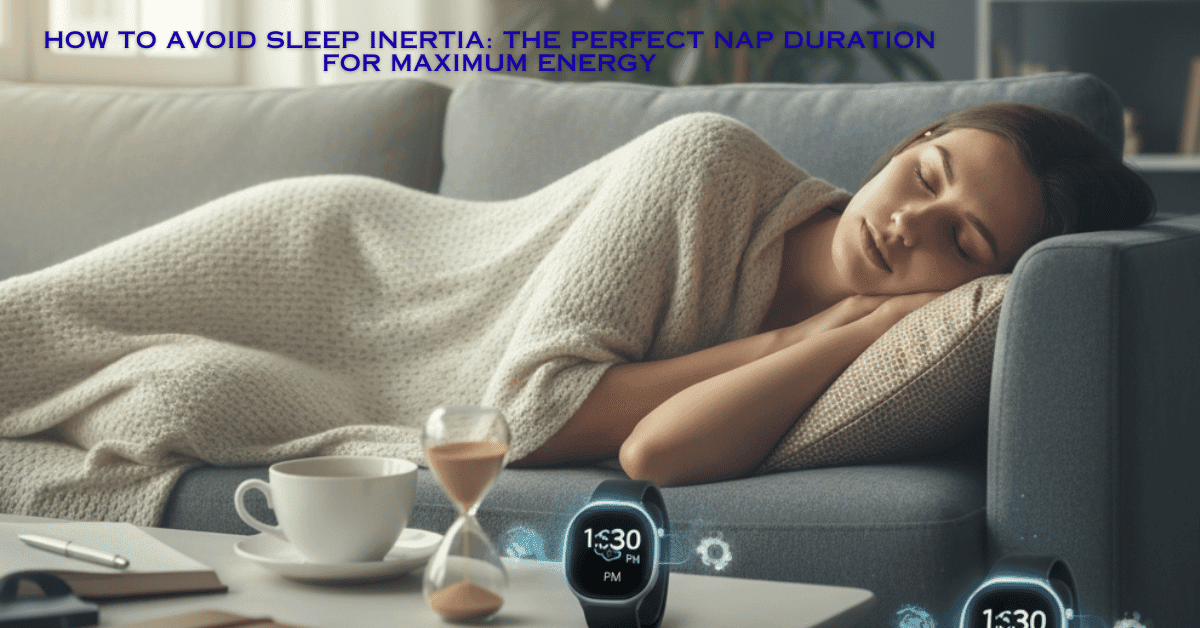
Most people approach napping with zero strategy. They’re tired, so they sleep. Simple, right? Wrong. What actually happens is that you crash on your couch, set an alarm for 45 minutes or an hour, and wake up feeling like you’ve been hit by a truck.
According to research from NASA (yes, NASA studies naps), 26% of workers in the United States admit to experiencing sleep inertia after napping. That’s more than one in four people who are actually making themselves less productive by trying to rest.
The National Sleep Foundation reports that the average person experiences sleep inertia for 5 to 30 minutes after waking, but in some cases, it can last for up to 2 to 4 hours. Imagine trying to work, drive, or make important decisions while your brain is essentially offline for that long.
Here’s what makes this frustrating: you’re not lazy. You’re not doing anything morally wrong. You’re just tired and trying to fix it. But without understanding how sleep cycles work, you’re accidentally sabotaging yourself every single time.
What Exactly Is Sleep Inertia?
Sleep inertia is that cognitive impairment you experience immediately after waking up. It’s not just feeling sleepy. It’s a genuine reduction in your mental performance, reaction time, and decision-making ability.
Research published in the Journal of the American Medical Association found that people experiencing sleep inertia performed worse on cognitive tasks than people who had been awake for 24 hours straight. Let that sink in. Your post-nap brain can be worse than someone who pulled an all-nighter.
The problem gets worse the deeper you sleep. When you enter what’s called slow-wave sleep (the deep stuff), your brain temperature drops, your blood pressure decreases, and your brain essentially goes into maintenance mode. Waking up from this state is like trying to start a cold engine on a winter morning. Everything needs time to warm up.
The Agitation: You’re Losing Hours of Productivity (And You Don’t Even Know It)
Here’s where this gets really annoying.
You’re already tired. You’re already struggling to focus. So you take a nap hoping to fix the problem, and instead, you lose even more productive time to sleep inertia. The math is brutal:
- 30 minutes of napping
- Plus 30 minutes to 2 hours of grogginess
- Equals 1 to 2.5 hours of lost productivity
A study from the University of California, Berkeley found that sleep inertia can reduce cognitive performance by up to 51% immediately after waking. That means you’re operating at less than half capacity. You might as well be drunk (and yes, studies have compared sleep inertia to alcohol impairment).
The Hidden Costs
This isn’t just about feeling bad. Sleep inertia has real consequences:
At work: You make more mistakes. A 2019 study in the Journal of Sleep Research found that medical residents experiencing sleep inertia had a 36% higher error rate in clinical decision-making.
On the road: Driving with sleep inertia is dangerous. The National Highway Traffic Safety Administration estimates that drowsy driving causes 100,000 crashes annually in the US, and many of these occur shortly after waking.
In relationships: You’re irritable, you can’t think straight, and you’re not present. Your partner asks you a simple question, and you respond like they’re speaking ancient Greek.
The worst part? Most people just accept this as normal. They think napping always leads to grogginess, so they either suffer through it or avoid napping entirely. Both options suck.
The Solution: How to Nap Like a Pro (And Actually Feel Better)
Okay, enough doom and gloom. Let’s fix this.
The good news is that sleep inertia is completely avoidable if you understand how to work with your sleep cycles instead of against them. I’m going to break down exactly how to take naps that leave you feeling sharp, focused, and ready to tackle the rest of your day.
The Science of Sleep Cycles
Your sleep happens in cycles that last roughly 90 minutes. Each cycle has different stages:
- Stage 1: Light sleep, lasts 5-10 minutes
- Stage 2: Still light sleep, lasts 10-25 minutes
- Stage 3: Deep sleep (slow-wave sleep), lasts 20-40 minutes
- REM Sleep: Dream sleep, lasts 10-20 minutes
The problem with sleep inertia happens when you wake up during Stage 3 (deep sleep). Your brain is at its most “offline” during this phase, and yanking yourself awake from it is what causes that horrible groggy feeling.
The Three Optimal Nap Durations
Based on research from sleep scientists around the world, there are three nap lengths that work with your biology instead of against it:
1. The Power Nap: 10-20 Minutes
This is your bread and butter nap. NASA research found that a 26-minute nap improved pilot performance by 34% and alertness by 54%. But you don’t even need that long.
A 10-20 minute nap keeps you in Stage 1 and Stage 2 sleep. You never drop into deep sleep, so there’s no sleep inertia when you wake up. You just feel… better.
“The 10-minute nap produced immediate improvements in all outcome measures (including sleep latency, subjective sleepiness, fatigue, vigor, and cognitive performance), with some of these benefits maintained for as long as 155 minutes.” – Journal of Sleep Research, 2006
2. The Coffee Nap: 20 Minutes + Caffeine
This one sounds weird, but it’s backed by science. Here’s how it works:
- Drink a cup of coffee quickly
- Immediately lie down and nap for 20 minutes
- Wake up as the caffeine kicks in
Caffeine takes about 20 minutes to reach peak levels in your bloodstream. By combining it with a nap, you get the restorative benefits of sleep plus the alertness boost from caffeine, all at the same time.
A study from Loughborough University found that a coffee nap reduced driving errors by 34% compared to just coffee or just a nap alone.
3. The Full Cycle Nap: 90 Minutes
If you have the time (lucky you), a full 90-minute nap lets you complete an entire sleep cycle. You go through all the stages and wake up at the end of REM sleep, which is a natural waking point.
Research shows that 90-minute naps can:
- Improve creativity by up to 40%
- Enhance memory consolidation
- Boost problem-solving skills
The catch? You need the full 90 minutes. If you wake up at minute 45 or 60, you’re probably in deep sleep, and you’ll feel terrible.
The Optimal Timing for Your Midday Nap
When you nap matters almost as much as how long you nap.
Your body has a natural dip in alertness between 1 PM and 3 PM. This is driven by your circadian rhythm, not just by how much you ate for lunch (though that doesn’t help).
The sweet spot: Between 1:00 PM and 2:30 PM
Napping too early (before noon) means you’re not actually tired enough, and you might struggle to fall asleep. Napping too late (after 3 PM) can interfere with your nighttime sleep, making it harder to fall asleep at bedtime.
A study in the Journal of Clinical Sleep Medicine found that naps taken between 1 PM and 3 PM had the least negative impact on nighttime sleep while still providing cognitive benefits.
Creating the Perfect Nap Environment
You can’t just collapse at your desk and expect good results. Here’s how to set yourself up for nap success:
Darkness: Your brain produces melatonin in response to darkness. Use an eye mask if you can’t control the lighting.
Temperature: Keep it cool. Research suggests 60-67°F (15-19°C) is optimal for sleep.
Sound: White noise or earplugs help. Your brain is still processing sounds during light sleep.
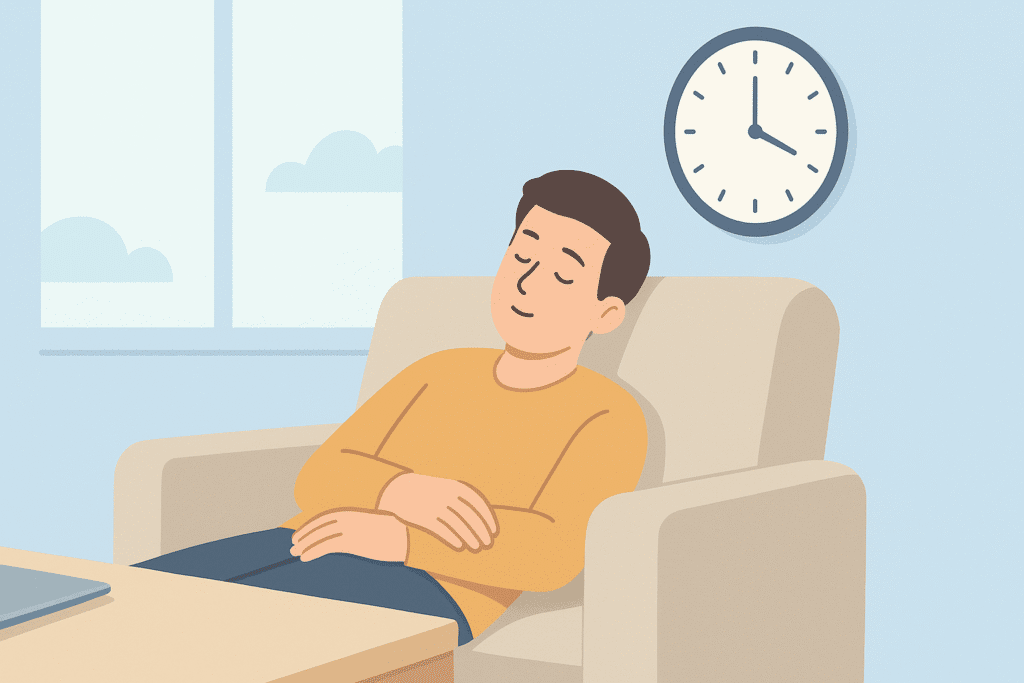
Comfort: But not too comfortable. You want to be able to fall asleep, but you also want to be able to get up when your alarm goes off. A couch is better than a bed for short naps.
The Nap Duration Comparison Table
| Nap Duration | Sleep Stages Reached | Benefits | Risks | Best For |
|---|---|---|---|---|
| 10-20 minutes | Stage 1-2 | Quick alertness boost, no grogginess, improved motor performance | Minimal benefits for memory consolidation | Busy schedules, workplace naps, pre-meeting energy |
| 20 minutes + coffee | Stage 1-2 | Maximum alertness, enhanced focus, reduced sleep inertia | Caffeine sensitivity, afternoon jitters | Long drives, important tasks, afternoon slumps |
| 30-60 minutes | Stage 1-3 | Some memory benefits | HIGH risk of sleep inertia, grogginess can last 2+ hours | AVOID THIS RANGE |
| 90 minutes | Full cycle (Stage 1-4 + REM) | Memory consolidation, creativity boost, emotional regulation | Requires significant time, may affect night sleep if too late | Free afternoons, creative work, problem-solving |
Key Takeaways
Let me give you the cliff notes version of everything we just covered:
✓ Sleep inertia is real and can impair your performance worse than being sleep-deprived
✓ The 30-60 minute nap range is the danger zone – avoid it at all costs
✓ Stick to either 10-20 minutes or 90 minutes to avoid waking during deep sleep
✓ The best nap time is between 1 PM and 3 PM when your circadian rhythm naturally dips
✓ The coffee nap is scientifically proven to be more effective than either coffee or naps alone
✓ Environment matters – darkness, cool temperature, and minimal noise optimize nap quality
✓ Set an alarm – even 5 extra minutes can drop you into deep sleep territory
✓ Don’t nap after 3 PM or you risk messing up your nighttime sleep
Practical Tips for Real Life
Look, I get it. You’re not living in a laboratory. You can’t always control when and where you nap. Here are some practical strategies for real-world napping:
At Work
Most offices aren’t exactly nap-friendly, but you can make it work:
- Use your car (recline the seat, set an alarm)
- Book a conference room for a “call” (lock the door, lights off, 20-minute timer)
- Use a nap pod if your company has them (more companies are adding these)
- Desk nap with your head down (not ideal, but works in a pinch)
At Home
If you’re working from home or have flexibility:
- Use your bed for 90-minute naps only (to avoid accidentally oversleeping during power naps)
- Keep a dedicated nap spot that’s not your bedroom for short naps
- Use smart home tech to automate lighting and temperature
For Parents
If you have young kids, your nap schedule might depend entirely on their nap schedule. That’s okay. Work with what you’ve got:
- Nap when the baby naps (even if it’s not the optimal time)
- Trade nap duty with your partner so each person gets one good nap
- Accept that survival mode naps don’t have to be perfect
For Shift Workers
If you work nights or rotating shifts, standard advice doesn’t really apply. Research suggests:
- Nap before your night shift begins (90 minutes if possible)
- Take a 20-minute break nap during your shift around hour 4-6
- Avoid napping right before driving home (wait 30 minutes for sleep inertia to clear)
Common Napping Mistakes (And How to Fix Them)
Mistake 1: Napping in Your Bed
Your bed is strongly associated with nighttime sleep. Napping there can:
- Make it harder to fall asleep at night
- Make it harder to wake up from your nap
Fix: Designate a different nap spot (couch, recliner, even the floor)
Mistake 2: Flexible Timing
“I’ll just nap when I’m tired” sounds reasonable, but it’s a recipe for sleep inertia.
Fix: Schedule your nap for the same time each day, between 1-3 PM
Mistake 3: Using Snooze
Hitting snooze after a nap alarm is how you accidentally slip into deep sleep.
Fix: Place your alarm across the room so you have to physically get up
Mistake 4: Napping to Compensate for Poor Night Sleep
If you’re regularly exhausted, napping is a band-aid, not a solution.
Fix: Address your nighttime sleep quality first (aim for 7-9 hours), use naps as a supplement, not a replacement
Mistake 5: Expecting Instant Results
Some people aren’t natural nappers. It might take 2-3 weeks for your body to adapt to a napping routine.
Fix: Give it time. Practice the same duration and timing consistently for at least two weeks
The Surprising Benefits of Strategic Napping
When you get napping right, the benefits go way beyond just “not feeling terrible.” Research has documented some impressive effects:
Cardiovascular Health: A study of 23,681 people in Greece found that those who napped 2-3 times per week had a 37% lower risk of dying from heart disease.
Learning and Memory: Napping helps consolidate memories. Students who napped after learning new material performed 20% better on tests than those who stayed awake.
Emotional Regulation: A 60-minute nap improved participants’ tolerance to frustration by 56% compared to the no-nap group.
Athletic Performance: Studies on athletes show that a 30-minute nap can improve sprint times by 2-5% and increase alertness during evening games.
Creativity: REM sleep (which you get in 90-minute naps) is linked to creative problem-solving. Many famous inventors and artists swore by their napping habits.
Famous Nappers Throughout History
You’re in good company if you’re a napper:
- Albert Einstein reportedly slept 10 hours per night plus daily naps
- Leonardo da Vinci took multiple 20-minute naps throughout the day
- Winston Churchill insisted on his afternoon nap, even during World War II
- John F. Kennedy ate lunch in bed and then napped every day
- Eleanor Roosevelt napped before evening events to boost energy
Frequently Asked Questions
Can everyone benefit from napping?
Most people can, but about 30% of the population reports difficulty falling asleep during the day even when tired. If you’re one of these people, focus on improving your nighttime sleep quality rather than forcing daytime naps. Also, people with insomnia should generally avoid napping as it can make nighttime sleep harder.
Will napping make me lazy or less productive at night?
Not if you nap correctly. The key is timing (before 3 PM) and duration (10-20 or 90 minutes). A study from the University of California found that appropriate naps actually increased overall productivity by 20% without affecting nighttime sleep quality.
How do I wake up from a short nap without an alarm?
Some people can train themselves to wake naturally after 20 minutes through consistent practice. Your body starts to recognize the pattern. However, when you’re first starting, always use an alarm. The risk of oversleeping into deep sleep is too high.
Is it normal to dream during a power nap?
You can experience hypnagogic hallucinations (dream-like images) during Stage 1 sleep, which can happen in even a 10-minute nap. Full dreams usually require REM sleep, which typically doesn’t occur until you’ve been asleep for 60+ minutes. If you’re regularly dreaming during short naps, you might be severely sleep-deprived.
What if I can’t fall asleep during my nap time?
Don’t stress about it. Even lying quietly with your eyes closed provides some rest. Research shows that “quiet rest” still improves cognitive performance, though not as much as actual sleep. Give yourself 15 minutes to fall asleep. If it doesn’t happen, just get up and move on with your day.
Should I nap on weekends?
If you nap during the week, keeping a consistent schedule on weekends helps maintain your circadian rhythm. However, if you’re sleeping 8+ hours at night on weekends, you probably don’t need a nap. The need for naps often indicates sleep debt that should be addressed through better nighttime sleep.
Can napping replace nighttime sleep?
Absolutely not. While naps provide benefits, they don’t offer the same restorative deep sleep and REM sleep that happens during nighttime sleep. Your body needs a long consolidated sleep period. Some people try polyphasic sleep schedules (multiple short sleep periods), but research shows these are not sustainable or healthy for most people.
Conclusion: Your 30-Day Napping Challenge
Here’s the thing about napping: knowing the science is useless if you don’t actually do it.
So here’s my challenge to you: commit to strategic napping for 30 days.
Week 1-2: Experiment with the 10-20 minute power nap. Same time every day (between 1-3 PM), 20-minute alarm, no snoozing.
Week 3: Try the coffee nap technique. Quick coffee, immediate 20-minute nap, see how you feel.
Week 4: If you have the flexibility, test a 90-minute nap on one or two days and compare how you feel.
Track your energy levels, focus, and productivity. I bet you’ll notice a difference.
The research is clear: when you nap strategically, you’re not being lazy. You’re being smart. You’re working with your biology instead of against it. You’re giving your brain the maintenance break it needs to perform at its best.
Sleep inertia isn’t an inevitable part of napping. It’s just what happens when you nap badly. Now you know how to nap well.
So next time you feel that afternoon slump coming on, don’t fight it. Don’t suffer through it. Don’t take a random 45-minute nap and wake up feeling like death.
Set a 20-minute timer, find a quiet spot, close your eyes, and give yourself permission to rest the right way.
Your brain will thank you.
Remember: This article is for informational purposes. If you have chronic sleep problems, sleep disorders, or concerns about your sleep health, talk to a healthcare provider or sleep specialist. They can provide personalized guidance based on your specific situation.