
Have you ever woken up after 8 hours of sleep and still felt like you got hit by a truck?
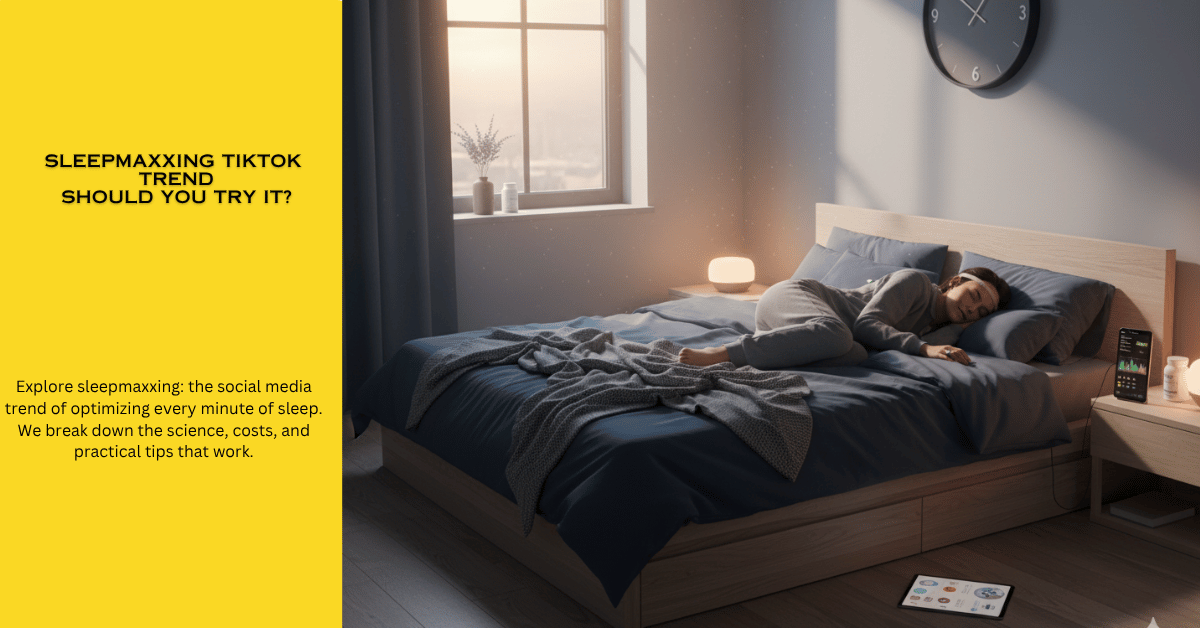
Yeah, me too. And apparently, I’m not alone because there’s this whole movement online now called “sleepmaxxing” where people are absolutely obsessed with making their sleep perfect. We’re talking mouth tape, sleep trackers, special pillows, blackout curtains, specific supplements, and even calculating the exact minute they should fall asleep.
But here’s what really got me thinking: are we actually sleeping better, or are we just stressing ourselves out more?
Let me walk you through what this whole sleepmaxxing thing is actually about, and whether you should jump on this bandwagon or just, you know, go to bed.
Table of Contents
The Problem: Why Everyone’s Suddenly Obsessed With Sleep
Look, I get it. We’re all tired. Like, really tired.
According to the CDC, about 1 in 3 American adults don’t get enough sleep on a regular basis. That’s roughly 70 million people walking around like zombies. And it’s not just an American thing either. The problem is global.
Here’s the thing though. Our grandparents didn’t need a $400 smart ring to tell them they slept poorly. They just… knew. But now? We’ve got technology telling us we spent 47 minutes in REM sleep instead of the optimal 52 minutes, and suddenly we’re spiraling.
The Real Cost of Poor Sleep
Before we dive into sleepmaxxing, let’s talk about why sleep actually matters. Because it’s not just about feeling groggy.
Poor sleep is linked to:
- Weight gain and obesity
- Increased risk of heart disease
- Weakened immune system
- Memory problems
- Mood disorders like anxiety and depression
- Decreased productivity (costing the US economy about $411 billion annually)
- Higher risk of accidents
So yeah, the concern is real. Sleep is legitimately important. But here’s where it gets complicated.
What Actually Is Sleepmaxxing?
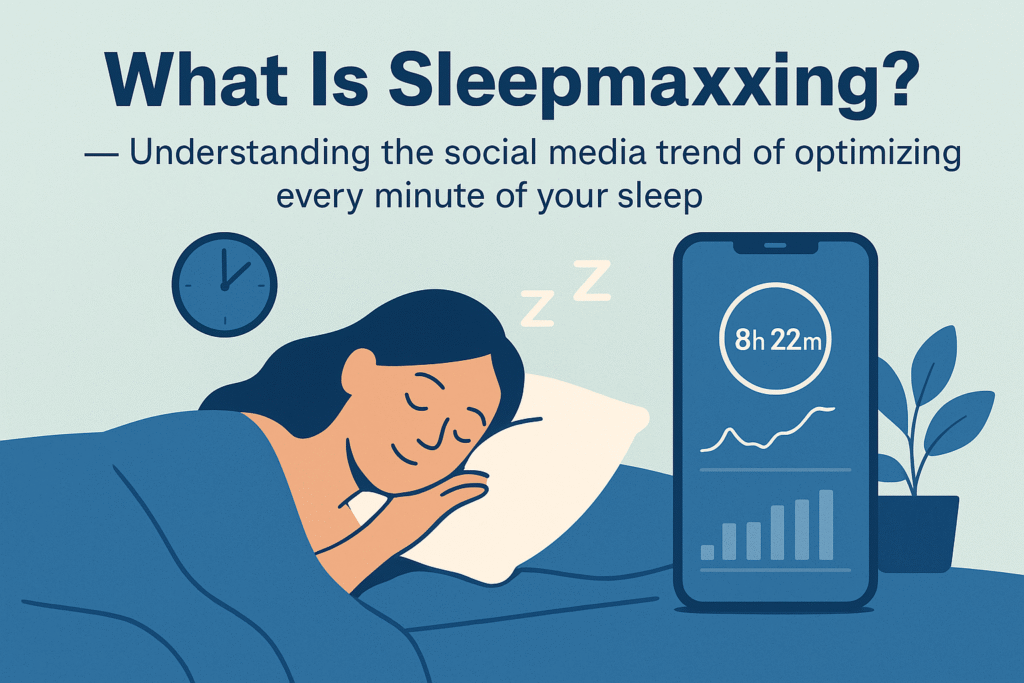
Sleepmaxxing is basically the idea of optimizing every single aspect of your sleep to get the “maximum” benefit. It’s part of this broader “maxxing” culture that started online where people try to maximize different aspects of their lives – looksmaxxing, moneymaxxing, you name it.
The sleep version involves:
- Tracking everything: Sleep cycles, heart rate, body temperature, movement, snoring, breathing patterns
- Optimizing your environment: Temperature control, humidity levels, lighting, sound
- Timing it perfectly: Following sleep cycle calculators, wake-up windows, and chronotype schedules
- Using supplements: Magnesium, melatonin, L-theanine, glycine, and about 47 other things
- Following strict routines: No screens 2 hours before bed, specific wind-down rituals, exact meal timing
- Buying all the gadgets: Smart mattresses, sleep trackers, special pillows, weighted blankets, mouth tape (yes, really)
A recent survey showed that 43% of adults now use some form of sleep tracking technology. That’s up from just 12% in 2020. The sleep tech market is expected to hit $40 billion by 2026.
How It Spread on Social Media
TikTok and Instagram are absolutely flooded with sleepmaxxing content. You’ve got influencers showing their elaborate nighttime routines that look more complicated than preparing for surgery.
I’ve seen videos with millions of views showing people:
- Taping their mouths shut (to promote nose breathing)
- Wearing blue light blocking glasses starting at sunset
- Taking cold showers before bed
- Doing specific breathing exercises
- Using red light therapy
- Sleeping in near-freezing temperatures
And look, some of this stuff is backed by science. But when you’re doing ALL of it and still obsessing over whether you got enough deep sleep, we’ve got a problem.
The Agitation: When Sleep Optimization Becomes Sleep Anxiety
Here’s where things get messy.
Remember how I said people are tracking their sleep? Well, there’s actually a term for what happens when you become too obsessed with perfect sleep metrics: orthosomnia.
Yeah, it’s a real thing. Orthosomnia is when your pursuit of perfect sleep data actually makes your sleep worse. It was first described in a 2017 study published in the Journal of Clinical Sleep Medicine.
The Vicious Cycle
Here’s what happens:
- You check your sleep tracker in the morning
- It says you only got 73 minutes of deep sleep (whatever that even means)
- You spend the day worried about it
- Tonight, you’re anxious about sleeping well
- The anxiety makes you sleep worse
- Repeat
One study found that 27% of people who use sleep trackers report increased anxiety about their sleep. And here’s the kicker: many consumer sleep trackers are only about 60-70% accurate for detecting sleep stages anyway.
I have a friend who became so obsessed with his sleep score that he’d lie awake worrying if he’d hit his REM target. The irony? The worrying was preventing him from getting good sleep.
The Comparison Game
Social media makes it worse because now you’re not just competing with yourself. You’re seeing someone’s “perfect” sleep routine with their 95% sleep score and thinking you’re failing.
But guess what? That person probably:
- Filmed that video at 2pm
- Doesn’t actually do that routine every night
- Is showing you their best night, not their average night
- Might be lying
The data shows that 90% of sleep content on social media contains at least some misinformation. That’s according to a 2024 analysis of sleep-related content across major platforms.
The Financial Pressure
Let’s talk money for a second.
The average sleepmaxxer spends:
- $200-400 on a sleep tracker or smart ring
- $50-150 monthly on supplements
- $500-2000 on a “perfect” mattress
- $100-300 on special pillows
- $50-200 on blackout curtains and sleep masks
- $30-100 monthly on subscription apps
That’s potentially $1,000-3,000 upfront and $100-250 per month. And for what? Maybe a 10-15 minute improvement in sleep quality that you probably can’t even accurately measure.
The Solution: A Sane Approach to Better Sleep
Okay, so here’s where I’m going to give you the actual useful stuff. Because despite all the craziness, there ARE things that genuinely help with sleep. You just don’t need to do all of them, spend thousands of dollars, or stress yourself out.
The Sleep Basics That Actually Matter
According to the National Sleep Foundation and the American Academy of Sleep Medicine, here’s what actually makes a difference:
1. Consistency is King
Going to bed and waking up at the same time every day (yes, even weekends) is probably the single most important thing you can do. Your body has a circadian rhythm, and it loves predictability.
A study of 61,000 people found that those with irregular sleep schedules had a 26% higher risk of cardiovascular events, regardless of how much total sleep they got.
2. Your Sleep Environment
You don’t need a $3,000 smart mattress, but these things do help:
- Temperature: 60-67°F (15-19°C) is optimal for most people
- Darkness: Yes, blackout curtains or a sleep mask help. Light suppresses melatonin
- Quiet: Earplugs or a white noise machine if you need it
- Comfort: A decent mattress and pillow (doesn’t have to be expensive)
3. The Pre-Sleep Routine
You need some kind of wind-down routine, but it doesn’t have to be elaborate. Here’s what works:
- Light exposure: Get bright light in the morning, dim lights at night
- Screen time: Ideally reduce bright screens 1-2 hours before bed (or use night mode)
- Caffeine cutoff: Stop caffeine 8-10 hours before bed
- Alcohol: It might help you fall asleep, but it wrecks your sleep quality
- Exercise: Great for sleep, but not right before bed
- Heavy meals: Avoid eating large meals 2-3 hours before sleep
What About All Those Supplements?
Here’s my honest take on the popular ones:
| Supplement | Does It Work? | The Real Deal |
|---|---|---|
| Magnesium | Maybe | Some evidence for magnesium glycinate helping with sleep quality. Worth trying if you’re deficient. Typical dose: 200-400mg |
| Melatonin | Yes, but… | Works for jet lag and shift work. Less clear for regular insomnia. Start with 0.5-1mg, not the 10mg bombs you see in stores |
| L-theanine | Some evidence | Found in tea. May help with relaxation. Dose: 200-400mg |
| Glycine | Promising | Limited but positive research. May improve sleep quality. Dose: 3g |
| CBD | Unclear | Lots of hype, limited solid research. Might help with anxiety-related sleep issues |
| Ashwagandha | Some support | May reduce stress and improve sleep. Takes weeks to show effects |
Important: Talk to your doctor before starting any supplements, especially if you’re on other medications.
The 80/20 of Sleep Optimization
Here’s what I call the 80/20 approach. These things will give you 80% of the benefits with 20% of the effort:
- Keep a consistent sleep schedule (even on weekends)
- Get morning sunlight (10-30 minutes outdoors)
- Make your bedroom cool and dark
- Cut caffeine after 2pm
- Have a simple wind-down routine (30 minutes of calming activity)
- Exercise regularly (but not right before bed)
- Manage stress (meditation, journaling, or just talking to someone)
That’s it. You don’t need the $400 Oura ring. You don’t need to tape your mouth shut. You don’t need 17 different supplements.
Should You Track Your Sleep?
Here’s my honest opinion: probably not.
Unless you have a diagnosed sleep disorder or your doctor recommends it, obsessively tracking your sleep often does more harm than good.
Instead, ask yourself these simple questions every morning:
- Do I feel rested?
- Did I fall asleep reasonably quickly?
- Did I wake up multiple times?
- Am I functioning well during the day?
Your subjective experience is actually a pretty good indicator of sleep quality. In fact, one study found that subjective sleep quality was a better predictor of daytime functioning than objective sleep measurements.
When to Actually See a Doctor
Stop sleepmaxxing and talk to a healthcare provider if you experience:
- Chronic insomnia (trouble sleeping 3+ nights per week for 3+ months)
- Loud snoring or gasping for air during sleep (possible sleep apnea)
- Extreme daytime sleepiness despite adequate sleep time
- Unusual movements or behaviors during sleep
- Difficulty falling asleep that’s affecting your life
Real sleep disorders need real medical treatment, not mouth tape and magnesium.
The Different Types of Sleepmaxxers
In my research (and let’s be honest, doom-scrolling through sleep TikTok), I’ve noticed a few different types of people who get into sleepmaxxing:
The Quantified Self Person
This person lives for data. They’ve got spreadsheets tracking their REM cycles, heart rate variability, and probably the phase of the moon. They’re not necessarily anxious about it – they just really love optimizing things.
The risk: Data overload and missing the forest for the trees.
The Biohacker
They’re taking seven different supplements, sleeping in a hyperbaric chamber (okay, maybe not, but they would if they could afford it), and have very strong opinions about red light therapy.
The risk: Spending tons of money on things with minimal evidence.
The Anxious Optimizer
This is the person who’s genuinely struggling with sleep and is desperately trying everything to fix it. They’re worried, stressed, and reading everything they can find.
The risk: Developing orthosomnia and making the problem worse through anxiety.
The Trend Follower
They saw a viral TikTok about mouth taping and now they’re all in. Next month it’ll be something else.
The risk: Trying potentially harmful “hacks” without understanding the actual science.
The Science Behind Sleep: What We Actually Know
Let me give you the CliffsNotes version of sleep science so you understand what’s actually happening when you sleep.
Sleep Cycles and Stages
You cycle through different sleep stages multiple times per night:
NREM Stage 1 (Light Sleep)
- Transition between wake and sleep
- 5-10% of total sleep
- Easily awakened
NREM Stage 2 (Light Sleep)
- True sleep begins
- 45-55% of total sleep
- Heart rate slows, body temp drops
NREM Stage 3 (Deep Sleep)
- The really restorative stuff
- 15-25% of total sleep
- Hard to wake up from
- Physical recovery happens here
REM Sleep
- Dreaming happens
- 20-25% of total sleep
- Brain activity increases
- Memory consolidation occurs
Here’s the thing: you don’t have direct control over how much time you spend in each stage. Your body knows what it needs. Obsessing over getting exactly 90 minutes of deep sleep is pointless because you can’t consciously control it.
How Much Sleep Do You Actually Need?
The CDC and National Sleep Foundation recommend:
| Age Group | Recommended Sleep |
|---|---|
| Teenagers (13-18) | 8-10 hours |
| Young Adults (18-25) | 7-9 hours |
| Adults (26-64) | 7-9 hours |
| Older Adults (65+) | 7-8 hours |
But here’s the catch: these are averages. Some people genuinely need 9 hours, others function great on 7. There’s a rare genetic mutation (affecting less than 3% of people) that lets some individuals thrive on 6 hours or less.
The key question isn’t “am I getting exactly 8 hours?” It’s “am I getting enough sleep to function well during the day?”
What Actually Improves Sleep Quality
Research has consistently shown these factors improve sleep:
- Regular exercise: 150 minutes of moderate activity per week improves sleep quality by 65%
- Consistent schedule: Even more important than total sleep duration
- Stress management: Chronic stress is one of the biggest sleep disruptors
- Limited alcohol: It might knock you out, but it fragments your sleep
- Treatment of underlying conditions: Sleep apnea, restless leg syndrome, etc.
Notice what’s NOT on this list? Expensive gadgets, complicated supplement stacks, or perfect sleep tracking.
Real Stories: When Sleepmaxxing Goes Wrong (and Right)
Let me share a few stories I’ve come across.
Sarah’s Story: Sarah got an Oura ring for her birthday and became obsessed with her sleep score. She’d check it first thing every morning, and a bad score would ruin her entire day. She started taking more and more supplements, trying different routines, and spending hours researching sleep optimization. Her sleep got worse. Eventually, she stopped using the tracker for a month and focused on just being consistent with her bedtime. Her sleep improved significantly.
Mike’s Story: Mike was a shift worker struggling with sleep. Instead of going down the sleepmaxxing rabbit hole, he worked with a sleep specialist who helped him develop a routine that worked with his schedule. He uses blackout curtains and white noise, takes melatonin strategically, and is consistent with his routine. Simple, effective, no obsession.
The Difference: Sarah got caught in the optimization trap. Mike used evidence-based strategies without the anxiety.
The Mental Health Connection Nobody Talks About
Here’s something important: your mental health affects your sleep more than any gadget ever will.
Anxiety and depression are both strongly linked to sleep problems. In fact, insomnia is often a symptom of underlying mental health issues.
I’ve noticed that a lot of sleepmaxxing content completely ignores this connection. They’ll tell you to buy a $300 pillow but won’t mention that maybe you should talk to a therapist about the stress that’s keeping you up at night.
If you’re lying awake ruminating about work, relationships, or life in general, mouth tape isn’t going to fix that. You need to address the actual issue.
The Productivity Trap
Part of why sleepmaxxing has become so popular is because we’re obsessed with productivity. We see sleep as another thing to optimize so we can “crush” our goals and be more productive.
But here’s a wild thought: maybe you’re allowed to just sleep without it being about optimization.
Sleep is a basic human need, not a productivity hack. You don’t need to earn the right to rest.
My Honest Recommendations
After researching this topic way too much, here’s what I actually recommend:
If You’re Sleeping Fine
Do nothing. Seriously. If you’re waking up feeling reasonably rested and functioning well during the day, you don’t need to change anything. Don’t let social media convince you that you need to optimize something that’s already working.
If You’re Having Some Sleep Issues
- Start with the basics: Consistent schedule, cool dark room, wind-down routine
- Address obvious problems: Too much caffeine, alcohol before bed, bright screens late at night
- Give changes time: Try something for at least 2 weeks before deciding it doesn’t work
- Keep it simple: Don’t try to change 15 things at once
If You’re Really Struggling
See a doctor. Not a TikTok influencer. Not a supplement company. An actual sleep specialist.
They can:
- Diagnose real sleep disorders
- Rule out medical issues affecting your sleep
- Provide evidence-based treatment
- Prescribe medication if truly necessary
If You Really Want to Track Your Sleep
Okay, fine. If you really want to use a tracker, here are the rules:
- Use it for patterns, not daily scores: Look at trends over weeks, not individual nights
- Don’t check it first thing: Wait until later in the day when you’re more objective
- Take a break regularly: One week per month without tracking
- Focus on how you feel: Your subjective experience matters more than the data
- If it causes anxiety, stop: The tracker should serve you, not the other way around
The Bottom Line on Sleepmaxxing
Look, I’m not saying that optimizing your sleep is inherently bad. Having a good sleep routine? Great. Making your bedroom conducive to sleep? Absolutely.
But there’s a big difference between having healthy sleep habits and becoming obsessed with perfect sleep metrics.
Sleep is supposed to be natural and restorative. When we turn it into another thing we need to be perfect at, another thing we can fail at, we’ve lost the plot.
The goal isn’t perfect sleep. The goal is good enough sleep that lets you live your life well.
Some nights you’ll sleep great. Some nights you won’t. That’s normal. That’s being human.
What Actually Matters
At the end of the day, these are the things that genuinely matter for sleep:
- Being generally consistent with your schedule
- Creating a decent sleep environment
- Managing stress and mental health
- Addressing any underlying medical issues
- Living a reasonably healthy lifestyle overall
Everything else? It’s just noise.
Key Takeaways
- Sleepmaxxing is the trend of obsessively optimizing every aspect of your sleep, often using expensive gadgets and complicated routines
- Orthosomnia (anxiety about sleep data) is a real problem affecting 27% of people who track their sleep
- Most consumer sleep trackers are only 60-70% accurate at detecting sleep stages anyway
- The 80/20 approach (consistent schedule, good environment, basic habits) gives you most of the benefits without the stress
- Subjective sleep quality (how you actually feel) is often more important than objective measurements
- The sleep tech market is expected to hit $40 billion by 2026, but you probably don’t need most of it
- Real sleep disorders need real medical treatment, not just lifestyle optimization
- Your mental health affects your sleep more than any gadget ever will
Frequently Asked Questions
Q: Do I need a sleep tracker to improve my sleep?
No. Most people can improve their sleep significantly with basic habits and consistency. Track how you feel instead of relying on data that may not even be accurate.
Q: Is mouth taping safe?
It’s controversial. While some people swear by it for reducing snoring, doctors warn it could be dangerous if you have nasal congestion, sleep apnea, or certain other conditions. Talk to a doctor before trying it.
Q: How much should I spend on sleep optimization?
Honestly? Maybe $100-300 total on basics like blackout curtains, a white noise machine if you need it, and perhaps some magnesium supplements. You don’t need to spend thousands.
Q: Will sleepmaxxing actually improve my sleep?
Some aspects (consistent schedule, good environment) will help. But the obsessive tracking and anxiety about perfect sleep metrics often makes things worse, not better.
Q: Should I take melatonin every night?
Generally not recommended for long-term daily use without medical supervision. It’s more effective for jet lag or occasionally resetting your sleep schedule. If you need it every single night, talk to a doctor.
Q: What’s the one thing I should do for better sleep?
Be consistent with your sleep and wake times, even on weekends. This single habit is probably more powerful than anything else you can do.
Q: Can I catch up on sleep on weekends?
Not really. While you can recover from short-term sleep debt somewhat, consistently sleeping poorly during the week and trying to “make up” for it on weekends disrupts your circadian rhythm and doesn’t fully compensate.
Q: When should I actually see a sleep specialist?
If you have chronic insomnia (3+ nights per week for 3+ months), loud snoring with gasping, extreme daytime sleepiness despite adequate sleep time, or unusual sleep behaviors, see a doctor. Real sleep disorders need professional treatment.
Conclusion
So, what is sleepmaxxing? It’s a perfect example of how we take something natural and essential – sleep – and turn it into another thing we need to optimize, perfect, and stress about.
Yes, sleep is important. Yes, some habits genuinely help. But no, you don’t need to spend thousands of dollars or obsess over your REM cycles to sleep well.
Here’s my challenge to you: Try the basics for 30 days. Consistent schedule, cool dark room, wind-down routine, limited caffeine and screens. See how you feel.
I bet you’ll sleep better than you would with a $400 smart ring and a supplement stack that costs $100 a month.
And if you’re still struggling? See a doctor, not an influencer.
Sleep well, friends. And don’t overthink it.
![Do Haptic Sleep Devices Work Better Than White Noise Machines? [Tested]](https://sleepgood.org/wp-content/uploads/2025/11/Do-Haptic-Sleep-Devices-Work-Better-Than-White-Noise-Machines-Tested-768x402.png)