

Have You Ever Woken Up in a Puddle of Your Own Sweat, Wondering Why Your “Breathable” Sheets Feel Like a Plastic Bag?
Yeah, me too. And honestly? I was convinced my expensive Egyptian cotton sheets were the problem. Turns out, I was half right.
Look, I spent three summers basically melting into my mattress before I finally decided to figure this out. And what I discovered completely changed how I think about fabric. Because here’s the thing—not all “cooling” fabrics are created equal, and some of the stuff marketed as breathable is actually worse than sleeping on a trash bag.
So let’s talk about the three fabrics everyone’s obsessing over right now: cotton, bamboo, and Tencel. Which one actually keeps you cool? Which one is just marketing hype? And which one might actually be worth the money?
Buckle up, because we’re about to get into the science of staying cool at night.
Table of Contents
The Problem: Why Are We All Waking Up Drenched?
First, let’s talk about the elephant in the room. Or should I say, the sweaty elephant in the bedroom?
According to sleep research, the ideal sleeping temperature is between 60-67°F (15-19°C). But here’s where it gets interesting: your body temperature naturally drops by about 1-2 degrees when you sleep. It’s part of your circadian rhythm. Your body needs to cool down to fall asleep and stay asleep.
So what happens when your sheets trap heat? Your body can’t regulate its temperature properly. You toss and turn. You wake up multiple times. You end up exhausted even after eight hours in bed.
And here’s the kicker—most people blame their room temperature or their mattress when the real culprit is often their bedding.
I learned this the hard way after spending a fortune on a new AC unit, only to realize my synthetic microfiber sheets were basically turning my bed into a sauna. Face, meet palm.
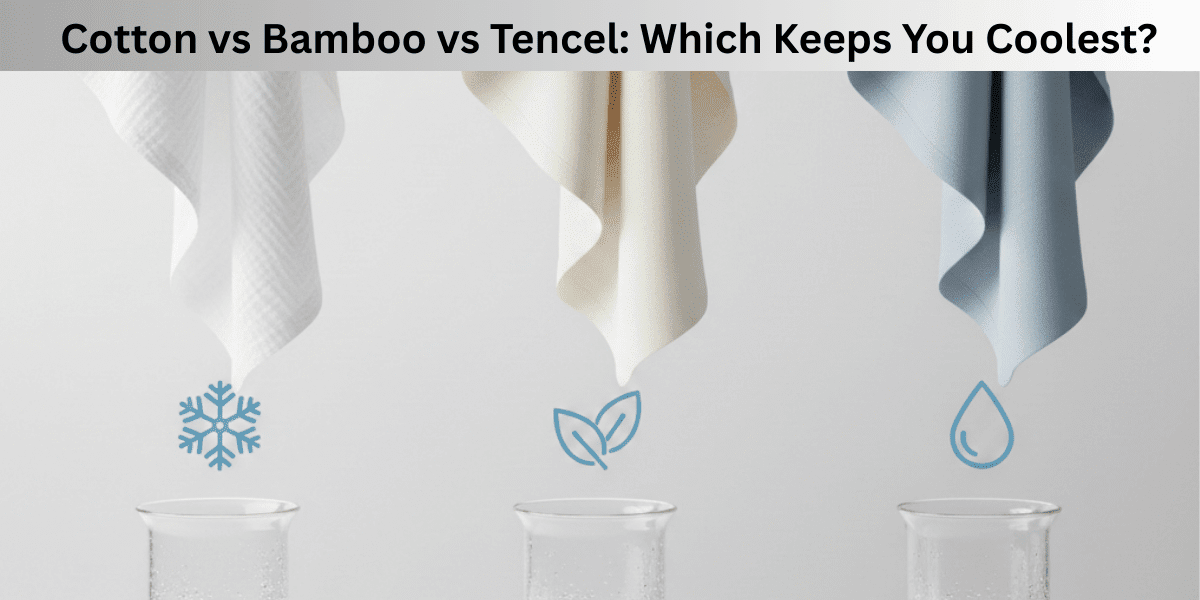
The Real Issue: It’s Not Just About Heat
But temperature is only part of the story. The bigger problem is moisture management.
The average person loses about 200-300ml of water through perspiration every night. That’s roughly a cup and a half of sweat. Yes, really. Even if you don’t feel sweaty, your body is constantly releasing moisture.
When fabric can’t wick that moisture away from your skin, you end up feeling clammy, uncomfortable, and hot. It’s not just about being cool—it’s about staying dry.
This is where the three fabrics we’re talking about today come into play. Because cotton, bamboo, and Tencel all handle moisture completely differently.
The Agitation: Why Your “Premium” Cotton Sheets Might Be Lying to You
Okay, let’s address the cotton situation first, because I have feelings about this.
Cotton has been marketed as the gold standard for bedding for decades. Thread count this, Egyptian cotton that, Pima cotton something else. And look, I fell for it too. I spent way too much money on 800-thread-count sheets thinking I was upgrading my sleep game.
But here’s what they don’t tell you in those fancy bedding stores:
High thread count doesn’t automatically mean cooler sleep. In fact, it can mean the opposite.
When manufacturers pack more threads into fabric, they reduce the space between fibers. Less space means less airflow. Less airflow means more heat retention. It’s basic physics, but somehow this detail gets conveniently left out of the marketing materials.
The Thread Count Trap
Let me break this down with some actual numbers, because the bedding industry really doesn’t want you to know this stuff.
| Thread Count | Airflow | Heat Retention | Best For |
|---|---|---|---|
| 200-400 | High | Low | Hot sleepers |
| 400-600 | Medium | Medium | Most people |
| 600-800+ | Low | High | Cold climates |
See what I mean? That 1000-thread-count sheet set you’ve been eyeing? It might actually make you hotter.
Regular cotton (we’re talking standard percale or sateen weaves) absorbs moisture, which sounds good until you realize it also holds onto that moisture. So instead of wicking sweat away from your body, cotton sheets basically become damp and heavy around you.
Ever notice how your sheets feel kind of cool at first, then gradually get warmer and clammier as the night goes on? That’s cotton doing its thing.
Now, I’m not saying cotton is terrible. It has its place. But if you’re a hot sleeper or you live somewhere humid? Cotton might not be your friend.
The Conventional Cotton Problem
And we haven’t even talked about how most cotton is grown. Conventional cotton farming uses about 16% of the world’s pesticides despite only taking up 2.5% of cultivated land. These chemicals can remain in the fabric even after processing, which isn’t great for your skin or the environment.
Plus, it takes approximately 2,700 liters of water to produce enough cotton for one t-shirt. For bedding? We’re talking thousands more liters.
I’m not trying to guilt-trip you here—I still own cotton sheets. But it’s worth knowing what you’re getting into.
The Solution: Enter Bamboo and Tencel (But Are They Actually Better?)
This is where things get interesting. And controversial. Because the bamboo and Tencel marketing machine is strong.
Let me tell you how I first heard about bamboo sheets. A friend of mine, who’s one of those people who’s always hot (you know the type—wearing shorts in winter), swore by them. “They’re amazing,” she said. “So cool and soft. Plus they’re eco-friendly!”